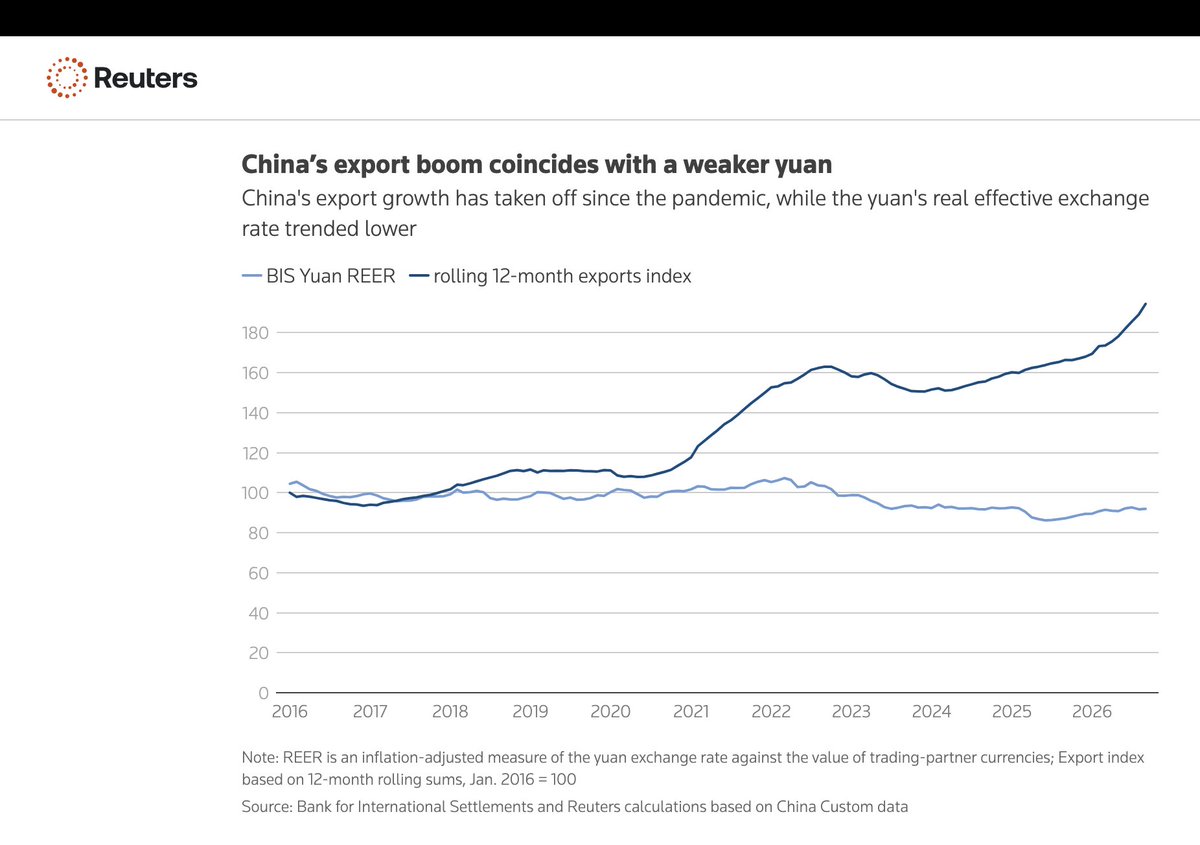
China's Exports Hit a Record While Its Real Exchange Rate Got Cheaper
China's 12-month rolling export index has pushed above 190, a record. Set against January 2016 at 100, it has nearly doubled in a decade.
There is a second line on the same chart. The yuan's real effective exchange rate sits around 92, below where that decade started.
The combination is unusual. A sustained export boom and a widening surplus normally push a currency up. That has not happened here.
The answer is in how a real effective rate is built. It takes the nominal exchange rate and adjusts it for prices on both sides. Chinese consumer prices have been close to flat for two years and factory gate prices are still falling, while trading partners' prices keep rising. That inflation gap alone is enough to drag the real rate down while the nominal rate barely moves.
Export prices are falling too. By late 2025 they were about 4% below a year earlier and close to 10% below two years earlier, as overcapacity turned into price competitiveness. So behind a record export value, the growth in actual volume shipped is larger than the dollar figure suggests.
What this chart shows, then, is not a currency being held down on purpose. It is a country converting surplus capacity into market share, and paying for it with prices at home that will not rise.
One addition: a growing share of recent exports is chips and computers, which is demand pulling rather than discounting winning orders. Both forces now sit on the same line.
Source: China customs export data, Bank for International Settlements yuan real effective exchange rate, and official export and consumer price releases (Image: @acemaxx)