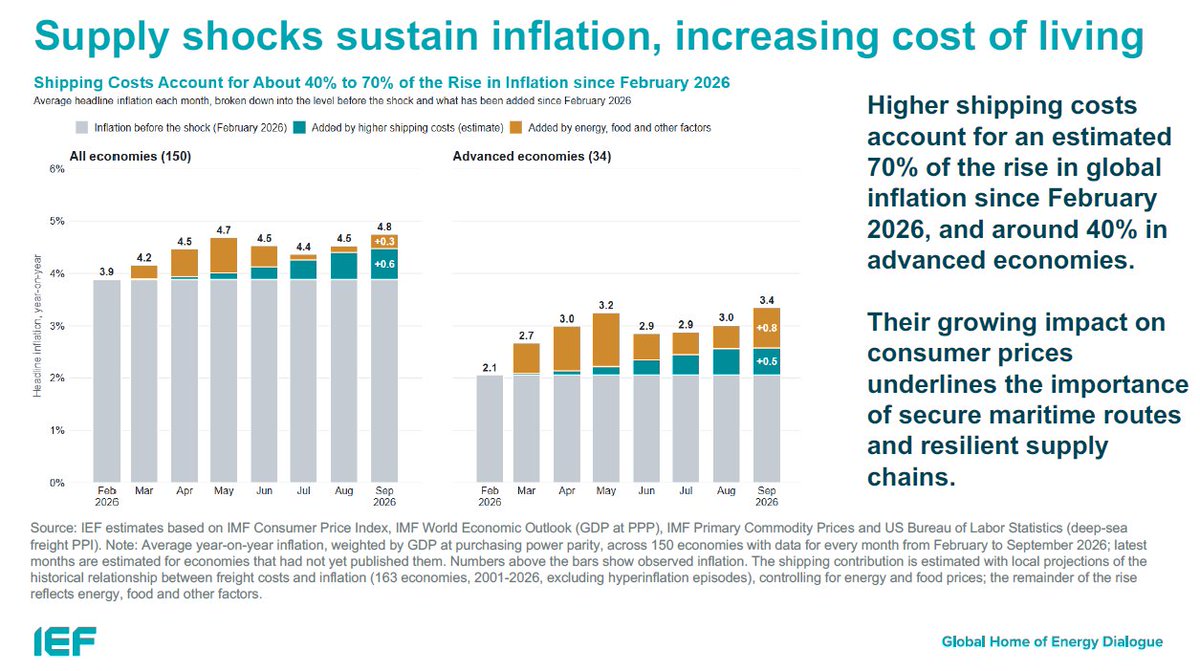
Shipping Costs Explain 70% of This Year's Rise in Global Inflation
Between February and September, average inflation across 150 economies rose from 3.9% to 4.8%. Of that 0.9 percentage point increase, about 0.6 points is attributed to higher shipping costs, with energy, food and everything else accounting for the rest.
Over the same months, inflation in 34 advanced economies went from 2.1% to 3.4%, a bigger jump in total, yet shipping explained only about 40% of it.
■ The difference is what sits in the basket
In richer countries, rent, healthcare and education make up most of the consumer basket, and services do not travel by sea. However far freight rates rise, they can only seep in through the smaller goods portion. Lower-income countries are the reverse, with far more goods in the basket and heavier reliance on imports, so the same freight bill pushes prices up almost twice as hard.
The source of this increase is the disruption to shipping around the Strait of Hormuz, forcing vessels to reroute and insurance costs higher. Worth noting early: even once routes normalise, clearing the cargo backlog takes three to four months before rates genuinely fall, and consumer prices respond later still. Up fast, down slow.
One caveat. This split is estimated from the historical relationship between freight and prices, not measured directly.
Source: International Energy Forum estimates based on IMF and US Bureau of Labor Statistics data (Image: @sohbetkarbuz)