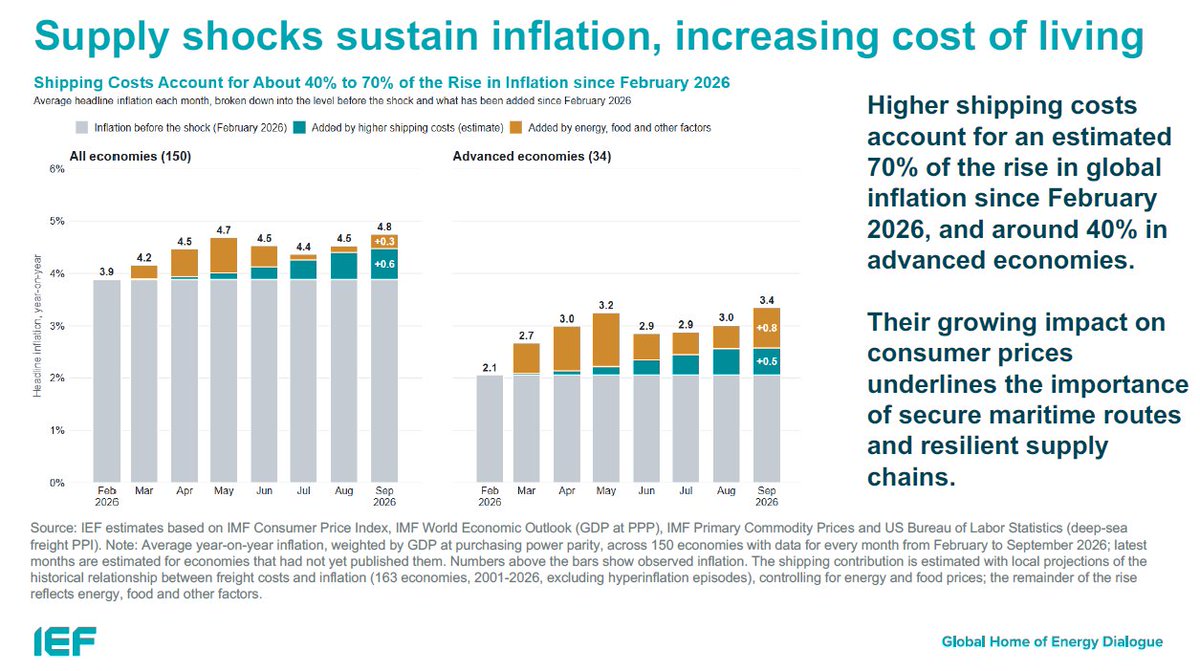
【今年全球物價多漲的那一截,七成來自運費】🚢
從 2 月到 9 月,150 個經濟體的平均通膨從 3.9% 升到 4.8%。這多出來的 0.9 個百分點裡,大約 0.6 個百分點被歸到海運成本上漲,剩下的才是能源、食品和其他。
同一段時間,34 個先進經濟體的通膨從 2.1% 升到 3.4%,升幅更大,但運費只解釋了其中四成。
■ 差別在籃子裡裝了什麼
富裕國家的物價籃子裡,房租、醫療、教育這類服務佔了一大半,而服務不用上船。運費漲再多,也只能從商品那一小塊滲進去。所得較低的國家正好相反,籃子裡商品佔比高得多,進口依賴也更重,所以同樣一筆運費,推高物價的力道差了快一倍。
這輪運費上漲的源頭是荷姆茲海峽一帶的航運中斷,船要繞路、保險要加價。值得先記下來的是:就算航線恢復正常,塞住的貨要清完還要三到四個月,運費才會真的回落,物價的反應又還要再晚一段。上去很快,下來很慢。
另外,這張圖是用歷史關係推估出來的拆解,不是直接量到運費對物價的貢獻。
資料來源: 國際能源論壇根據國際貨幣基金與美國勞工統計局資料推估 (圖片來自 @sohbetkarbuz)
Shipping Costs Explain 70% of This Year's Rise in Global Inflation
Between February and September, average inflation across 150 economies rose from 3.9% to 4.8%. Of that 0.9 percentage point increase, about 0.6 points is attributed to higher shipping costs, with energy, food and everything else accounting for the rest.
Over the same months, inflation in 34 advanced economies went from 2.1% to 3.4%, a bigger jump in total, yet shipping explained only about 40% of it.
■ The difference is what sits in the basket
In richer countries, rent, healthcare and education make up most of the consumer basket, and services do not travel by sea. However far freight rates rise, they can only seep in through the smaller goods portion. Lower-income countries are the reverse, with far more goods in the basket and heavier reliance on imports, so the same freight bill pushes prices up almost twice as hard.
The source of this increase is the disruption to shipping around the Strait of Hormuz, forcing vessels to reroute and insurance costs higher. Worth noting early: even once routes normalise, clearing the cargo backlog takes three to four months before rates genuinely fall, and consumer prices respond later still. Up fast, down slow.
One caveat. This split is estimated from the historical relationship between freight and prices, not measured directly.
Source: International Energy Forum estimates based on IMF and US Bureau of Labor Statistics data (Image: @sohbetkarbuz)