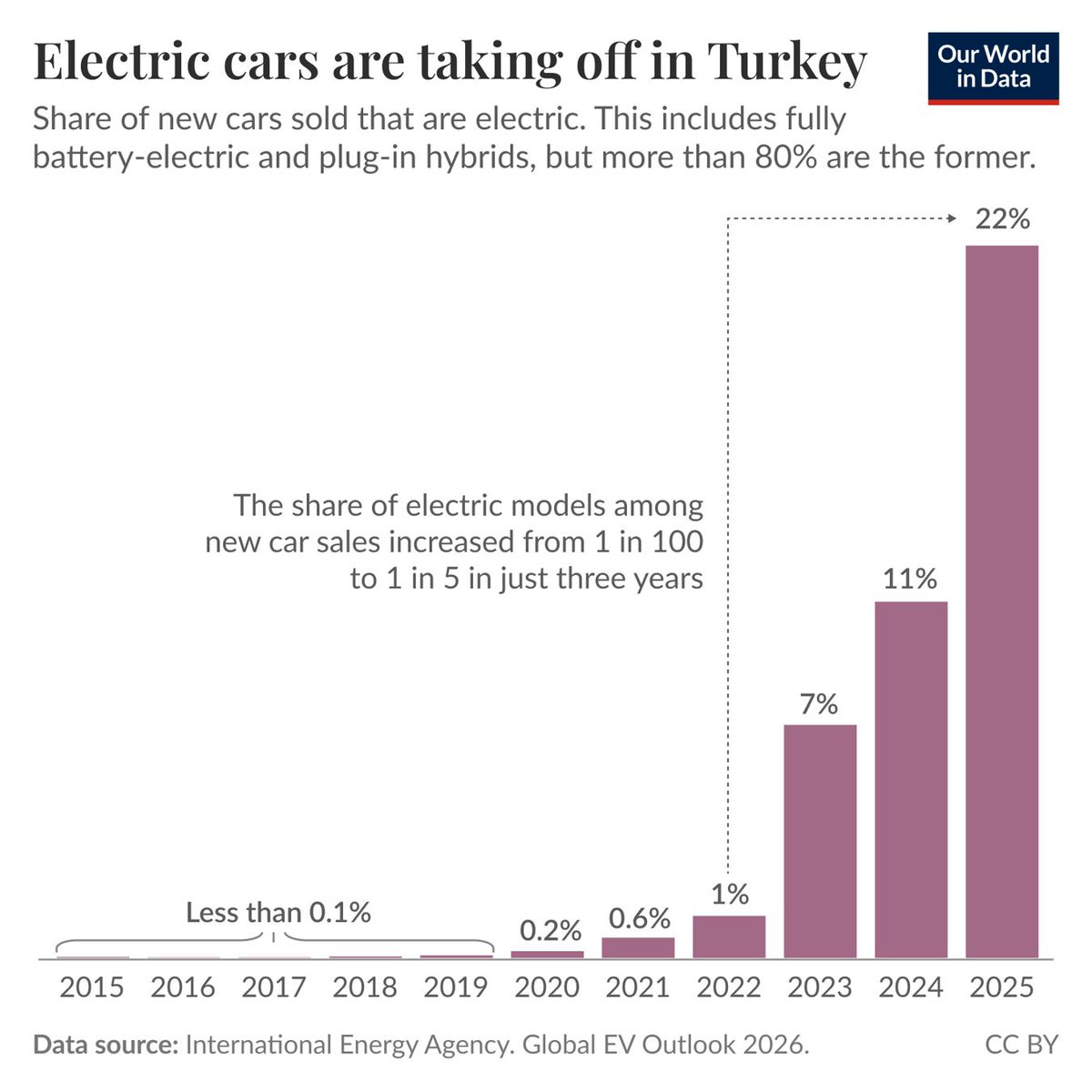
Turkey Went From One Electric Car in a Hundred to One in Five in Three Years
One in every five new cars sold in Turkey is now electric. Three years ago it was one in a hundred.
International Energy Agency figures put the electric share of Turkish new-car sales at 1% in 2022, 7% in 2023, 11% in 2024 and 22% in 2025. That measure includes plug-in hybrids, though more than 80% of the total is fully battery-electric.
Reading this as a shift in consumer taste misses what is driving it. Turkey's special consumption tax on cars is unusually heavy: petrol models under 1,600cc start at around 80% and the rate climbs towards 220% as engine size and price rise, while electric models sat between 10% and 40% for years. Two cars at a similar list price can end up tens of percent apart once the tax is added.
The other half of the policy is not about encouraging purchases but about forcing local production. Turkey applies a 40% tariff on battery-electric cars imported from China, with a floor of $7,000 per vehicle. BYD won an exemption after committing $1 billion to a Turkish plant with capacity for 150,000 cars a year. The domestic brand Togg accounts for roughly a fifth of Turkish electric-car sales.
Part of the 2025 bar was borrowed from later. Turkey raised the electric-car tax in July 2025 to a range of 25% to 75%, narrowing the gap, and the monthly electric share touched 27% in the second half of the year largely because buyers closed deals ahead of the increase. The slope from here only becomes readable once the new schedule has run a full year.
Source: IEA Global EV Outlook 2026, EY tax alerts and AGBI (Image: @OurWorldInData)