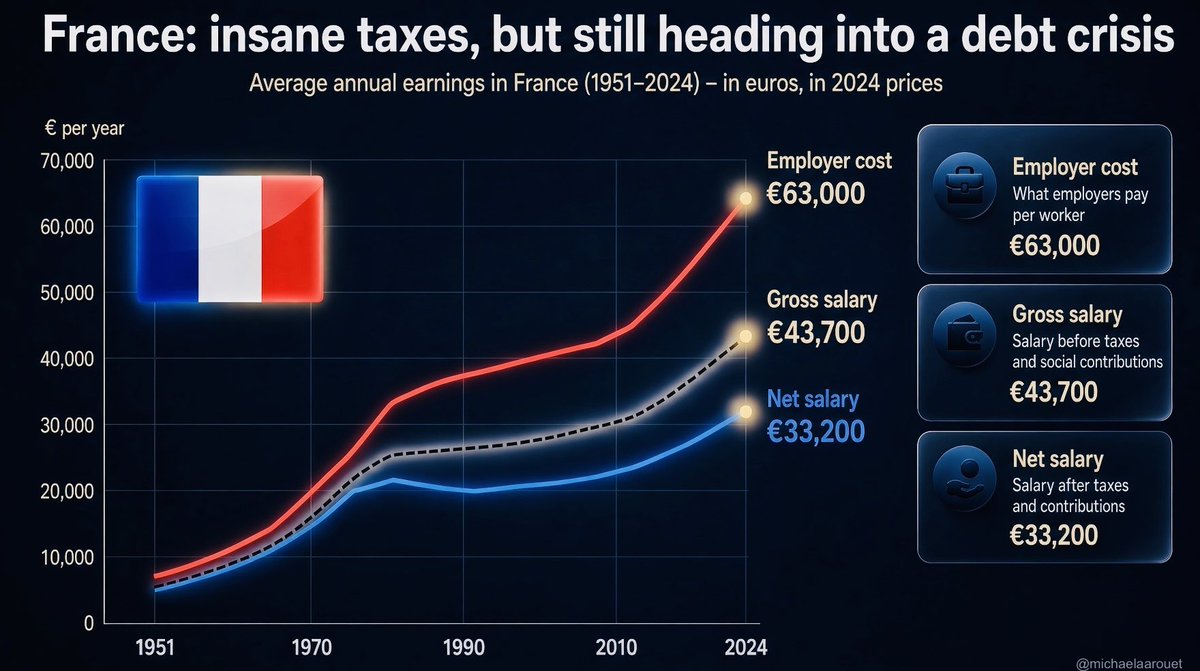
A French Employer Pays €63,000 and the Worker Receives €33,200
The average French employee cost their employer €63,000 in 2024. Gross salary was €43,700. After income tax and social contributions, €33,200 landed in the worker's account. Between the company's books and the employee's bank account, 47% goes somewhere else.
That share is not an outlier, it is how the system is built. OECD figures put the tax wedge for a single French worker on the average wage at 47.2%, the third highest of 38 member countries and almost exactly what the chart implies, against an average across those countries of 35.1%.
The missing 47% has not vanished. It is prepaid public provision. French health care and pensions are funded mainly through this channel, where elsewhere the same services are bought privately by the worker. Judging which arrangement is better value means counting what comes back, not only what goes out.
One detail is easy to skip. All three lines are in 2024 prices, and all three are rising. Net pay went from around €5,000 in 1951 to €33,200 today, several times more in real purchasing power. A widening wedge is not the same as workers getting poorer.
So the question worth asking is not how large the share is, but whether the services it buys have improved alongside it. The French argument now centres on pension spending, which is also the hardest part of the wedge to bring down.
Source: OECD Taxing Wages 2026 and OECD average annual wages data (Image: @MichaelAArouet)