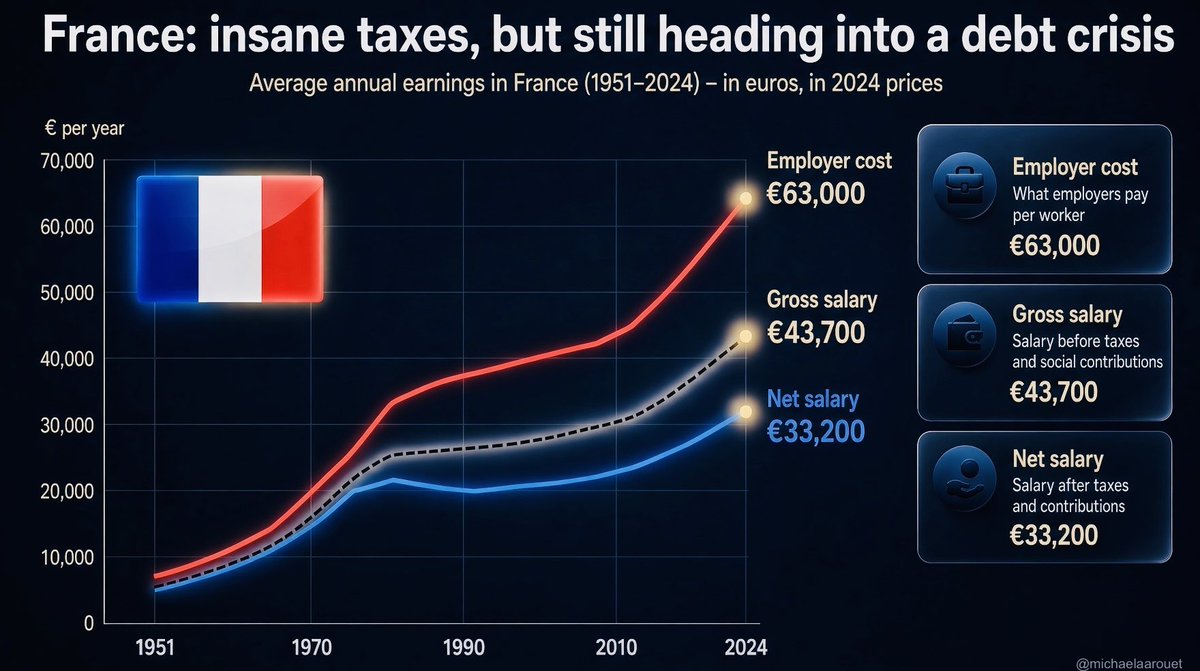
【法國雇主付 6.3 萬歐元,員工實拿 3.32 萬】💶
2024 年法國每名受雇者的平均雇主成本是 63,000 歐元,稅前薪資 43,700 歐元,扣掉所得稅與社會保險費之後,實際入帳 33,200 歐元。從公司帳上出去到員工帳戶進來,中間少了 47%。
這不是特例,是制度設計。經濟合作暨發展組織的資料顯示,法國單身平均薪資者的整體稅負占勞動成本 47.2%,38 個成員國裡第三高,跟圖上算出來的幾乎一致,而 38 國平均只有 35.1%。
中間那 47% 沒有消失,是預付出去的公共服務。法國的健保與退休金主要靠這條管道支應,同樣的東西在別的國家可能由員工自己買。要比較哪一套划算,得把拿回來的服務一起算進去。
圖上還有一件事容易跳過:三條線都是 2024 年物價,而且三條都在往上。實拿薪資從 1951 年的約 5,000 歐元漲到 33,200 歐元,實質購買力增加了好幾倍。這個比例變高不等於員工變窮。
所以該問的不是比例有多高,而是這筆錢買到的服務有沒有跟著變好。法國現在的爭論集中在退休金支出,那也是這個比例最難往下調的一塊。
資料來源: 經濟合作暨發展組織 Taxing Wages 2026、經濟合作暨發展組織平均薪資統計 (圖片來自 @MichaelAArouet)
A French Employer Pays €63,000 and the Worker Receives €33,200
The average French employee cost their employer €63,000 in 2024. Gross salary was €43,700. After income tax and social contributions, €33,200 landed in the worker's account. Between the company's books and the employee's bank account, 47% goes somewhere else.
That share is not an outlier, it is how the system is built. OECD figures put the tax wedge for a single French worker on the average wage at 47.2%, the third highest of 38 member countries and almost exactly what the chart implies, against an average across those countries of 35.1%.
The missing 47% has not vanished. It is prepaid public provision. French health care and pensions are funded mainly through this channel, where elsewhere the same services are bought privately by the worker. Judging which arrangement is better value means counting what comes back, not only what goes out.
One detail is easy to skip. All three lines are in 2024 prices, and all three are rising. Net pay went from around €5,000 in 1951 to €33,200 today, several times more in real purchasing power. A widening wedge is not the same as workers getting poorer.
So the question worth asking is not how large the share is, but whether the services it buys have improved alongside it. The French argument now centres on pension spending, which is also the hardest part of the wedge to bring down.
Source: OECD Taxing Wages 2026 and OECD average annual wages data (Image: @MichaelAArouet)