Berlin Froze Rents for a Year, and Rental Listings Fell by Nearly 60%
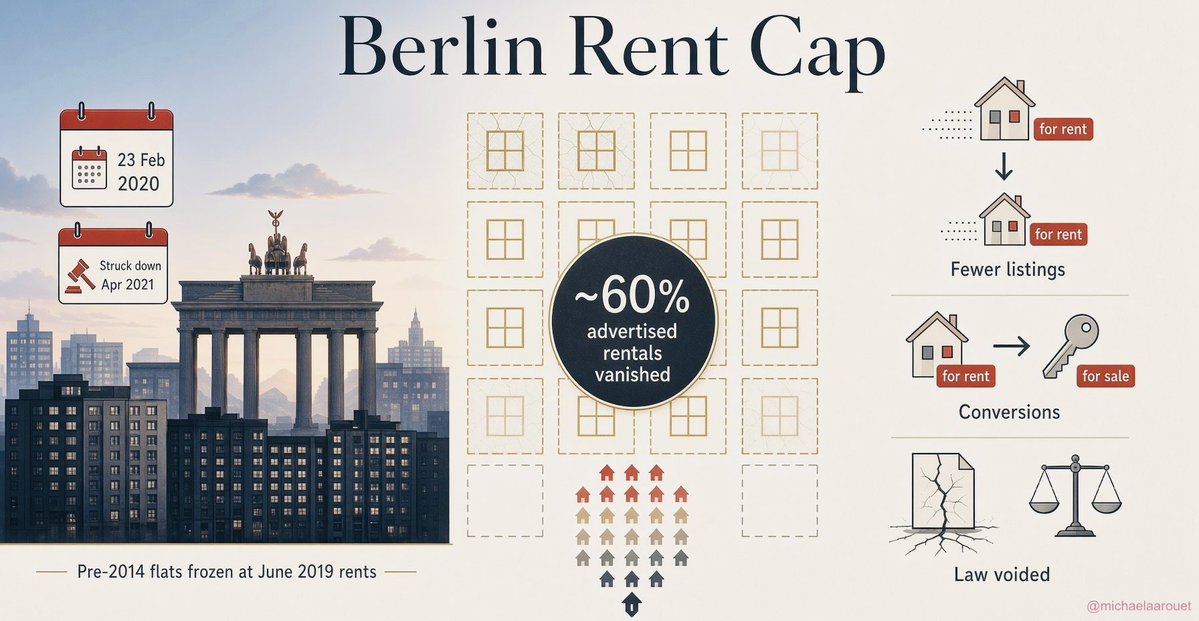
Berlin froze rents in February 2020. A year later, the number of apartments offered for rent had fallen by nearly 60%.
The rent cap froze rents on apartments completed before 2014 at June 2019 levels, and some landlords charging above the limit had to cut rents. The German Institute for Economic Research (DIW) estimates that rents on regulated apartments did fall by about 11%. But the ifo Institute found that rental supply shrank by up to 60%, and DIW's own figure for the drop was 57%.
Lower rents and fewer listings are two sides of the same thing. Landlords did not necessarily leave flats empty. Many sold them instead, turning regulated rentals into homes on the sales market. Cheap apartments became very hard to rent, while rental supply of new, unregulated apartments grew faster than average and demand spilled over into neighbouring Potsdam.
In April 2021, Germany's Federal Constitutional Court ruled that rent regulation is a federal power, so Berlin had no authority to set its own, and the whole law was voided. Follow-up work by ifo found that rental supply did not return to its earlier level after the law was scrapped, while rents started rising again.
The policy protected tenants already living in their flats, while people looking for a home faced fewer choices. Judging rent control means looking at both prices and quantities.
Source: ifo Institute, German Institute for Economic Research (Image: @MichaelAArouet)