【柏林凍漲房租一年,出租廣告少了將近六成 🔑】
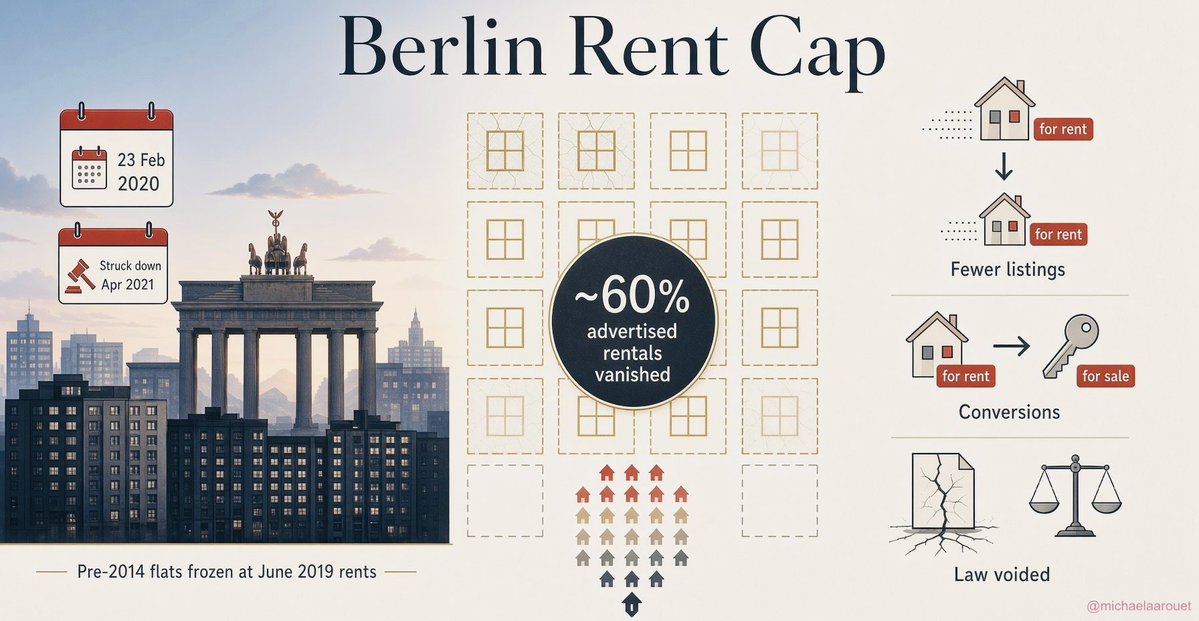
柏林在2020年2月凍結房租,一年後,市場上的出租物件少了將近六成。
這項租金上限規定,讓2014年以前完工的公寓租金凍結在2019年6月的水準,部分超標的還必須調降。德國經濟研究所(DIW)估計,受管制公寓的租金確實降了約11%;但德國ifo經濟研究所統計,出租物件最多少了六成,DIW算出的減幅也有57%。
租金下降和房源變少是同一件事的兩面。房東不一定把房子空著,而是改成出售,讓受管制的出租公寓變成買賣市場的物件。租金便宜的房子因此變得很難租到;不受管制的新公寓出租供給反而增加得比平均快,需求也外溢到鄰近的波茨坦。
2021年4月,德國聯邦憲法法院判定租金管制屬於聯邦權限,柏林無權自訂,整部法律失效。ifo後續追蹤發現,法律取消之後,出租供給並沒有回到原本的水準,租金則重新上漲。
這項政策照顧到已經住在裡面的租客,找房子的人則面對更少的選擇。租金管制的效果,要同時看價格和數量才完整。
資料來源:德國ifo經濟研究所、德國經濟研究所(圖片來自 @MichaelAArouet)
Berlin Froze Rents for a Year, and Rental Listings Fell by Nearly 60%
Berlin froze rents in February 2020. A year later, the number of apartments offered for rent had fallen by nearly 60%.
The rent cap froze rents on apartments completed before 2014 at June 2019 levels, and some landlords charging above the limit had to cut rents. The German Institute for Economic Research (DIW) estimates that rents on regulated apartments did fall by about 11%. But the ifo Institute found that rental supply shrank by up to 60%, and DIW's own figure for the drop was 57%.
Lower rents and fewer listings are two sides of the same thing. Landlords did not necessarily leave flats empty. Many sold them instead, turning regulated rentals into homes on the sales market. Cheap apartments became very hard to rent, while rental supply of new, unregulated apartments grew faster than average and demand spilled over into neighbouring Potsdam.
In April 2021, Germany's Federal Constitutional Court ruled that rent regulation is a federal power, so Berlin had no authority to set its own, and the whole law was voided. Follow-up work by ifo found that rental supply did not return to its earlier level after the law was scrapped, while rents started rising again.
The policy protected tenants already living in their flats, while people looking for a home faced fewer choices. Judging rent control means looking at both prices and quantities.
Source: ifo Institute, German Institute for Economic Research (Image: @MichaelAArouet)