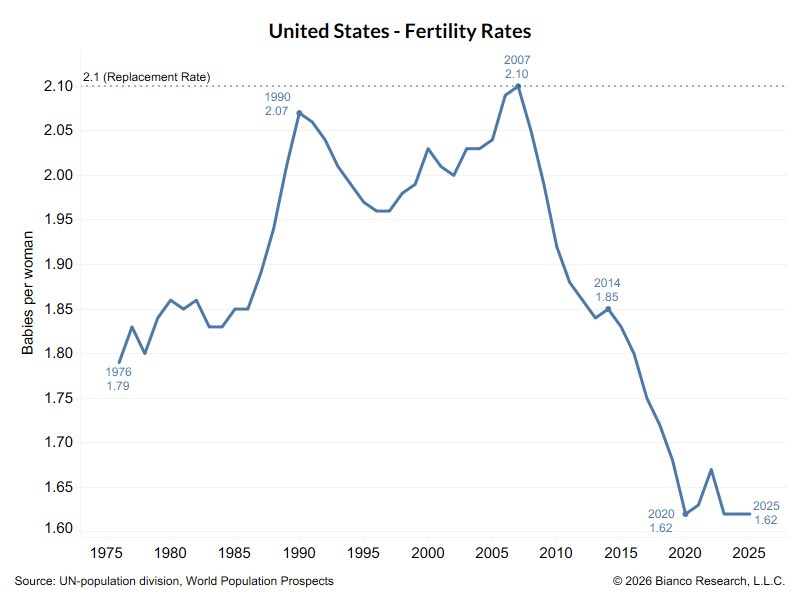
US Fertility Has Fallen From 2.10 to 1.62
The US total fertility rate peaked at 2.10 in 2007, right at the replacement level, and has fallen since to around 1.62. The 1976 reading was 1.79, so it now sits below the low point of fifty years ago.
The two most common explanations do not hold up. The first is that collapsing teen births pulled the number down. Teen birth rates did fall about 72% between 2007 and recent years, but research attributes only somewhere between a tenth and a quarter of the total decline to them. The rest comes from adult women. The second is that women are simply having children later. Birth rates for women in their thirties have not risen to compensate, and what has fallen most is first births, concentrated among women in their early twenties.
What is missing is not a delayed child. It is a first child that does not happen. Those two cases imply very different things for the future workforce and for consumption.
On scale, the recent US general fertility rate is about 23% below 2007, which works out at roughly 700,000 fewer births a year.
The figure deserves some room. The series shown here is a United Nations estimate, which has been roughly flat for five years, while US vital statistics show births reaching another record low in 2025. The two differ in method and in timing, and the official 2025 total fertility rate has not been published.
Source: UN Population Division World Population Prospects, the US National Center for Health Statistics and related academic research (Image: @Hedgeye)