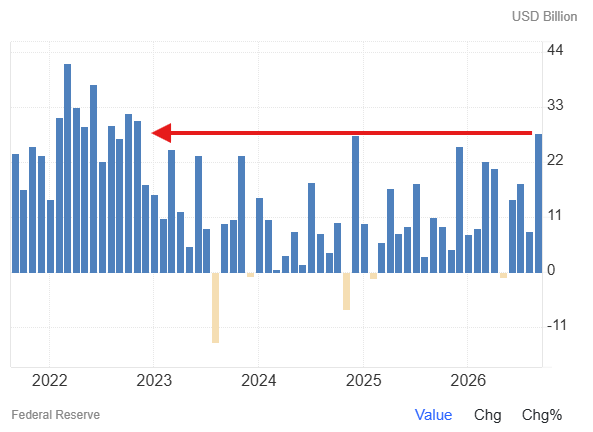
Americans Borrowed $27.8bn More in September, the Most in Four Years
US consumer credit rose $27.8 billion in September, the largest monthly increase since November 2022, against a forecast of about $12 billion. Revolving credit, mostly cards, accounted for $16.3 billion, and non-revolving credit such as car and student loans for $11.5 billion.
In the same month, real disposable income fell and the saving rate dropped to 3.8%, the lowest since October 2022, while consumer prices ran 3.7% above a year earlier. Put those together and the picture is plain: to keep real spending flat, households covered the gap with credit. This is not stronger spending but income failing to keep up with prices, and the borrowing bought no extra goods, only the price increase on the same basket.
What the chart does not show is the rate on that money. Cards that carry interest average around 22%, and the Fed raised rates in September with another increase possible before year-end. The last time borrowing ran this hot, rates were still on their way up. This time they start high.
Monthly figures jump around. The thing to watch is whether the next two months follow.
Source: Federal Reserve consumer credit data (Image: @Hedgeye)