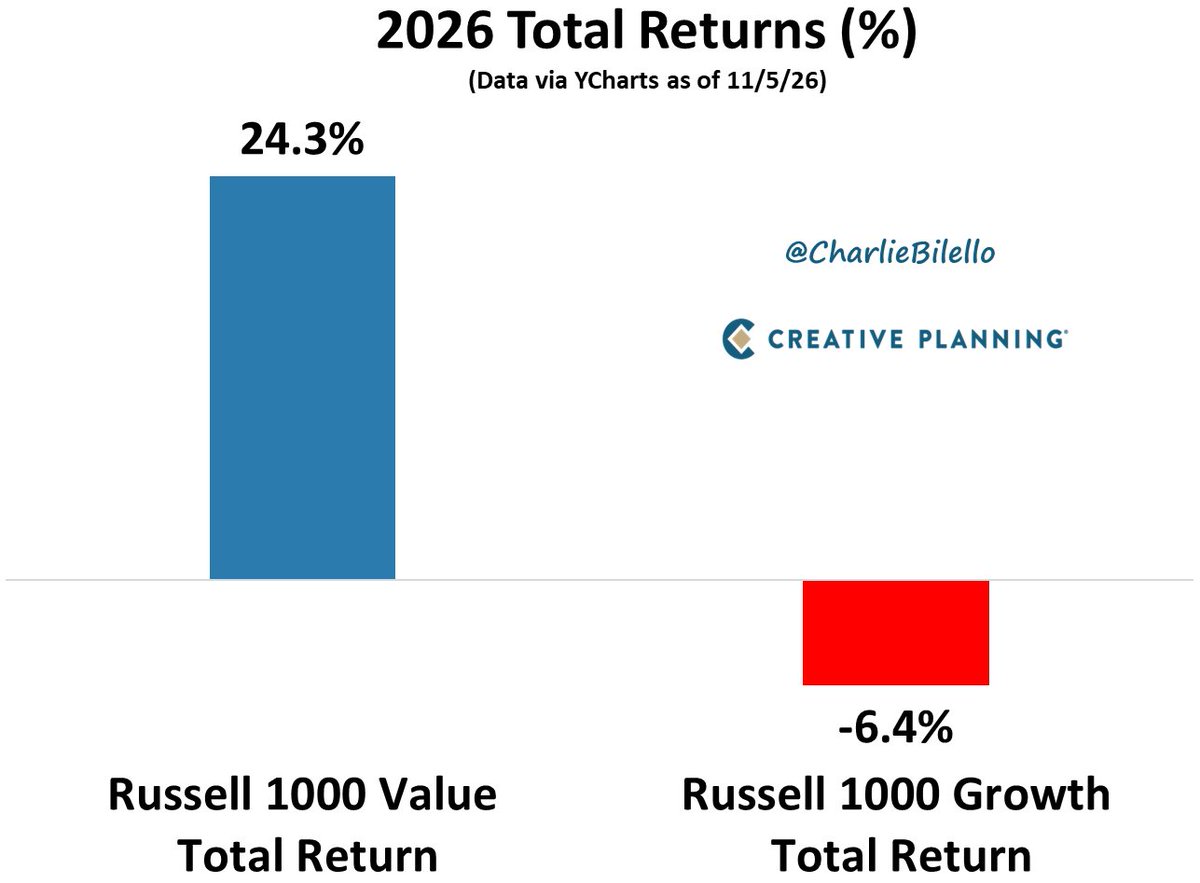
【價值股今年賺 24.3%,成長股賠 6.4% 🔀】
到 11 月 5 日為止,羅素 1000 價值指數今年的總報酬是 24.3%,成長指數是 -6.4%,兩邊差了 30 個百分點以上。
這個差距比 2000 年網路泡沫開始鬆動那一年還大。當年價值領先成長約 27 個百分點,是過去三十幾年的最大值。今年要是就這樣收尾,紀錄會換人。
不過「價值股打敗成長股」這句話,今年其實不太成立,因為這兩個指數已經不是兩群不同的公司。六月的指數成分調整之後,蘋果和微軟同時出現在價值和成長兩邊,價值指數也拿到了更多科技曝險。成長指數那邊則愈來愈集中,少數幾檔就撐起超過半數的權重,而且大多繫在同一條 AI 資料中心的線上。
所以這 30 個百分點比較像一筆高度集中的押注在鬆動,不是風格輪動。價值指數今年贏,很大一部分是因為它裡面的金融、醫療和能源沒有參與那筆押注。
有兩件事會影響最後的數字。年還沒結束,而且指數從今年底開始改成一年調整兩次,所謂的「年度報酬」會橫跨不同的成分名單。
資料來源:YCharts 指數總報酬資料、FTSE Russell 指數成分調整說明與多家機構的指數集中度分析(圖片來自 @charliebilello)
Value Is Beating Growth by Over 30 Points in 2026
Through 5 November, the Russell 1000 Value index has returned 24.3% this year. Growth has returned -6.4%. The gap is more than 30 percentage points.
That is wider than 2000, the year the dot-com bubble began to unwind, when Value led Growth by about 27 points. That had been the widest margin in more than thirty years. If the year ended here, the record would change hands.
The phrase "value is beating growth" does not quite describe what happened, because the two indices are no longer two different sets of companies. After June's index reconstitution, Apple and Microsoft appear in both, and the value index picked up more technology exposure. The growth index has gone the other way and become more concentrated, with a handful of names carrying more than half its weight, most of them tied to the same AI data-centre trade.
So the 30-point gap looks less like a rotation between styles and more like one crowded bet coming loose. Value is winning this year largely because the banks, health-care firms and energy producers inside it were never part of that bet.
Two things will shape the final number. The year is not over, and from the end of this year the index moves to two reconstitutions a year, so the annual return will span different membership lists.
Source: YCharts index total returns, FTSE Russell reconstitution notes and index-concentration analysis from several firms (Image: @charliebilello)