【央行買黃金這件事,其實只有兩個國家在認真做 🪙】
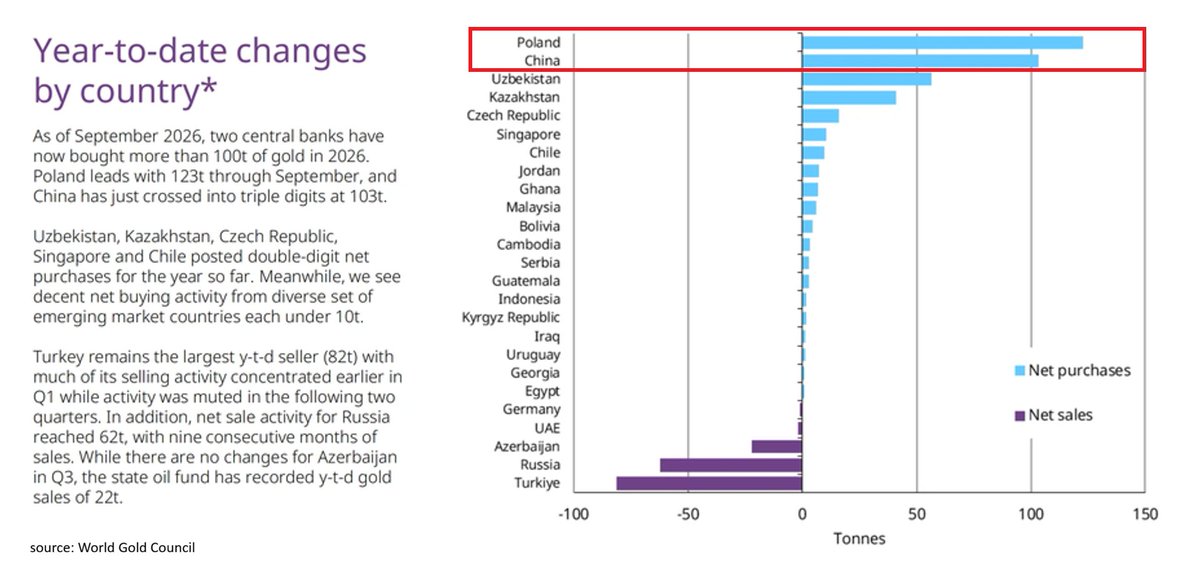
今年到九月為止,波蘭淨買 123 噸、中國淨買 103 噸,是唯二破百噸的國家。接下來是烏茲別克約 57 噸、哈薩克約 40 噸,再往下的新興市場多半在 10 噸以內。
同一張圖的另一端,土耳其淨賣 82 噸、俄羅斯淨賣 62 噸、亞塞拜然約 22 噸。
所以「全球央行搶購黃金」這個說法要修一下。買盤是真的,但高度集中,波蘭和中國兩家就佔了大半,其餘幾十個國家加起來的量不如這兩家。
賣方那邊也不是看空黃金。世界黃金協會自己在這張圖旁邊註明:土耳其的賣出集中在第一季,之後幾乎沒有動作;而亞塞拜然那 22 噸是國家石油基金賣的,不是央行。換句話說,表上有些「央行賣金」其實是別的機構在調整部位,被放進同一張表而已。
把央行當成一個會一起行動的群體來讀這張表,會看錯。真正持續在加碼的只有兩條線,其他多數國家是零星進出。
這類數字各國回報有時間落差,公布後還會往回修,看方向比看小數點合適。
資料來源:世界黃金協會截至 2026 年 9 月的各國央行黃金交易統計與其月度報告(圖片來自 @GlobalMktObserv)
Central Banks Are Buying Gold, but Really Only Two of Them
Through September this year, Poland bought a net 123 tonnes of gold and China 103 tonnes, the only two countries past the hundred-tonne mark. Uzbekistan follows at around 57 tonnes and Kazakhstan at 40, and the emerging markets below them are mostly under 10.
At the other end of the same chart, Turkey sold a net 82 tonnes, Russia 62 and Azerbaijan about 22.
So the line about central banks piling into gold needs an adjustment. The buying is real, but it is concentrated: Poland and China account for most of it, and the several dozen other buyers together add up to less than those two.
The selling is not a bearish view on gold either. The World Gold Council notes alongside this chart that Turkey's sales were concentrated in the first quarter and it has been largely inactive since, and that Azerbaijan's 22 tonnes were sold by the state oil fund rather than the central bank. Some of what reads as central bank selling is another institution adjusting its position, folded into the same table.
Reading this chart as though central banks move as a bloc will mislead you. Only two lines on it represent sustained accumulation. Most of the rest is occasional traffic in both directions.
Reporting lags vary by country and the figures get revised after publication, so the direction is more reliable than the decimals.
Source: World Gold Council central bank gold statistics through September 2026 and its monthly reports (Image: @GlobalMktObserv)