【中東明年預估成長 6.6%,但那不是復甦 ⏳】
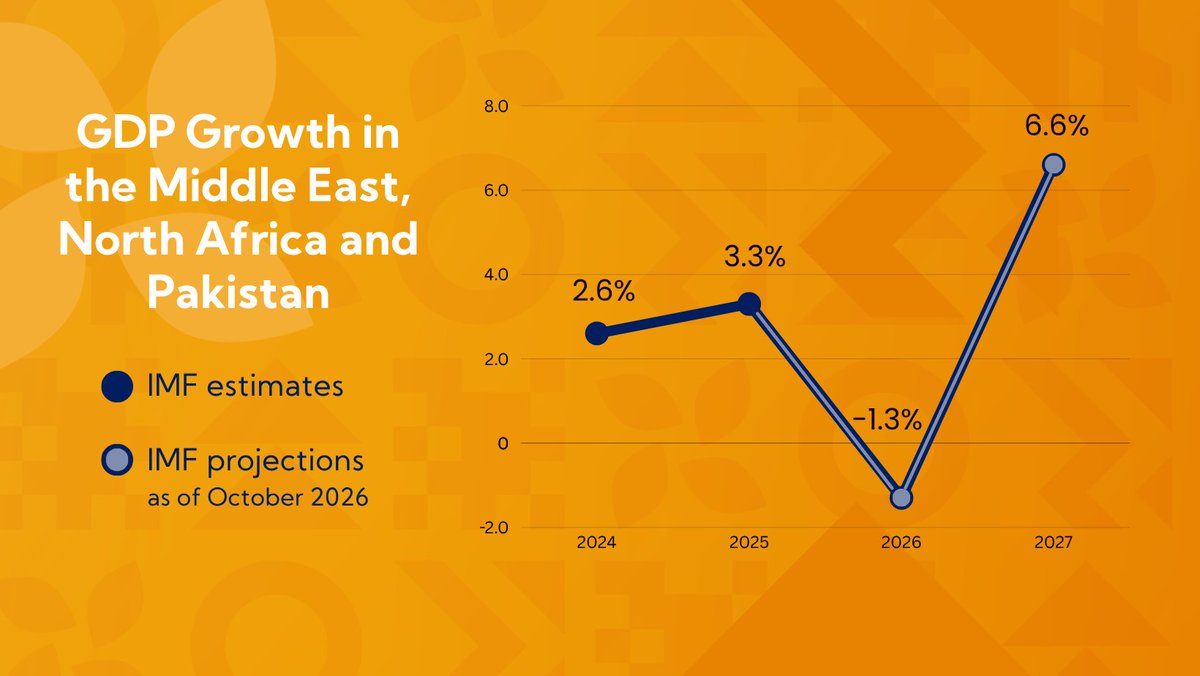
國際貨幣基金十月預估,中東、北非加上巴基斯坦這一區今年 GDP 萎縮 1.3%,明年反彈到 6.6%。圖上那個 V 字很醒目。
把數字接起來算一次,就知道右半邊是什麼。以 2025 年為 100,今年掉到 98.7,明年乘上 1.066 是 105.2。而如果照 2025 年那樣以 3.3% 的速度長兩年,應該要到 106.7。也就是說,反彈完之後,產出仍然低於沒有這場戰爭的路徑。這一點基金組織自己也寫了。
6.6% 還附帶前提,是假設伊朗的戰事緩和。今年這個 -1.3%,比四月那次預估低了將近三個百分點,半年之內改了這麼多,明年那個數字自然也不該當成承諾。
區域內部的差距很大。海灣國家今年多數萎縮,巴林、科威特、卡達和伊拉克的預估是兩位數跌幅,阿曼是少數例外。能源生產、航運、觀光和投資信心被同時打到,所以跌幅才會這麼集中在產油國。
高成長率有時候只是分母變小的結果。V 型的右半邊是算術,不是復原。
資料來源:國際貨幣基金 2026 年 10 月世界經濟展望及其區域預測相關報導(圖片來自 @IMFNews)
The Middle East Is Forecast to Grow 6.6% Next Year, Which Is Not a Recovery
The IMF's October forecast has the Middle East, North Africa and Pakistan contracting 1.3% this year and rebounding to 6.6% next year. The V on the chart is hard to miss.
Work the numbers through and the right-hand side becomes clearer. Index 2025 at 100 and this year falls to 98.7. Multiply by 1.066 and next year reaches 105.2. Growing instead at 2025's 3.3% pace for two years would have reached 106.7. After the rebound, in other words, output is still below the path it would have been on without the war. The fund says as much itself.
The 6.6% also comes with a condition attached: that the fighting involving Iran eases. This year's -1.3% is nearly three percentage points below what was forecast in April. A number that moved that far in six months is not a promise about next year.
The spread within the region is wide. Most Gulf economies contract this year, with Bahrain, Kuwait, Qatar and Iraq projected to post double-digit declines and Oman among the few exceptions. Energy production, shipping, tourism and investment confidence were hit at once, which is why the damage concentrates in the oil producers.
A high growth rate is sometimes just a smaller denominator. The right half of this V is arithmetic, not repair.
Source: IMF World Economic Outlook, October 2026, and coverage of its regional projections (Image: @IMFNews)