【把一桶油運到亞洲,現在要花 49 美元 🚢】
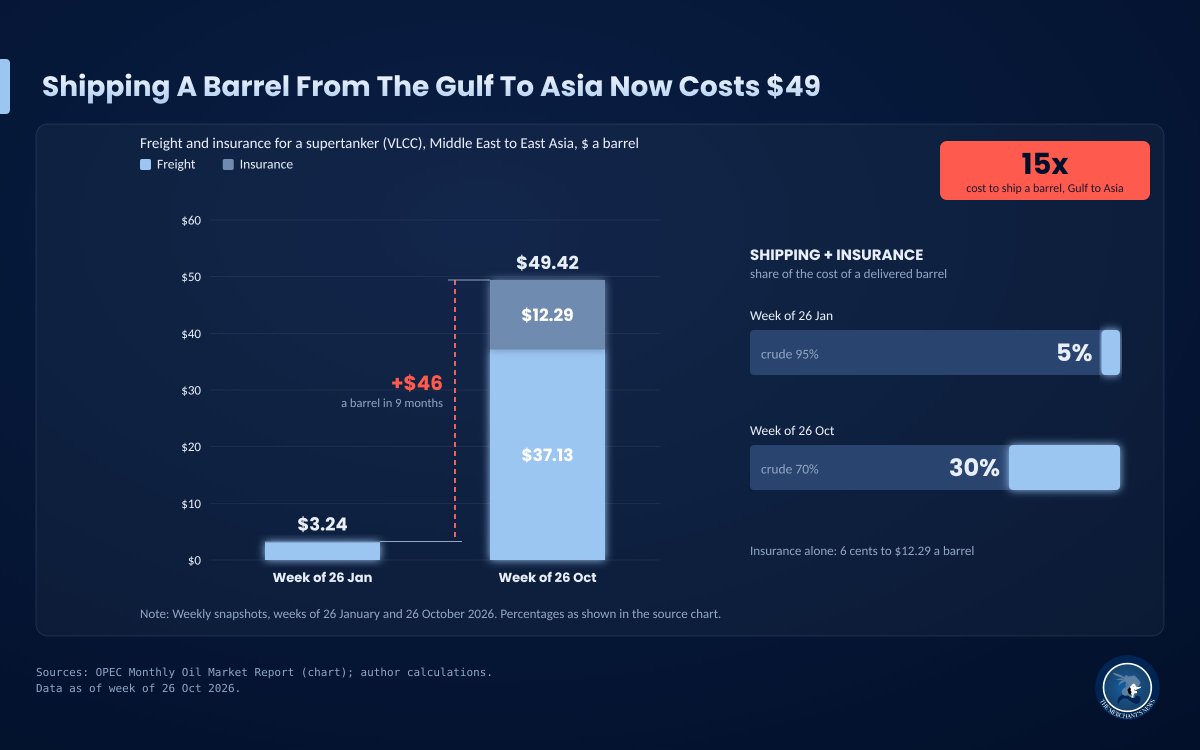
一月的時候,把一桶原油從波斯灣運到東亞要 3.24 美元,十月變成 49.42 美元,九個月漲了十五倍。
漲的不只是運費。拆開來看,純運費從 3.18 美元升到 37.13 美元,戰爭風險保險從六分錢升到 12.29 美元。一月時運送和保險合起來只佔到岸油價的 5%,現在佔 30%。亞洲買家付的錢裡,將近三分之一是為了讓油走完最後那段海路。
這段漲幅跟原油本身的報價是兩回事。保險公司對通過荷姆茲海峽的油輪開出的戰爭險,已經從船體價值的千分之一點多,跳到 6% 到 10%,一趟航程光保費就可能要兩千萬美元。所以會出現一種奇怪的組合:期貨市場的油價在跌,亞洲煉廠實際拿到油的成本卻沒有跟著降。
這筆成本是會回頭的。戰爭險按當下風險重新報價,不是長約;海峽的通行風險一旦緩和,保費和運價會比原油報價更快掉回來。煉廠面對的是一段暫時性的成本,船東拿到的則是一次性的獲利窗口,不是長期的新均衡。
要注意這是單一航線、單週的快照,不是全年平均,不同船型和航線的價差很大。真正該盯的不是油價那條線,是保費。
資料來源:OPEC 月報與作者計算、再保險經紀商的戰爭險報價(圖片來自 @jackprandelli)
Shipping a Barrel to Asia Now Costs $49
In January it cost $3.24 to move a barrel of crude from the Gulf to East Asia. By late October it cost $49.42, fifteen times more in nine months.
Freight alone went from $3.18 to $37.13, and war risk insurance went from six cents to $12.29. Together they were 5% of the delivered cost of a barrel in January. They are now 30%. Close to a third of what an Asian buyer pays is simply the price of getting the oil to port.
That is separate from what crude itself is quoted at. War risk cover for tankers transiting the Strait of Hormuz has gone from roughly a tenth of a percent of hull value to between 6% and 10%, which can mean twenty million dollars for a single voyage. It produces an odd combination: futures prices fall while the cost of a delivered barrel in Asia does not.
This cost can reverse. War risk is repriced against current conditions rather than locked into long contracts, so premiums and freight will fall faster than crude once transit risk eases. Refiners are carrying a temporary cost, and shipowners are collecting a one off window rather than a new equilibrium.
These are weekly snapshots on one route, not an annual average, and rates vary widely by vessel and voyage. The line to watch is not the oil price. It is the premium.
Source: OPEC Monthly Oil Market Report with author calculations, and war risk quotes from reinsurance brokers (Image: @jackprandelli)