【生產線加薪 4.2%,服務業只剩 2.8% 🔧】
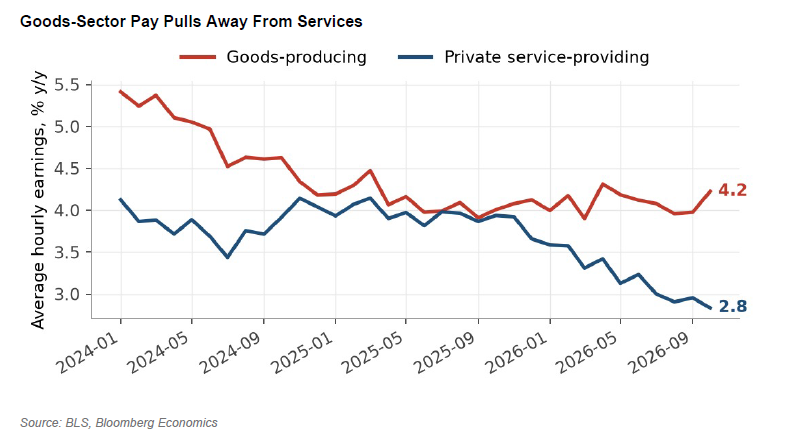
十月的就業報告裡有一條容易被跳過的線。生產商品的部門,也就是製造、營建與礦業,平均時薪年增 4.2%;民間服務業只有 2.8%。兩條線的差距是 2024 年以來最大。
差距拉開,不是因為工廠加薪加得兇,而是服務業的加薪在塌。
把兩年攤開看就很清楚:商品部門這段期間一直在 4% 上下橫著走,真正在動的是服務業,從 2024 年初的 4.1% 一路滑到現在的 2.8%,幾乎沒有回頭過。餐飲、零售、專業服務這些吸納最多人的行業,加薪空間正在收窄。
對整體薪資的影響比看起來小。商品部門只佔民間就業一成多,所以全體平均時薪年增 3.1%,基本上是跟著服務業走。而物價年增 3.7%。換句話說,實質薪水還在往上的,大概只剩工廠和工地這一群人。
十月製造業就業還增加 1.9 萬人,這條線短期內不太像會反轉。至於原因,把它全算到人工智慧頭上要小心:關稅和產線回流也正往同一個方向推,兩者在數據上很難分開。
資料來源:美國勞工統計局(圖片來自 @AnnaEconomist)
Factory Pay Is Rising 4.2% a Year, Services Only 2.8%
One line in the October jobs report is easy to skip past. Average hourly earnings in the goods-producing sector, meaning manufacturing, construction and mining, are up 4.2% from a year ago. Private services are up 2.8%. The gap is the widest since 2024.
It widened because services pay is sagging, not because factories are bidding wages up.
Lay the two years out and it is clear. Goods-sector pay has tracked sideways around 4% the whole time. Services is the line that moved, sliding from 4.1% in early 2024 to 2.8% now with barely a pause. The industries that employ the most people, from restaurants to retail to professional services, are running out of room to raise pay.
The effect on overall wages is smaller than it looks. Goods production is only a little over a tenth of private employment, so the all-employee average of 3.1% essentially follows services. Prices are up 3.7%. On that arithmetic, the workers still gaining in real terms are on factory floors and building sites.
Manufacturing added 19,000 jobs in October, so this is unlikely to flip soon. On the cause, be careful about crediting AI alone: tariffs and reshoring push the same way, and the data cannot easily separate them.
Source: US Bureau of Labor Statistics (Image: @AnnaEconomist)