【同一份調查,共和黨 80.9 民主黨 35.9 🗳】
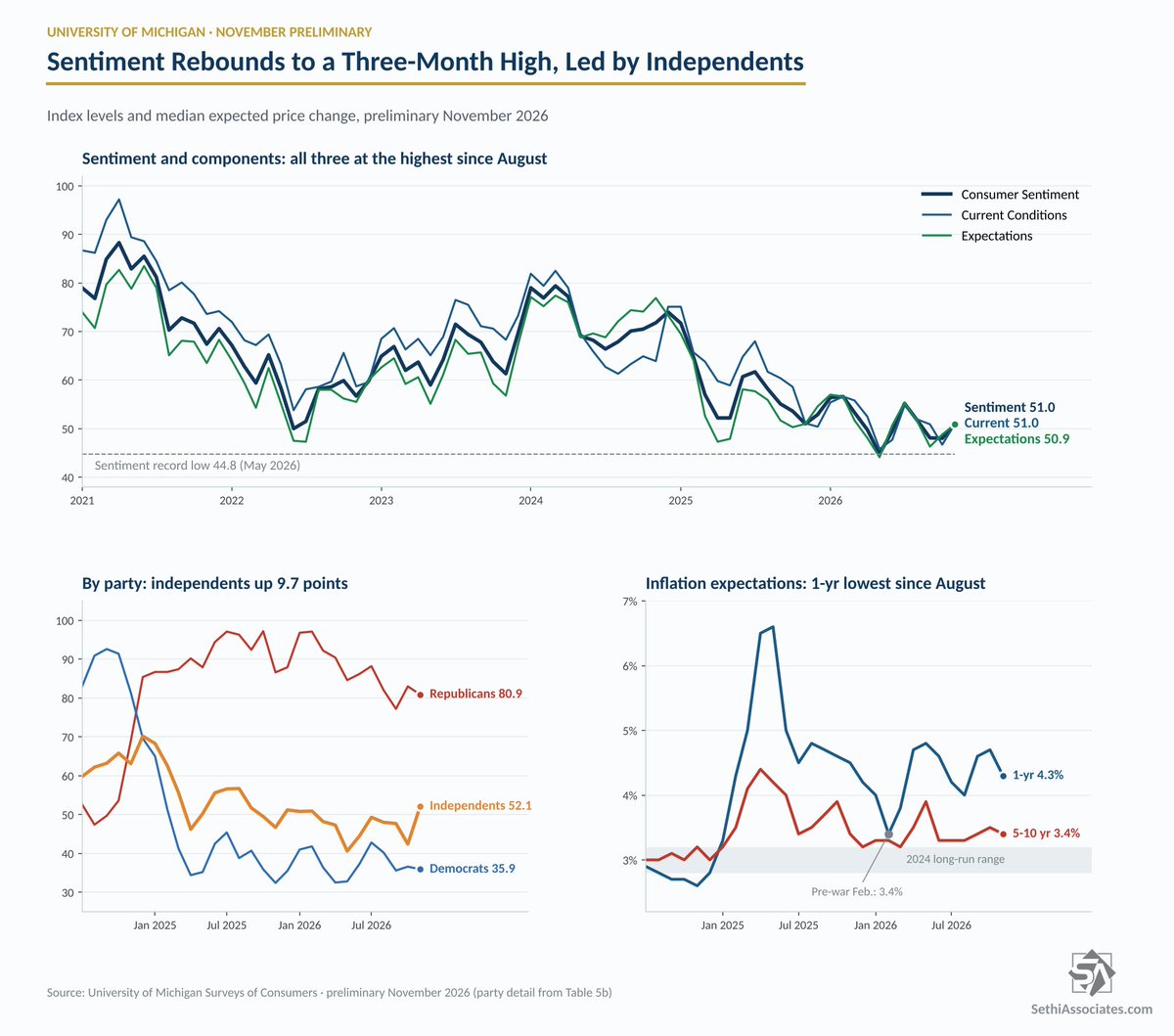
密西根大學十一月消費者信心初值 51.0,高於十月的 48.0,是三個月來最高。同一份調查按政黨拆開:共和黨 80.9,獨立選民 52.1,民主黨 35.9。
兩黨之間差了 45 分。這個指數有紀錄以來的最低點是今年五月的 44.8,也就是說,光是政黨立場造成的落差,就比整個指數從歷史低點走到今天的距離還大。
圖左邊可以看到 2025 年初兩條線交叉換位,誰執政、誰的分數就翻上去。一份原本用來量景氣的調查,現在有很大一部分在量受訪者投給誰。
這次回升是獨立選民推上去的,單月加了 9.7 分。另外兩個細節比總數有用:持股最多的那一群,信心反而掉了約 5%;而整份調查在這週股市回檔之前就收卷了。
通膨預期那格比較有訊息量。一年期從上個月的 4.7% 降到 4.3%,但 5 到 10 年期停在 3.4%,仍高於 2024 年那條長期區間。短期的物價痛感在退,長期的那把尺還沒回去。
資料來源:密西根大學消費者調查(圖片來自 @neilsethinew)
Same Survey: Republicans at 80.9, Democrats at 35.9
The University of Michigan's preliminary November consumer sentiment reading came in at 51.0, up from 48.0 in October and the highest in three months. Split by party, the same survey shows Republicans at 80.9, independents at 52.1 and Democrats at 35.9.
That is a 45-point gap between the two parties. The index's record low, set in May this year, was 44.8. The distance created by political affiliation alone is larger than the distance from the all-time low to today's level.
On the left of the chart the two lines cross in early 2025, with whichever party holds the White House jumping to the top. A survey built to measure the economy now spends much of its range measuring who respondents voted for.
This month's rebound came from independents, up 9.7 points. Two details matter more than the headline: sentiment fell about 5% among the largest stockholders, and the survey closed before this week's drop in equities.
The inflation panel carries more signal. One-year expectations eased from 4.7% to 4.3%, while the five-to-ten-year measure sits at 3.4%, still above its 2024 range. Near-term price pain is fading; the long-run anchor has not reset.
Source: University of Michigan Surveys of Consumers (Image: @neilsethinew)