【電網多塞 12 倍用電的條件,是願意被斷電 ⚡】
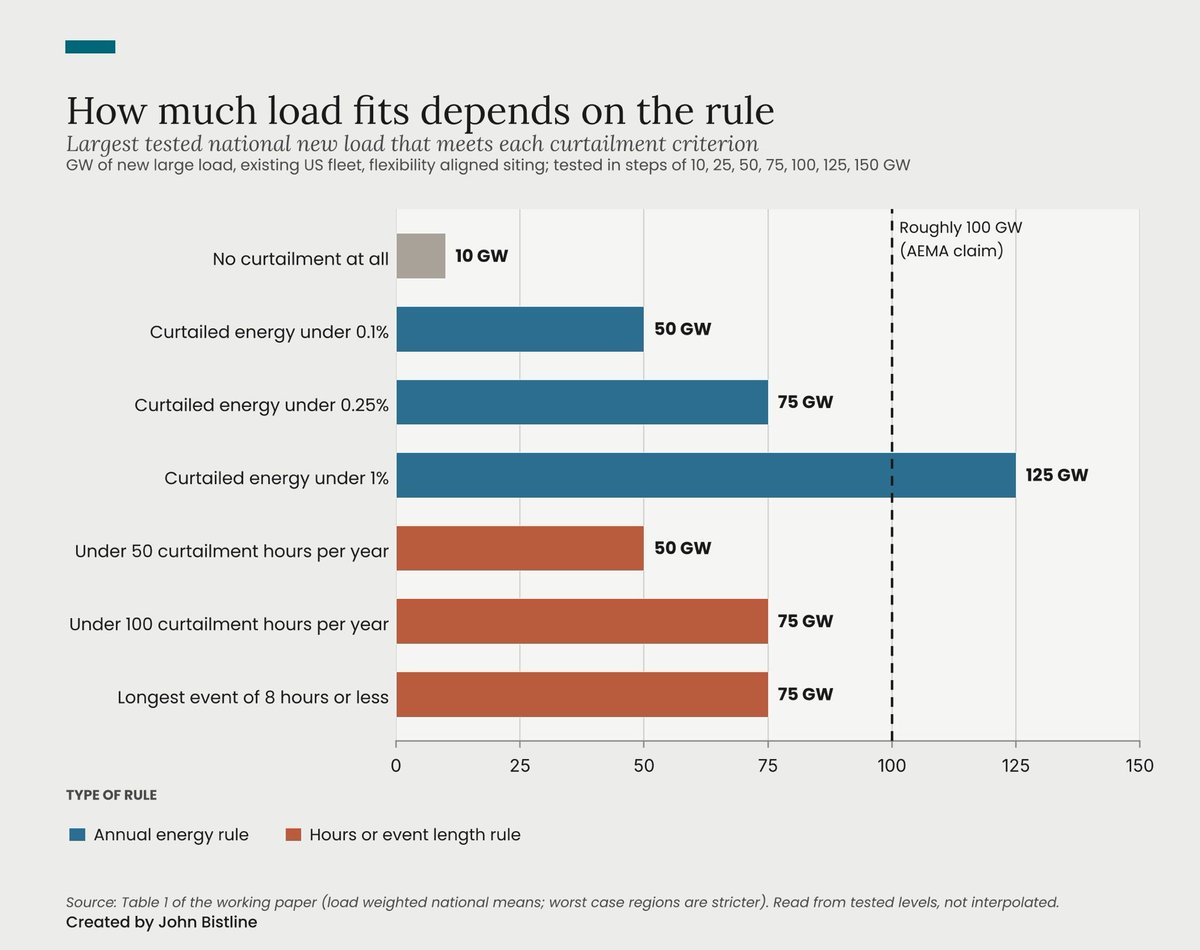
美國現有電網還能接多少新的大型用電戶,答案幾乎完全取決於規則怎麼寫。如果新用戶一度電都不能被切,全國只能再塞 10 GW。如果願意接受一年被切掉 1% 的用電量,可以塞進 125 GW。
中間那 115 GW 不是蓋電廠蓋出來的,是一紙願意被斷電的同意書換來的。
關鍵在於,1% 的「用電量」不等於 1% 的「時間」。被切的那幾十個小時,一定落在一年當中最熱、電最貴、系統最吃緊的那幾天。所以資料中心需要的不是省電,而是在全年最關鍵的那些小時裡靠自己撐住,這筆成本會落在發電機、儲能和調度合約上。
同一份研究換個寫法就看得出代價:規則改成「一年最多斷 50 小時」,可接的量只剩 50 GW;改成「單次最長 8 小時」,是 75 GW。限制時間比限制總量貴得多,因為停機的痛苦跟長度不成比例。
這些數字是用 10、25、50、75、100、125、150 幾個級距試出來的,不是連續推算,所以 125 要讀成「這個級距過得了」,不是精準上限。業界喊的 100 GW 並沒有錯,只是建立在最寬鬆的那條規則上。
資料來源:美國電網彈性併網研究工作底稿(圖片來自 @JEBistline)
The Grid Fits 12 Times More Load, If You Agree to Be Switched Off
How much new large load the existing US grid can take depends almost entirely on how the rule is written. If a new user can never be curtailed, the country fits 10 GW. If it accepts losing 1% of its annual energy, it fits 125 GW.
Those 115 GW in between come from a signed agreement to be interrupted, not from new power plants.
The catch is that 1% of energy is not 1% of the time. The curtailed hours land on the hottest, tightest, most expensive days of the year. So a data centre does not need to use less power; it needs to carry itself through the few hours that matter most, and that cost shows up in generators, storage and dispatch contracts.
Rewrite the rule and the price becomes visible. Cap curtailment at 50 hours a year and the grid fits 50 GW. Cap any single event at 8 hours and it fits 75 GW. Limiting time costs far more than limiting volume, because the pain of an outage does not scale with its length.
These figures come from tested steps rather than a smooth curve, so 125 means that level passed, not a precise ceiling. The industry's 100 GW claim is not wrong, but it assumes the loosest rule.
Source: working paper on flexible interconnection for the US grid (Image: @JEBistline)