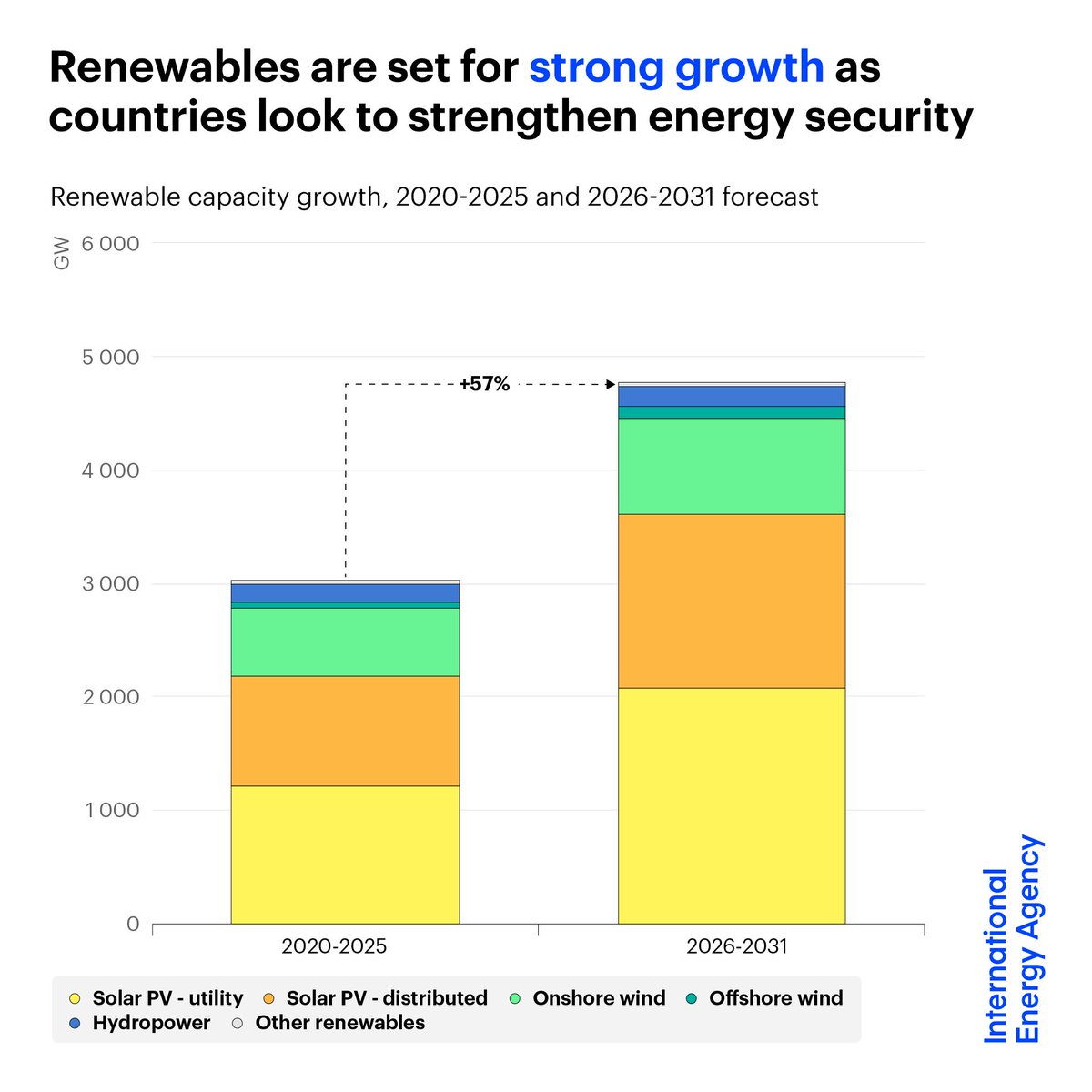
【未來六年再生能源新增量,多出 57% ☀️】
國際能源總署最新預測,2026 到 2031 年全球再生能源新增裝置容量約 4,770 GW,比 2020 到 2025 那六年多出 57%。其中太陽光電佔四分之三以上。
這個 57% 是六年比六年,而起跑點是一個往下走的年份:2026 年當年的新增量預估只有 733 GW,比 2025 年掉 11%。主因在中國,前九個月的太陽光電安裝量年減將近五成五,補貼與電價機制改版讓搶裝潮停了下來。所以這張圖講的是先蹲再跳,不是一路往上,而第一年的坑要先填完。
結構也在換。中國佔全球新增的比重,會從 2025 年的六成以上降到這六年的 53% 左右;印度補上空缺,成為第二大成長市場;歐洲六年加起來大約 100 GW,和 2025 年的水準差不多,等於原地踏步。
驅動力同樣換了人。這份報告把加速的理由放在能源安全,不是氣候目標。對投資而言,這代表政策風險的來源從環保承諾移到了貿易與電網,而後者通常更難預測,也更快變。
資料來源:國際能源總署《再生能源 2026》報告(圖片來自 @IEA)
The Next Six Years of Renewables Will Add 57% More Than the Last Six
The International Energy Agency's latest forecast puts global renewable capacity additions at about 4,770 GW for 2026 to 2031, some 57% more than the six years from 2020 to 2025. Solar accounts for more than three-quarters of it.
That 57% compares six years with six years, and the starting line is a year that goes down: additions in 2026 itself are forecast at 733 GW, an 11% fall from 2025. China is the reason: solar installations there dropped nearly 55% in the first nine months as subsidy and pricing reforms ended the rush to connect. So the chart describes a dip before the climb, and the first year's hole has to be filled first.
The structure is shifting too. China's share of global growth falls from over 60% in 2025 to roughly 53% across the period. India takes up the slack as the second-largest growth market. Europe adds about 100 GW over the whole six years, near its 2025 pace, which amounts to standing still.
The driver has changed as well. The report credits energy security rather than climate targets. That moves the policy risk from environmental commitments to trade and grid connections, which tend to be harder to forecast and quicker to change.
Source: International Energy Agency, Renewables 2026 (Image: @IEA)