【德國的核電歸零那年,中國扛起全球所有的新增】⚛️
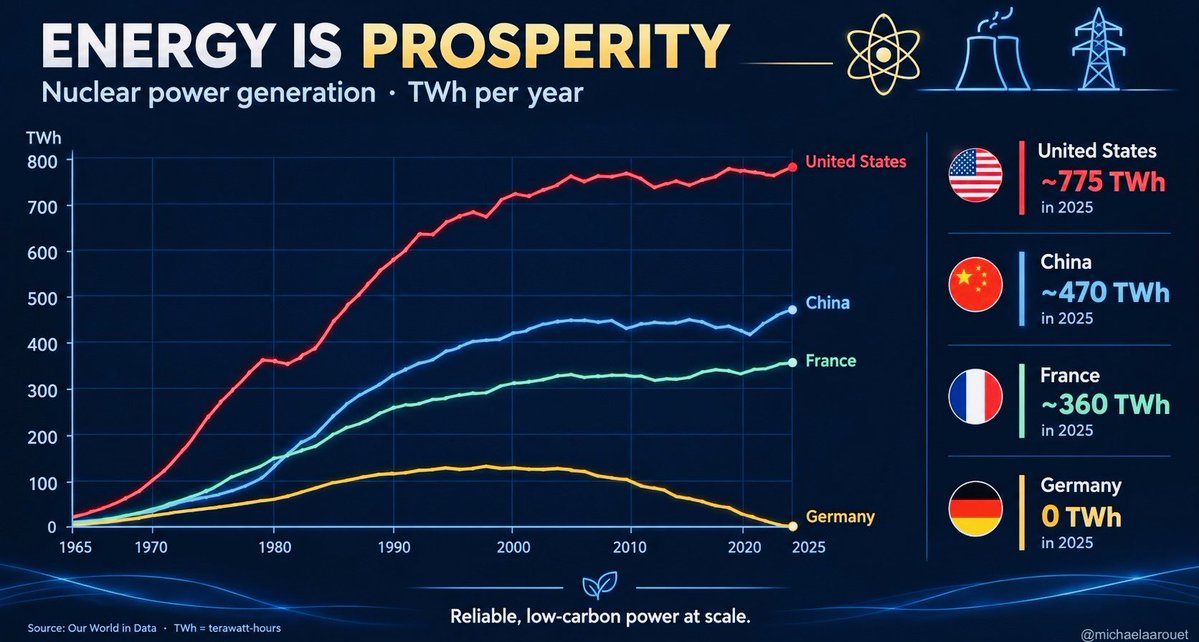
四條線講四種國家。美國仍然是全世界最大的核電生產國,法國一直穩在第三,德國在完成廢核之後正式落到零,而中國是唯一還在往上走的。
有意思的是美國那條線的形狀。它在 1990 年前後就爬到今天的高度,之後三十幾年幾乎是平的。這段期間美國新蓋的機組屈指可數,發電量卻沒有掉下來。
■ 沒有新機組,電是從哪裡多出來的
答案是舊機組被操得更勤。核電廠的成本幾乎都是蓋的時候就付掉了,多發一度電的額外成本很低,所以美國過去三十年的重點不是蓋新的,是把大修時間壓短、把既有機組的功率往上提。這條平線不是停滯,是一座 1990 年以前蓋好的電廠群,把運轉效率榨到接近上限。
中國走的是另一條路。它十年前的核電規模還只有美國的四分之一左右,現在全球核電的淨增長幾乎全部來自這一個國家。
另外提醒一下,不同資料庫對同一年的發電量統計會差上幾十個單位,看趨勢比看單一數字可靠。
資料來源: 核電發電量歷史統計資料庫 (圖片來自 @MichaelAArouet)
The Year Germany's Nuclear Output Hit Zero, China Supplied All the World's Growth
Four lines, four kinds of country. The United States is still the world's largest producer of nuclear power. France sits steadily in third. Germany has dropped to zero after completing its phase-out. And China is the only one still climbing.
The interesting shape is the American line. It reached roughly today's level around 1990 and has been close to flat for more than thirty years since. Over that period the US built barely any new reactors, yet output never fell away.
■ With no new reactors, where did the electricity come from
Older plants simply run harder. Almost all the cost of a nuclear plant is paid when it is built, and the extra cost of generating one more unit of electricity is very low. So for three decades the American effort went into shortening refuelling outages and uprating existing reactors rather than pouring concrete. That flat line is not stagnation. It is a fleet finished before 1990 being squeezed close to its practical limit.
China took the other route. A decade ago its nuclear output was around a quarter of the American total, and today essentially all of the net growth in global nuclear generation comes from this one country.
One caution: different databases differ by tens of units for the same year, so the trend is more reliable than any single figure.
Source: Historical statistics on nuclear electricity generation (Image: @MichaelAArouet)