【記憶體報價要跌掉九成,三星才會開始虧現金】💾
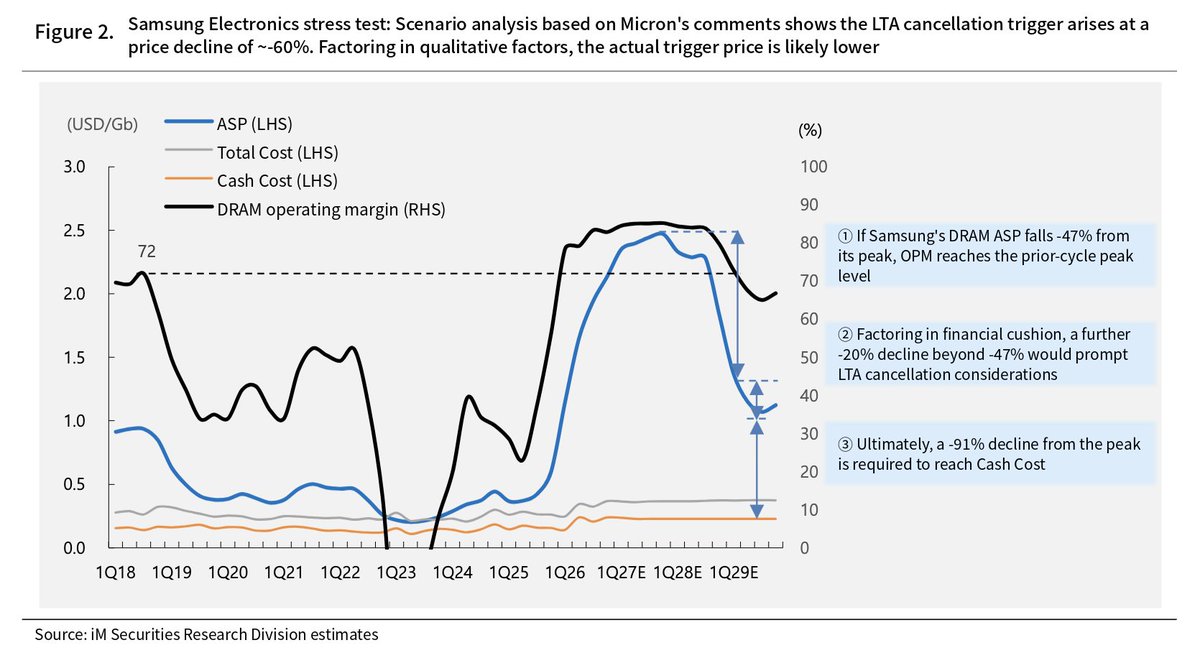
這張圖不是在記錄已經發生的事。它是一份券商做的壓力測試,問的是:記憶體報價從現在的高點往下掉,要掉多少才會真的痛。
答案分三層。跌 47%,三星的記憶體營益率只是回到上一輪景氣高點的水準。再往下 20 個百分點,也就是從高點算起約六成,長期供貨合約才會開始被拿出來重談。要讓報價跌到現金成本,得從高點砍掉 91%。
■ 中間那一層才是這輪的新東西
過去記憶體是按季報價,價格垮了就直接反映在下一季的帳上。今年大型買家和供應商改簽三到五年的長約,裡面寫了價格下限,也寫了買方不買也得付錢的條款。價格的第一段下跌會先被合約吃掉,所以真正的壓力點不在跌幅本身,在合約什麼時候撐不住。
但合約軟化景氣循環,不等於取消它。產業裡的人也說得很直白:長約只能讓波動變小,不會讓波動消失。
另外,圖上 2027 年之後那一段是分析師模型跑出來的,不是市場報價。
資料來源: 券商的記憶體壓力測試報告 (圖片來自 @pequityresearch)
Memory Prices Would Have to Fall 91% Before Samsung Burns Cash
This chart is not a record of what has happened. It is a broker's stress test, asking how far memory prices would have to fall from today's highs before the pain becomes real.
The answer comes in three layers. A 47% drop only returns Samsung's memory operating margin to the peak of the previous cycle. Another 20 percentage points below that, roughly 60% down from the top, is where long-term supply agreements start being renegotiated. To push prices all the way to cash cost takes a fall of 91% from the peak.
■ The middle layer is what is new this cycle
Memory used to be priced quarterly, so a collapse showed up in the next quarter's accounts. This year large buyers and suppliers moved to three- and five-year contracts with price floors and take-or-pay clauses. The first leg of any decline gets absorbed by those contracts, which means the pressure point is not the size of the fall but the moment the contracts stop holding.
Softening the cycle is not the same as ending it. People in the industry put it plainly: long-term deals make the swings smaller, they do not remove them.
Note also that everything on the chart after 2027 is a modelled scenario, not a market quote.
Source: Broker stress-test analysis on memory pricing (Image: @pequityresearch)