【請領失業金創 57 年新低,招人卻沒跟著回來】🧾
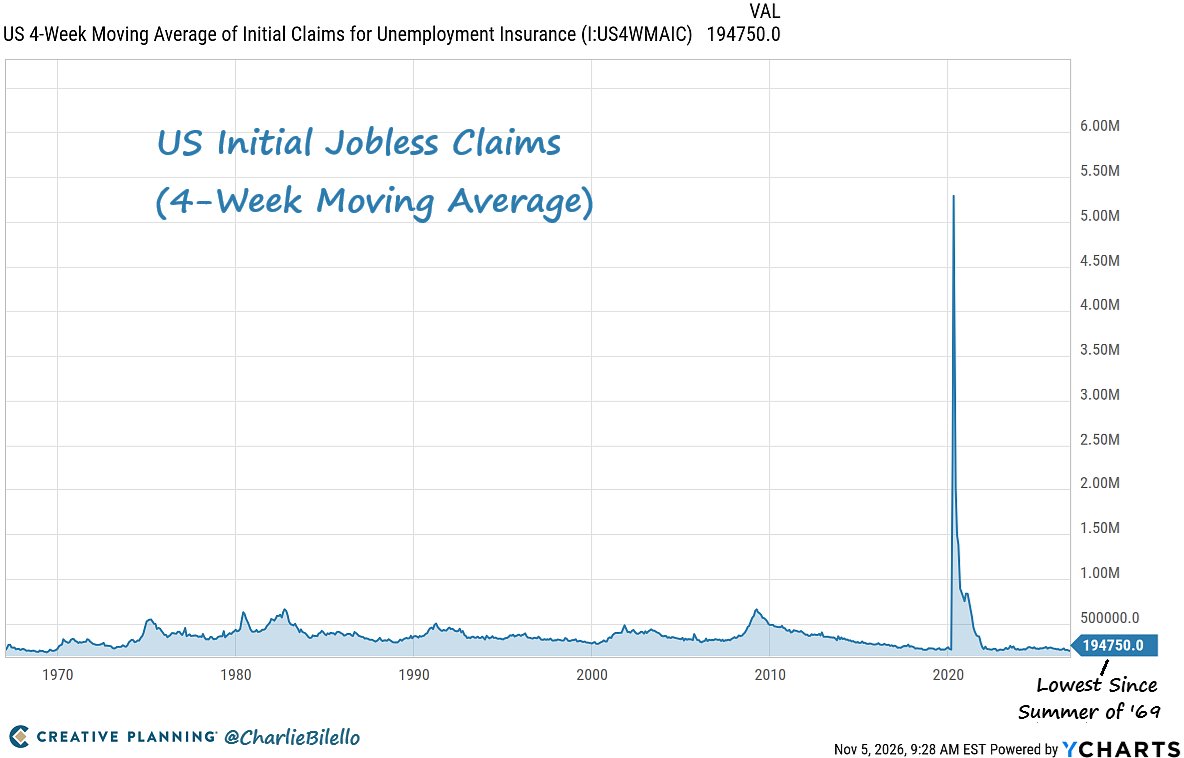
美國上週初次請領失業救濟的人數是 18.9 萬,四週平均降到 19.5 萬,要回到 1969 年夏天才找得到更低的數字。這個數字已經連續八週待在 20 萬以下。
而且實際上比看起來更低。1969 年美國的勞動力大約 8,000 萬人,現在超過 1.7 億。同樣的件數攤到兩倍大的就業人口上,比例只剩當年的一半。
■ 這個指標只量一件事:有沒有人被裁掉
請領失業金的前提是先失去工作。所以它測得出企業有沒有在裁員,測不出企業有沒有在請人。一個公司可以同時做到不裁舊人、也不開新缺,在這張圖上看起來會跟景氣很好一模一樣。
對照其他數據就看得出落差:美國的就業人數年增率已經趨近於零,裁員也確實少。這是一個低解雇、低招募的市場,兩邊同時凍住。
對現在有工作的人,這是好消息。對正在找工作的人,這張圖幾乎什麼都沒說。
資料來源: 美國勞工部 (圖片來自 @charliebilello)
Jobless Claims Hit a 57-Year Low While Hiring Stays Frozen
Initial US jobless claims came in at 189,000 last week and the four-week average fell to 194,750. You have to go back to the summer of 1969 to find a lower reading. Claims have now stayed at or below 200,000 for eight straight weeks.
The number is even lower than it looks. The US labour force was around 80 million in 1969 and is above 170 million today. The same count of claims spread over twice as many workers is half the rate it used to be.
■ This series measures one thing: whether people are being let go
You can only file a claim after losing a job. So claims capture whether companies are cutting, not whether they are hiring. A firm that keeps its staff and opens no new roles looks exactly like a booming economy on this chart.
Other data fills the gap. US employment growth has slowed to roughly zero while layoffs really are scarce. This is a low-firing, low-hiring market, frozen on both sides.
For people who already have a job, that is good news. For people looking for one, this chart says almost nothing.
Source: US Department of Labor (Image: @charliebilello)