【擠在同一批股票裡的代價,單月 10.8%】🧲
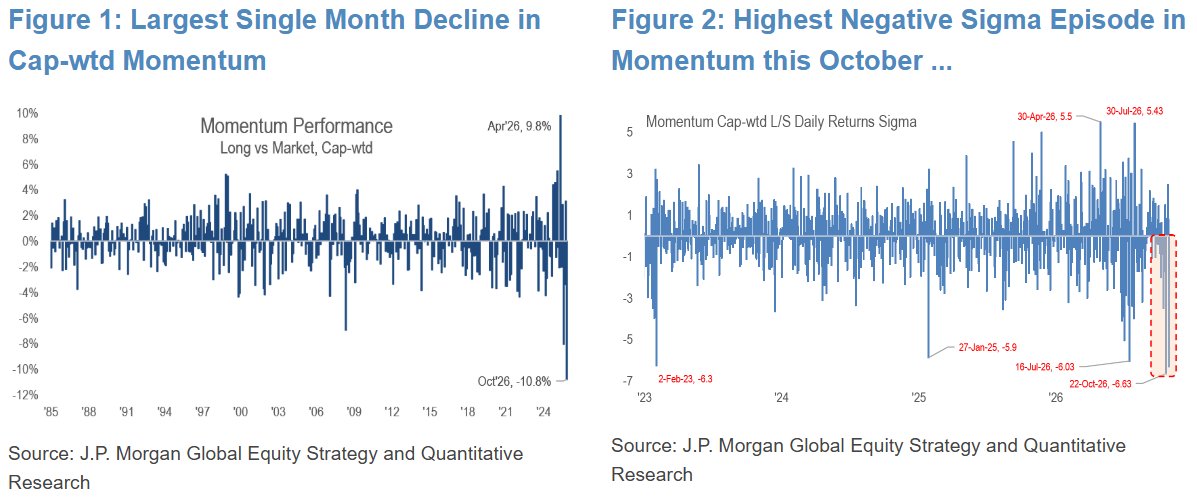
10 月,一個追蹤「最近漲最多的那批股票」的組合單月下跌 10.8%,是這份資料自 1985 年開始統計以來最深的一個月。10 月 22 日單日的波動更極端,相當於六個半標準差。
動能不是一種產業,也不是一類公司。它是一條規則:買最近表現最好的那些股票。問題在於,用這條規則的人太多,大家手上會長得一模一樣。
■ 一起進場的,也會一起找不到出口
當部位高度重疊,賣壓就沒有自然的買方。想減碼的人要賣給誰?只能賣給同一群也想減碼的人。所以大盤跌 3% 到 4% 的那幾天,這個組合可以跌掉兩三倍。跌幅不是在反映基本面變差,是在反映出口太窄。
圖上還有另一個數字值得一起看:今年 4 月,同一個組合單月上漲 9.8%。一來一回,這一年多累積的超額報酬大致被還了回去。這比較像擁擠度的來回,不是單向的崩塌。
這條曲線用的是一家投資銀行自己的算法。換一家機構、換一種加權方式,數字會不一樣,但擁擠的那一面不會變。
資料來源: 投資銀行的全球股票策略與量化研究 (圖片來自 @BlakeMillardCFA)
The Price of Crowding Into the Same Stocks: 10.8% in One Month
In October a portfolio tracking the stocks that had gone up the most fell 10.8%, the worst month in a series that starts in 1985. The single-day move on 22 October was more extreme still, worth about six and a half standard deviations.
Momentum is not an industry or a type of company. It is a rule: buy whatever has performed best recently. The trouble is that so many investors follow the rule that their holdings end up looking identical.
■ Everyone who arrives together also leaves together
When positions overlap this heavily, selling pressure has no natural buyer. Who do you sell to? Only to the same crowd that also wants out. So on days when the broad market fell three or four percent, this portfolio could fall two or three times as much. The drop is not pricing in worse fundamentals. It is pricing in a narrow exit.
The chart holds one more number worth reading alongside it. In April this year the same portfolio gained 9.8% in a single month. Round trip, most of the excess return built up over the past year and a half has been handed back. This looks more like crowding moving in and out than a one-way collapse.
The line uses one investment bank's own construction. A different provider or weighting gives a different figure, but not a different story about crowding.
Source: Global equity strategy and quantitative research at an investment bank (Image: @BlakeMillardCFA)