【科技股的溢價不見了,但便宜是分析師算出來的】🧮
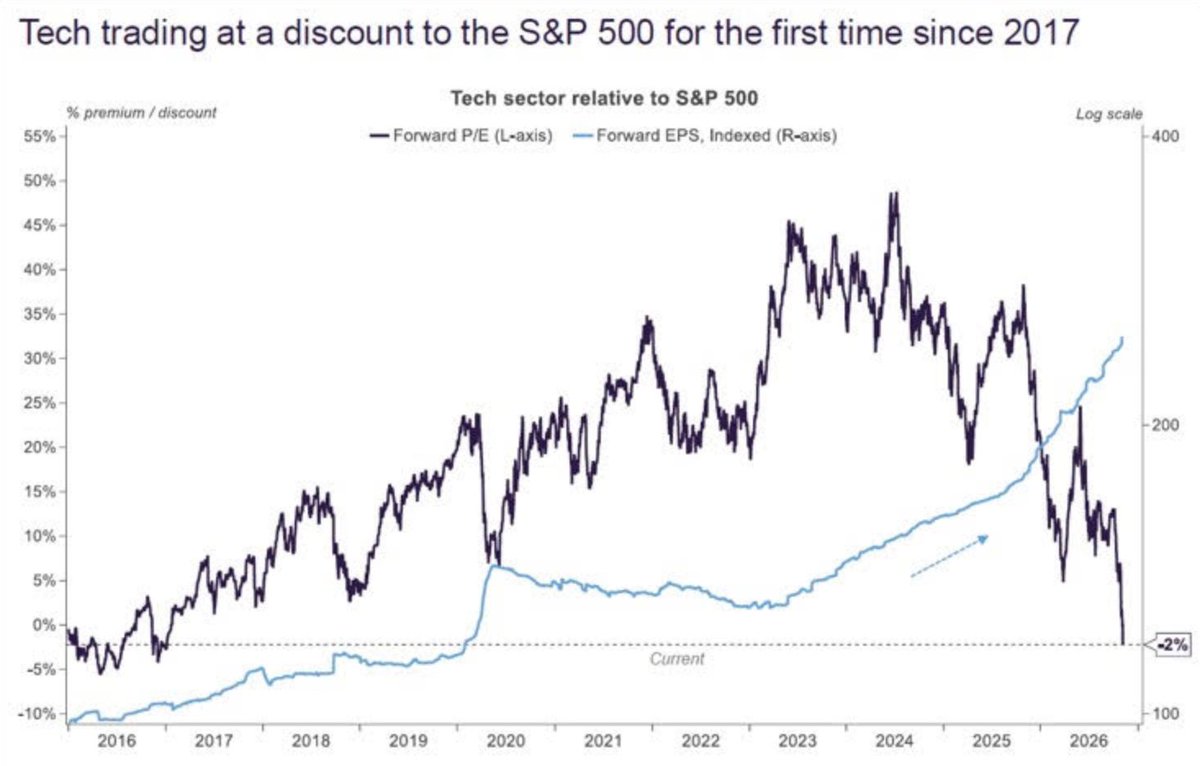
兩年前,美國科技類股的預估本益比比大盤貴將近五成。這兩天,有些機構的算法已經把它壓到比大盤低一點點,是 2017 年以來第一次。
折價是兩件事同時發生的結果,而只有一件是股價造成的。
分子那邊,科技股從高點一路被賣下來。分母那邊,分析師還在往上調科技公司的預估獲利,圖上那條淺色線這幾個月仍在創新高。股價跌、預估獲利升,比值自然掉得特別快。
問題就在分母。預估獲利是分析師對未來一年的猜測,不是已經入帳的錢。這一輪的預估裡,有很大一塊建立在人工智慧的資本支出會繼續擴張。如果這個假設被下修,分母縮水,現在看到的便宜會自己消失,股價一毛都不用再動。
不同機構算出來的數字也不一樣,有的顯示小幅折價,有的顯示還有幾個百分點的溢價。能確定的是溢價已經被壓掉大半,不是它正好跨過了零。
資料來源: 多家機構的預估本益比統計 (圖片來自 @BrianSozzi)
Tech's Valuation Premium Has Gone, but the Discount Is an Analyst Estimate
Two years ago the US technology sector traded at a forward price-to-earnings ratio almost 50% above the broad market. This week some measures put it slightly below the market, the first time since 2017.
That discount is the result of two things happening at once, and only one of them is the share price.
In the numerator, tech shares have been sold down hard from their highs. In the denominator, analysts are still raising their profit forecasts for these companies. The pale line on the chart has kept making new highs through the selloff. Falling prices and rising estimates push the ratio down quickly.
The denominator is the weak point. Forward earnings are a guess about the next twelve months, not money already booked, and a large part of this cycle's estimates assumes that spending on artificial intelligence keeps expanding. Cut that assumption and the cheapness disappears on its own, without the share price moving at all.
Providers also disagree. Some show a small discount, others still show a premium of a few percentage points. What is clear is that most of the premium has been squeezed out, not that it has precisely crossed zero.
Source: Forward P/E estimates from several research providers (Image: @BrianSozzi)