【蘋果一年花 864 億美元買回股票,股數只少 1.6%】🍎
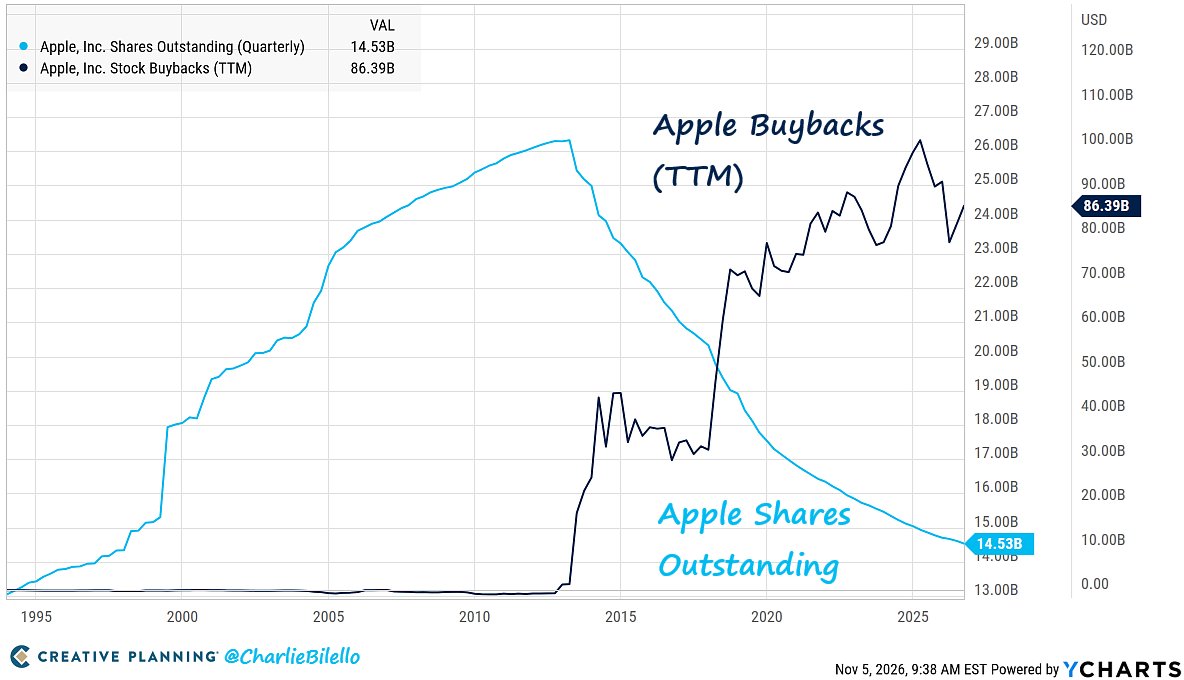
蘋果的流通股數現在是 145.3 億股。2013 年前後的高點是 262 億股左右,十三年縮水超過四成。沒有分割、沒有合併,就是一股一股從市場上買回來註銷掉。
這件事對每股盈餘的影響很直接:分母一直在變小,所以每股盈餘長得比公司的獲利快。如果一家公司的淨利十年不變,光是把股數砍掉四成,每股盈餘也會多出三分之二。
■ 但同樣的錢,買回的股數越來越少
過去一年蘋果在庫藏股上花了約 864 億美元,接近歷史最高。而這一年的股數從 147.7 億降到 145.3 億,只少了 1.6%。圖上那條淺藍色的線這幾年明顯變平,就是這個原因:股價越高,同樣的預算能註銷的股數越少。
所以股數減少本身不是好消息,要看買在什麼價位。買回的錢花在股價高點,和花在低點,對長期股東是完全不同的兩件事,而這張圖分不出來。
資料來源: 蘋果年報與財報揭露 (圖片來自 @charliebilello)
Apple Spent $86.4bn Buying Back Stock in a Year and Shrank Its Share Count by 1.6%
Apple now has 14.53 billion shares outstanding. The peak around 2013 was roughly 26.2 billion, so the count has fallen by more than 40% in thirteen years. No splits, no mergers, just shares bought back from the market and cancelled.
The effect on earnings per share is direct. The denominator keeps shrinking, so EPS grows faster than profit does. If a company's net income were flat for a decade, cutting the share count by 40% would still lift earnings per share by about two thirds.
■ But the same money buys back fewer and fewer shares
Over the past year Apple spent about $86.4bn on buybacks, close to a record. In that same year the share count went from 14.77 billion to 14.53 billion, a fall of 1.6%. The pale blue line on the chart has visibly flattened, and this is why: the higher the share price, the fewer shares the same budget retires.
So a falling share count is not good news by itself. What matters is the price paid. Money spent near the highs and money spent near the lows mean very different things for a long-term holder, and this chart cannot tell them apart.
Source: Apple annual report and company filings (Image: @charliebilello)