【最有錢的一成美國人,每五個就有一個在提領投資帳戶】🏦
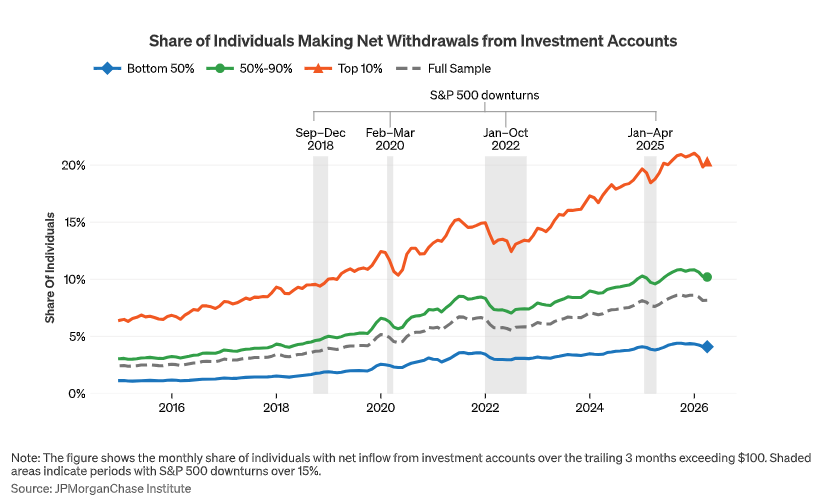
美國收入前 10% 的人當中,有 20.3% 在 2026 年 2 月到 4 月期間淨提領投資帳戶,2015 年同期只有 6.6%。
摩根大通研究院追蹤自家客戶的資金流向,發現這個比例在每一個財富層級都在上升。全體樣本從 2015 年的 2.4%、2019 年的 4.0%,升到 2026 年的 8.2%;收入中位數以下的族群從 1.1% 升到 4.1%。前 10% 的水準一直是最高的,也是拉得最開的。
這不是有錢人在賣股票。圖下方的註解寫明,認定標準是「過去三個月淨流出超過 100 美元」,門檻低到幾乎任何一筆日常轉帳都算得上,所以這條線量的是有多少人動用投資帳戶,不是動用了多少金額。曲線在 2016 到 2021 年的多頭期間照樣一路往上,也說明它跟看空與否無關。
真正的推力是退休結構的改變。同一份研究顯示,高收入退休族中有 37% 在 2025 年淨提領,2019 年是 24.5%,而投資帳戶提供的資金占他們支出的比重從 8% 升到 15%。當確定給付制的退休金被確定提撥制取代,退休後的現金流就從「每月自動入帳」變成「自己決定何時賣、賣多少」。
把範圍拉到全體家庭,投資帳戶目前支應了美國消費支出的 6.8%,2015 年是 2.3%。這代表美國消費和股市的連動變得更直接。過去股價下跌主要影響消費信心,現在會直接減少家庭準備拿出來花的那一筆錢。
資料來源: 摩根大通研究院 (圖片來自 @RyanDetrick)
One in Five of America's Top Earners Is Now Drawing Down an Investment Account
Among the top 10% of US earners, 20.3% made net withdrawals from investment accounts during February to April 2026. In the same months of 2015, the figure was 6.6%.
The JPMorganChase Institute, tracking flows across its own customer base, finds the share rising at every wealth level. The full sample went from 2.4% in 2015 and 4.0% in 2019 to 8.2% in 2026, while people below median income went from 1.1% to 4.1%. The top decile has been the highest throughout, and it has pulled furthest away.
This is not wealthy households selling stocks. The footnote defines a withdrawal as a net outflow of more than $100 over the trailing three months, a threshold low enough that almost any routine transfer qualifies. The line measures how many people touch an investment account, not how much they take out. It also climbed steadily through the bull market years from 2016 to 2021, which is another sign it has little to do with market views.
What is driving it is a change in how retirement is funded. The same study shows 37% of top-earning retirees making net withdrawals in 2025, up from 24.5% in 2019, with investment accounts covering 15% of their spending against 8% before. As defined-benefit pensions give way to defined-contribution plans, retirement income stops arriving automatically each month and becomes a decision about what to sell and when.
Across all households, investment accounts now fund 6.8% of US consumer spending, against 2.3% in 2015. American consumption has become more directly linked to the stock market. A falling market used to dent consumer confidence. It now reduces the balance households were about to spend.
Source: the JPMorganChase Institute (Image: @RyanDetrick)