【燃氣發電機產能要加五成,排隊已經排到 2030 年】🏭
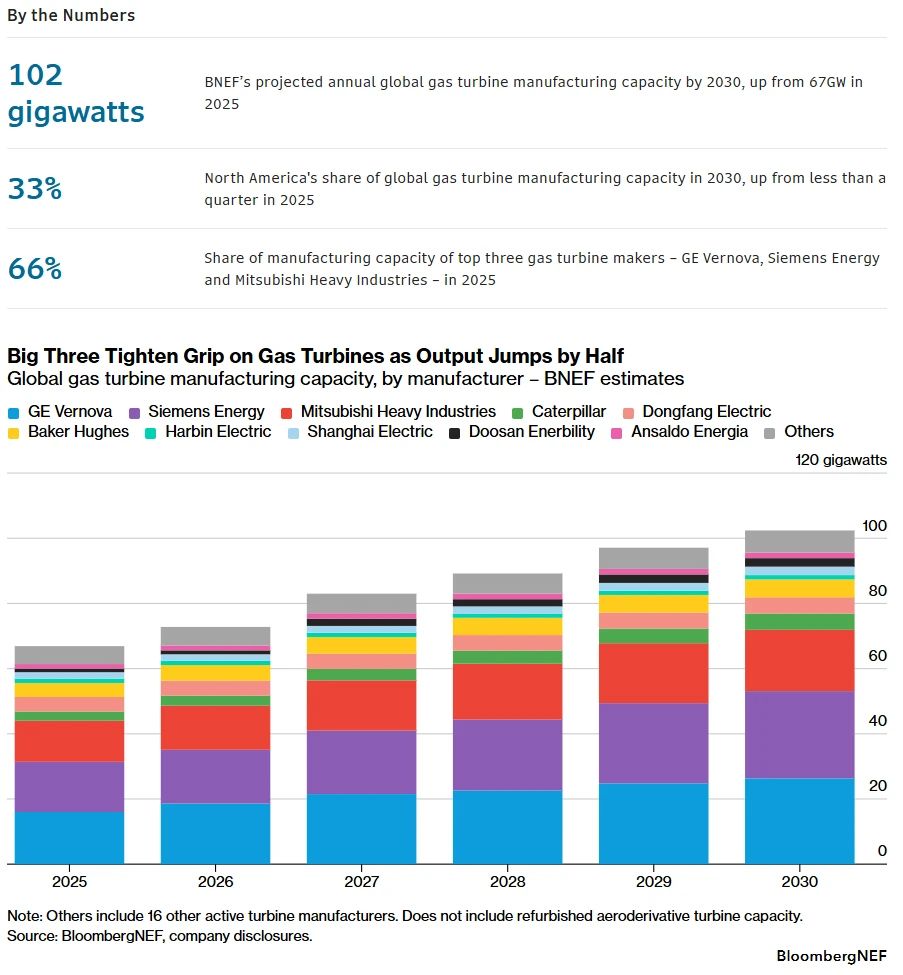
彭博新能源財經估算,全球燃氣渦輪機的年產能會從 2025 年的 67 GW 增加到 2030 年的 102 GW,五年多出五成以上。
這份統計盤點了 26 家製造商、44 座組裝廠。目前前三大廠商 GE Vernova、西門子能源與三菱重工合計占全球產能的 66%,而北美在總產能中的比重會從 2025 年的不到四分之一,升到 2030 年的 33%。
擴產解決不了現在要電的人的問題。新增產能要到 2030 年才會全部到位,而聯合循環燃氣機組的交機時間已經從過去的 2 到 3 年拉長到 5 到 7 年,現在下訂的機組排程本來就落在 2030 年前後。換句話說,這批還沒蓋好的產能,早在出廠之前就被訂走了。今天簽約的資料中心,拿到的不是提前交貨,是排在更後面的號碼牌。
訂單本身也要拆開看。GE Vernova 手上 116 GW 的積壓訂單中,確定的設備訂單只有 53 GW,其餘 63 GW 是保留產能的排程名額;西門子的 69 GW 則全部是確定訂單。三菱重工的 35 GW 只計入大型機組,沒有納入航改型與中型產品線。
排隊長度本身是一個價格訊號。當交機時間比蓋一座資料中心還長,電力供應的瓶頸就不在發電成本,而在製造業的產線上,這也是為什麼舊機組延役與現場自備發電的價值會跟著上升。
資料來源: 彭博新能源財經、彭博、Modern Power Systems (圖片來自 @JEBistline)
Gas Turbine Capacity Is Rising by Half, and the Queue Already Runs to 2030
BloombergNEF estimates that global gas turbine manufacturing capacity will rise from 67 gigawatts a year in 2025 to 102 gigawatts by 2030, an increase of more than half in five years.
The study covers 44 assembly plants across 26 manufacturers. The three largest makers, GE Vernova, Siemens Energy and Mitsubishi Heavy Industries, hold 66% of global capacity today, and North America's share of the total is set to climb from under a quarter in 2025 to 33% by 2030.
Building more factories does not help anyone who needs power now. The new capacity only arrives in full by 2030, while delivery windows for combined-cycle gas units have already stretched from two or three years to between five and seven, putting orders placed today around 2030 anyway. The capacity that has not been built yet is effectively sold before it exists. A data centre signing a contract now is not getting an earlier delivery, only a later place in line.
The order books need unpacking too. Of GE Vernova's 116 gigawatt backlog, only 53 gigawatts are firm equipment orders; the remaining 63 gigawatts are reservations holding a production slot. Siemens Energy's 69 gigawatts are all firm. Mitsubishi's 35 gigawatts covers large-frame machines only, leaving out its aeroderivative and mid-size lines.
The length of the queue is itself a price signal. When delivery takes longer than building the data centre it will power, the constraint on electricity supply sits on a factory floor rather than in the cost of fuel, which is also why keeping older units running and generating on site keeps gaining value.
Source: BloombergNEF, Bloomberg and Modern Power Systems (Image: @JEBistline)