【印度用電多了 7%,燒的煤卻一點也沒增加】⚡
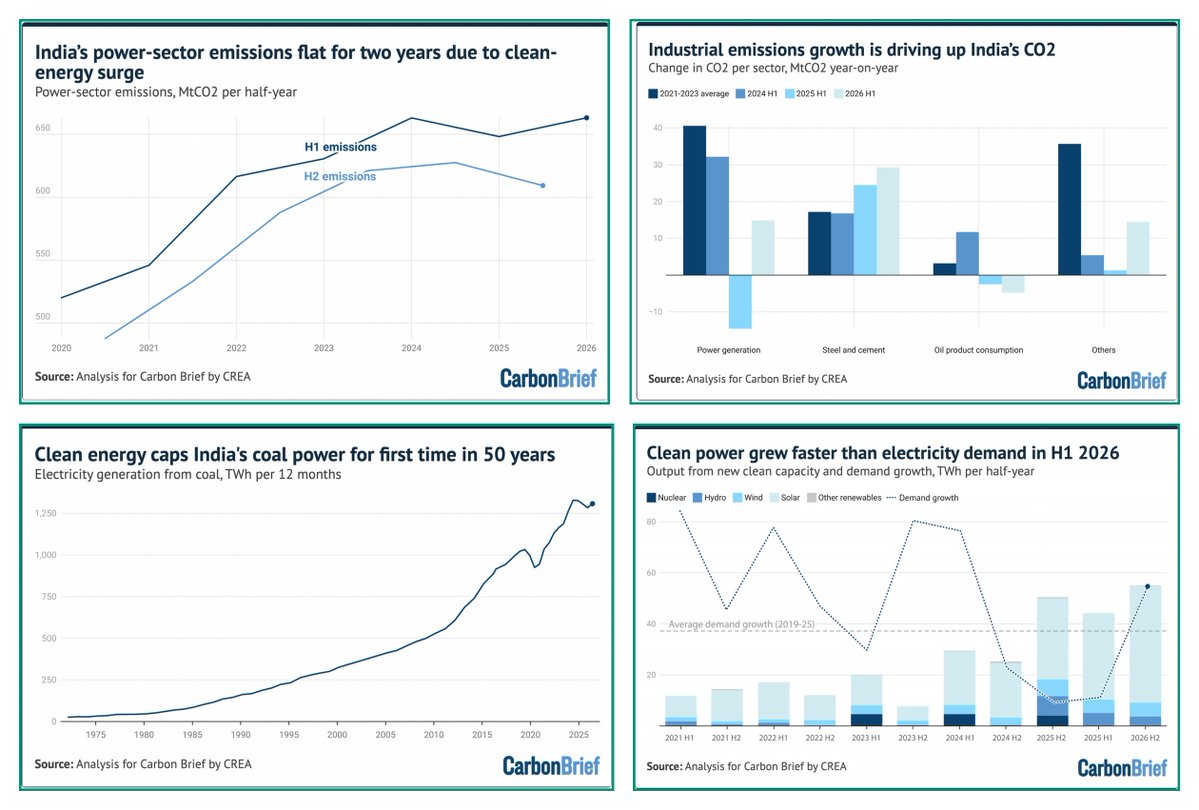
印度過去兩年多出來的用電需求,全部由乾淨能源接走,燃煤發電量一度也沒有往上。
研究機構能源與清潔空氣研究中心為氣候媒體 Carbon Brief 做的分析顯示,從 2024 年上半年到 2026 年上半年,印度電力需求成長 7%,相當於 630 億度電,而這 630 億度全部來自太陽能、風力與其他乾淨電力。燃煤發電在兩年之間沒有成長,這是超過 50 年來第一次。電力部門的排放也因此連續兩年持平。
不過煤電廠並沒有停止興建。同一段期間印度仍然新增了 8.5 GW 的燃煤機組。當發電量不增加、裝置容量卻繼續擴大,結果是每座電廠的運轉時數下降,而燃煤電廠的成本大多是蓋好就已經固定的資本支出,這筆錢最後會透過電費轉嫁給用電戶。乾淨電力壓住了煤的發電量,卻沒有壓低煤帶來的電費。
同時,印度整體的二氧化碳排放在 2026 年上半年仍然年增 3.7%,主要來自鋼鐵與水泥,這兩個產業的排放年增 8%,已經占印度總排放的 23%。
電力部門的轉折是真的,但它目前只擋住了排放成長的一部分。接下來比較難處理的排放來自工廠的高溫爐,那不是多蓋幾座太陽能電廠就能解決的。
資料來源: 能源與清潔空氣研究中心、Carbon Brief (圖片來自 @exencial_RP)
India Used 7% More Electricity and Burned No More Coal
All of the additional electricity India consumed over the past two years came from clean sources, and coal-fired generation did not rise at all.
Analysis by the Centre for Research on Energy and Clean Air for the climate outlet Carbon Brief shows electricity demand growing 7% between the first half of 2024 and the first half of 2026, equal to 63 terawatt-hours, with solar, wind and other clean sources covering the entire increase. Coal generation was flat across the two years, the first time that has happened in more than 50 years, which is why power-sector emissions have now held steady for two years running.
Coal plants kept getting built anyway. India added 8.5 gigawatts of new coal capacity over the same period. When output stops growing while capacity keeps expanding, each plant runs fewer hours, and most of a coal plant's cost is capital committed the day it is built. That money is recovered through electricity bills. Clean power has capped how much coal gets burned without lowering what coal costs households.
India's total carbon dioxide emissions still rose 3.7% year on year in the first half of 2026, driven by steel and cement. Emissions from those two industries grew 8% and now account for 23% of the country's total.
The turn in the power sector is real, but so far it has only blocked part of the growth in emissions. The harder emissions to deal with next come from industrial furnaces, and building more solar farms will not reach them.
Source: the Centre for Research on Energy and Clean Air and Carbon Brief (Image: @exencial_RP)