【聯準會升息這幾年,美國企業的利息負擔反而更輕了】💳
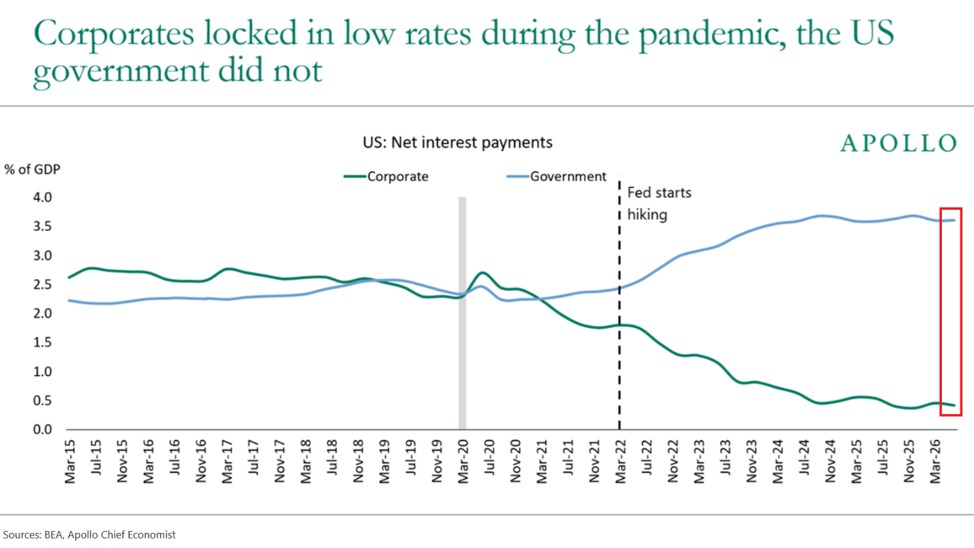
美國企業的淨利息支出占國內生產毛額比重,從 2015 年的約 2.5% 降到今年第 2 季的 0.4%。同一段時間,政府從約 2.2% 升到 3.6%。兩條線交叉的位置,正好是 2022 年聯準會開始升息。
原因是兩邊在零利率時期做了相反的決定。疫情期間企業大量發行長天期固定利率公司債,把便宜的資金成本鎖進未來十年;財政部沒有在那段期間拉長債務期限,短天期占比偏高,政策利率一動,利息帳單幾乎立刻跟著動。
這條線是「淨」利息,值得多看一眼。企業手上的現金這幾年拿到 4% 到 5% 的利息收入,會直接沖掉一部分支出,所以 0.4% 比企業實際付出去的利息好看。現金多的大公司受惠最明顯,真正在付高息的中小企業被平均掉了。
這也解釋了從 2022 年困惑很多人的一件事:這輪升息對實體經濟的壓力遠小於預期。成本沒有消失,只是落在財政那一邊。
鎖住的利率會到期。疫情那批公司債陸續換約之後,綠色那條線會往上走,最先感受到的是槓桿高、現金少的公司。這條線目前的位置不是結構性優勢,是一段還沒走完的緩衝期。
資料來源: 美國經濟分析局、Apollo Global Management 首席經濟學家 Torsten Sløk 研究 (圖片來自 @KobeissiLetter)
Years of Rate Hikes Left US Companies Paying Less Interest
Net interest payments by US corporates have fallen from about 2.5% of GDP in 2015 to 0.4% in the second quarter of this year. Over the same stretch, government net interest payments rose from about 2.2% to 3.6%. The two lines cross at the point where the Federal Reserve started hiking in 2022.
The two sides made opposite decisions when money was free. Companies issued long-dated fixed-rate bonds through the pandemic and locked cheap funding in for a decade. The Treasury did not extend the maturity of its debt while it had the chance, leaving a heavy weighting in short paper where the interest bill moves almost as soon as the policy rate does.
It is worth noticing that this is net interest. Corporate cash piles have been earning 4% to 5%, and that income is netted against what companies pay out, so 0.4% flatters the picture relative to interest actually paid. Large cash-rich firms benefit most, and smaller borrowers genuinely paying high rates are averaged away inside the line.
This also answers something that has puzzled people since 2022, which is why the tightening cycle did so little to slow the economy. The cost did not disappear. It landed on the fiscal side instead.
Locked-in rates expire. As pandemic-era bonds roll into new coupons the green line turns back up, and the first to feel it are the leveraged borrowers with the least cash. Where the line sits today is not a structural advantage. It is a cushion partway through being used.
Source: US Bureau of Economic Analysis and research by Torsten Sløk, chief economist at Apollo Global Management (Image: @KobeissiLetter)