【15 歲學生的閱讀成績,掉到本世紀最低】📚
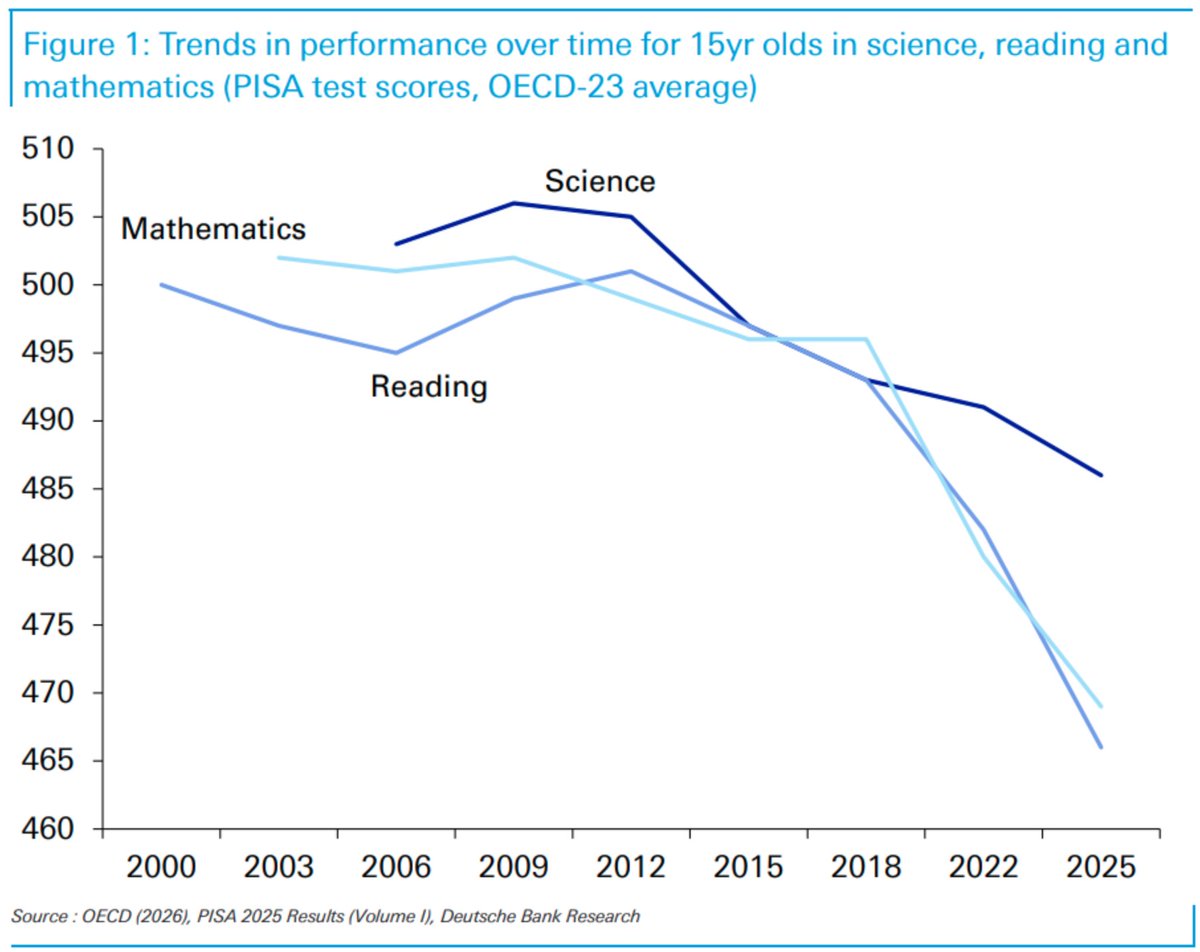
經濟合作暨發展組織剛公布 2025 年 PISA 結果,成員國平均數學 463 分、閱讀 461 分、科學 482 分,數學與閱讀都是 PISA 開辦以來最低。圖上那組從 2000 年就有資料的 23 國固定樣本,三條線同時往下。
用比較有感的尺度看:2015 到 2025 年,閱讀平均掉了 28 分,經濟合作暨發展組織換算大約等於一年半的學習進度。
三科掉的方式不一樣。科學只是溫和下滑,數學與閱讀是 2018 年之後轉為陡降。如果只是疫情停課,三科應該一起掉,而且掉在同一個時間點。
報告裡有一個比分數更具體的指標:「急著作答」的學生,也就是快速掃過文章就給出錯誤答案的那一群,比例在 2018 到 2025 年之間幾乎翻倍。報告指出螢幕時間變長與閱讀興趣下降和這段下滑同時發生,但強調是並存趨勢,不是已證實的因果。
退步最多的是評估資訊、跨來源連結、批判性閱讀。報告自己的說法是,下滑的正好是在 AI 時代最要緊的那組能力。當機器負責生成答案,判斷答案對不對就是人剩下的工作,而這正是分數在掉的地方。
資料來源: 經濟合作暨發展組織 PISA 2025 報告、德意志銀行研究部 (圖片來自 @BrianSozzi)
Reading Scores for 15-Year-Olds Just Hit a Century Low
The OECD has published its 2025 PISA results. The average across member countries came in at 463 in mathematics, 461 in reading and 482 in science, with maths and reading both the lowest the assessment has ever recorded. On the chart, which tracks a fixed sample of 23 countries with data back to 2000, all three lines fall together.
For a sense of scale, average reading scores fell 28 points between 2015 and 2025. The OECD puts that at roughly a year and a half of learning.
The three subjects did not fall the same way. Science drifted down gently. Maths and reading turned sharply lower after 2018. Closed schools alone would have pulled all three down together and at the same moment.
The report contains a measure more concrete than the scores. The share of what it calls hasty readers, students who skim a passage and give a quick wrong answer, almost doubled between 2018 and 2025. The OECD notes that longer screen time and falling rates of reading for pleasure accompanied the decline, while stressing these are trends alongside the results rather than proven causes.
What fell furthest was evaluating information, connecting multiple sources and thinking critically about what has been read. The report's own framing is that these matter most in the AI age. When machines produce the answer, judging whether the answer is any good is the part left to people, and that is precisely where the scores are going down.
Source: OECD PISA 2025 Results and Deutsche Bank Research (Image: @BrianSozzi)