【中國品牌在歐洲搶到的市占,幾乎全部來自平價車】🚗
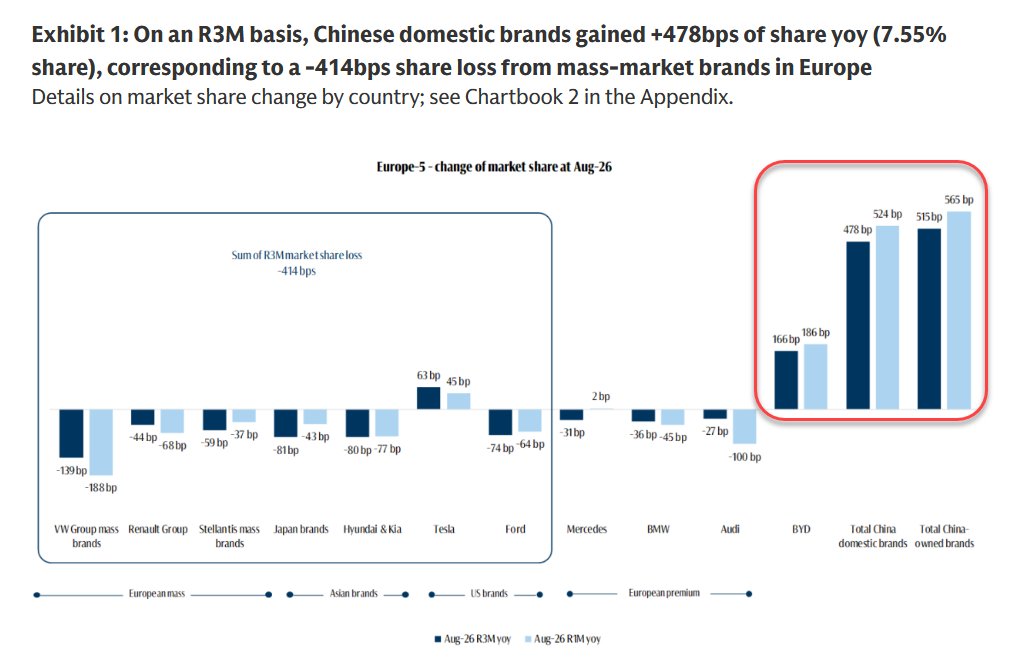
到 8 月為止的三個月,中國自主品牌在歐洲五大車市的市占比一年前多了 478 個基點,來到 7.55%。同期歐洲平價品牌合計掉了 414 個基點,光福斯集團的平價品牌就掉 139 個基點。
豪華品牌幾乎沒被碰到。賓士掉 31 個基點,BMW 掉 36 個,奧迪掉 27 個,都只有福斯的零頭;特斯拉反而多了 63 個基點。被換掉的是 2 萬歐元上下那一層,不是整個市場。
這個結果跟關稅的形狀有關。歐盟 2024 年底對中國製純電動車加徵反補貼稅,比亞迪 17%、吉利 18.8%、上汽 35.3%,但插電式混合動力車不在名單上,只課 10% 的一般進口稅。中國品牌的火力因此轉向混合動力,現在歐洲賣出的插電式混動車,每三輛就有超過一輛是中國製。
圖上還有一條線更高:中國資本持有的品牌合計加了 515 個基點,比自主品牌的 478 個還多。差額來自掛著歐洲名字、股權卻在中國集團手上的車廠。所以「中國車在歐洲占多少」,答案取決於算的是品牌還是股東。
關稅擋得住特定的動力型式,擋不住價格帶。只要 2 萬歐元這一層有人補得上,歐洲平價品牌的市占就會繼續被磨。
資料來源: 歐洲五大車市新車掛牌統計、歐盟執委會反補貼稅裁定、Bloomberg (圖片來自 @zerohedge)
China's Gains in Europe Came Almost Entirely Out of Cheap Cars
Over the three months to August, Chinese domestic brands gained 478 basis points of share across Europe's five largest car markets, reaching 7.55%. European mass-market brands lost 414 basis points over the same period, with Volkswagen Group's mass-market brands alone down 139.
Premium barely moved. Mercedes lost 31 basis points, BMW 36 and Audi 27, a fraction of Volkswagen's decline, while Tesla gained 63. What is being replaced sits around the €20,000 mark, not the whole market.
The shape of that outcome follows the shape of the tariffs. The EU imposed countervailing duties on China-built battery electric vehicles at the end of 2024, at 17% for BYD, 18.8% for Geely and 35.3% for SAIC. Plug-in hybrids were left out and still pay only the standard 10% import duty. Chinese brands redirected accordingly, and more than a third of Europe's plug-in hybrid sales now come from China.
There is a higher line on the chart too. Brands under Chinese ownership gained 515 basis points, more than the 478 for Chinese domestic brands. The difference is carmakers with European names whose shareholders sit in China. How much of Europe's market is Chinese therefore depends on whether you count badges or owners.
Tariffs can close off a powertrain. They cannot close off a price band. As long as someone can supply that €20,000 tier, Europe's mass-market brands will keep losing ground in it.
Source: new-car registration data for Europe's five largest markets, European Commission countervailing duty decisions and Bloomberg (Image: @zerohedge)