【拿掉首都,歐洲多數國家窮兩成,德國只少0.4%】🏙️
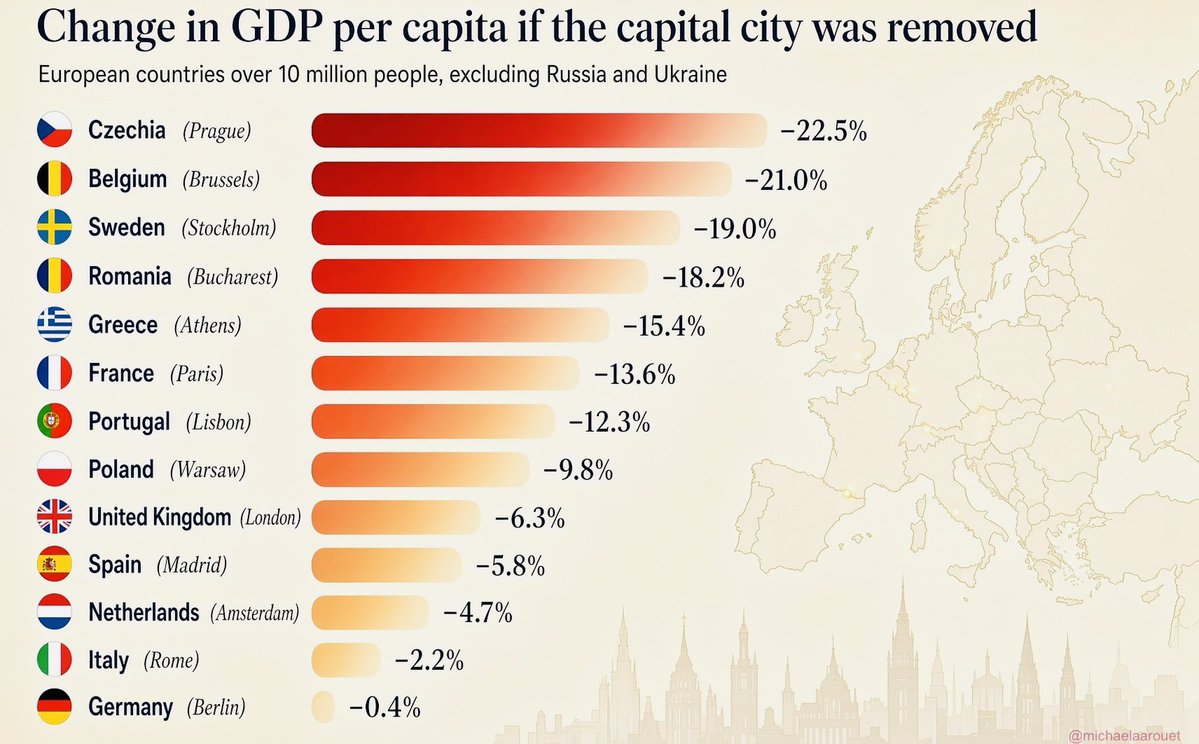
把首都從國家統計裡拿掉,捷克的人均 GDP 會少 22.5%,比利時少 21.0%,瑞典少 19.0%,法國少 13.6%。德國只少 0.4%。
■ 德國的錢不在柏林
柏林 2024 年的人均 GDP 約 5.67 萬歐元,全德國平均約 5.42 萬歐元,兩個數字幾乎貼在一起,抽掉柏林自然影響不大。德國最富裕的地方是漢堡,以及慕尼黑所在的上巴伐利亞,上巴伐利亞 2024 年人均 GDP 高達 7.54 萬歐元。四十年的分裂把企業總部和工廠推去了慕尼黑、法蘭克福、漢堡和杜塞道夫,統一之後也沒有搬回來。
這份排名有一個容易誤讀的地方:GDP 算在工作的地方,人口算在居住的地方。布魯塞爾每天有約 36 萬人從法蘭德斯和瓦隆通勤進城上班,產出記在布魯塞爾,人卻不計入布魯塞爾的人口,帳面才會那麼漂亮。改看人均可支配所得,布魯塞爾反而低於法蘭德斯,當地有三成人口處於貧窮狀態。
資料來源: 德國聯邦統計局、比利時國家銀行、OECD (圖片來自 @MichaelAArouet)
Remove the Capital and Most of Europe Gets 20% Poorer. Germany Loses 0.4%
Take the capital city out of the national accounts and Czechia's GDP per capita falls 22.5%, Belgium's 21.0%, Sweden's 19.0% and France's 13.6%. Germany's falls 0.4%.
■ Germany's money is not in Berlin
Berlin's GDP per capita was about €56,700 in 2024 against a national average of roughly €54,200. The two numbers sit almost on top of each other, so removing Berlin barely moves the national figure. Germany's richest places are Hamburg and Upper Bavaria, home to Munich, where GDP per capita reached €75,400 in 2024. Four decades of division pushed headquarters and factories to Munich, Frankfurt, Hamburg and Düsseldorf, and reunification never brought them back.
The ranking also has a trap in it. GDP is counted where people work, population where people live. About 360,000 people commute into Brussels each day from Flanders and Wallonia. Their output lands in the Brussels figure while they do not, which is what makes the city look so rich. Measured by disposable income per head, Brussels actually sits below Flanders, and 30% of its residents live in poverty.
Source: German Federal Statistical Office, National Bank of Belgium and the OECD (Image: @MichaelAArouet)