【關稅退款開始發了,只有15%的企業打算降價】💵
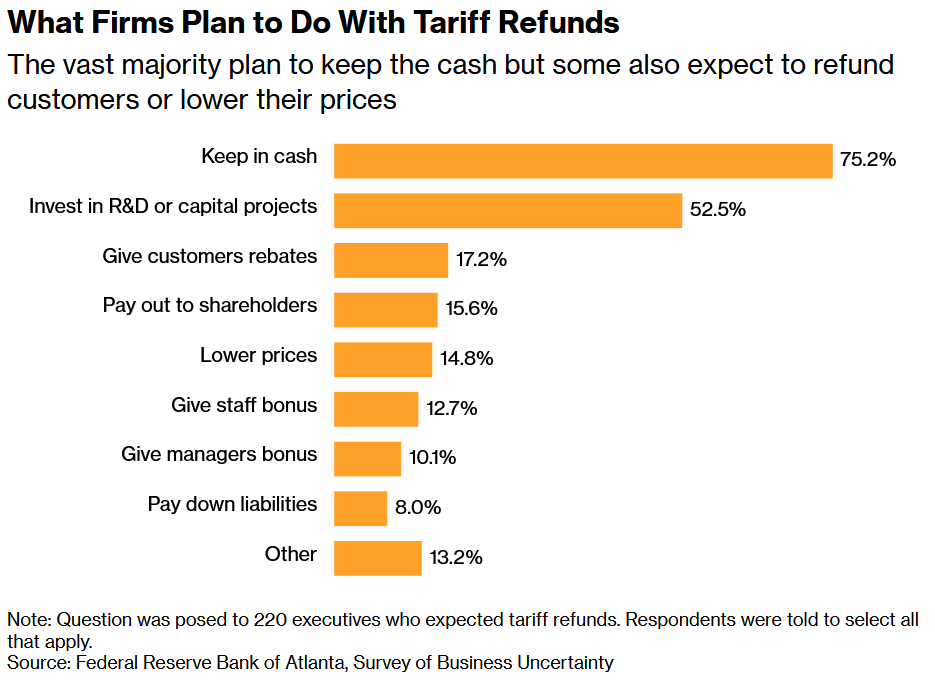
美國企業拿到關稅退款之後打算怎麼處理?75.2% 說留成現金,52.5% 說投入研發或資本支出,17.2% 打算回饋給客戶,只有 14.8% 打算降價。
錢的流向決定了這個結果。關稅是進口商繳給海關的,成本沿著供應鏈一路加進售價,最後由消費者付掉;退款退回的對象卻是當初繳稅的進口商,不是付錢的那個人。價格往上調的時候整條鏈一起動,往下退卻沒有任何機制要求它回頭,於是關稅進了物價,退款進了資產負債表。
金額不算小。最高法院判定 1,660 億美元的緊急關稅不合法之後,退款從 5 月開始發放,到 9 月 11 日已經支付或受理約 1,347 億美元,平均相當於受訪企業年營收的 1.7%。不過這是一次性的現金,問卷問的也是「打算怎麼做」而不是已經做了什麼,實際結果仍有變數。
資料來源: 亞特蘭大聯準銀行企業不確定性調查、彭博 (圖片來自 @puckrin)
Tariff Refunds Are Flowing, and Only 15% of Firms Plan to Cut Prices
Asked what they will do with their tariff refunds, 75.2% of US firms said they would keep the cash, 52.5% said they would put it into R&D or capital projects, 17.2% planned customer rebates and just 14.8% planned to lower prices.
The path the money takes explains the answer. Tariffs are paid to customs by the importer, the cost travels down the supply chain into the shelf price, and the consumer ends up paying it. The refund goes back to the importer who wrote the cheque, not to the person who absorbed the cost. Prices move up as a whole chain, and nothing obliges them to move back down, so the tariff lands in the price level while the refund lands on a balance sheet.
The sums are not small. After the Supreme Court ruled $166 billion of emergency tariffs unlawful, refunds began flowing in May, and about $134.7 billion had been paid or accepted for processing by 11 September. That averages 1.7% of annual revenue for the firms surveyed. It is one-off cash, though, and the survey asked about intentions rather than actions, so what firms actually do may differ.
Source: Atlanta Fed Survey of Business Uncertainty and Bloomberg (Image: @puckrin)