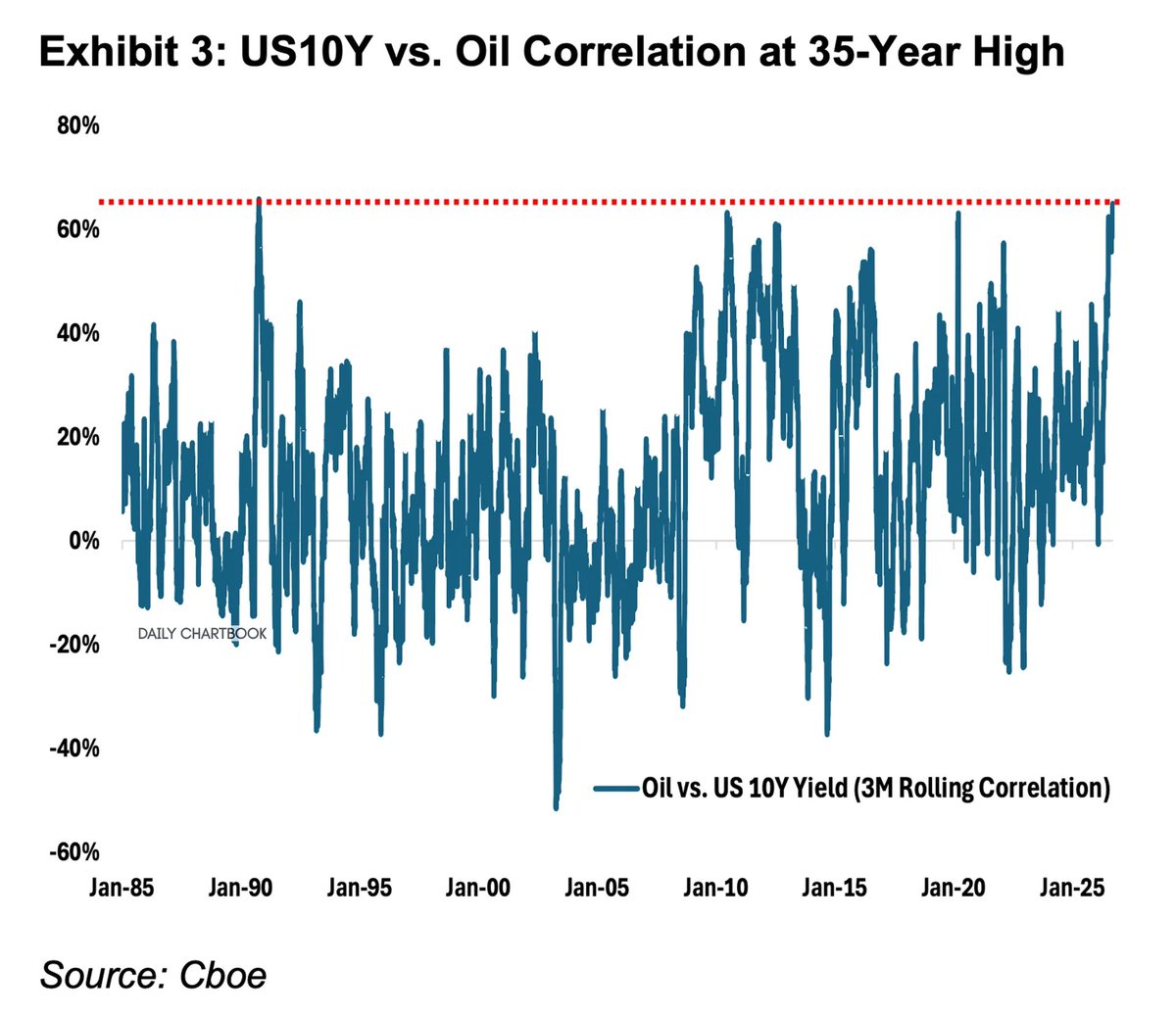
【油價和美債殖利率同步的程度,回到1990年】🛢️
油價與美國 10 年期公債殖利率的 3 個月滾動相關性升到約 65%,是 1990 年以來最高,只差一點就追上波斯灣戰爭爆發時寫下的 66%。
這個數字真正在說的,是市場把油價當成哪一種消息。油價因為需求旺而漲,殖利率跟著走高很正常,那代表經濟熱;這一次油價是供給受阻推上去的,結果公債也同步被賣。對一個股債都有的投資組合來說差別很大:同一件事情既壓股票又壓債券,原本負責分散風險的那一半就失去作用了。
值得記住的是持續時間。1990 年那次高相關只維持幾個月,供給問題緩解之後就退了回去。這次的相關性反映的是當下消息的來源,不是資產之間換了關係,中東局勢一鬆,兩者很可能又各走各的。另一種算法也指向同一件事:BMO Capital Markets 計算的一個月滾動相關性已達 0.96,是 2019 年 6 月以來最強,而這種極端讀數通常不會停留太久。
資料來源: Cboe、BMO Capital Markets (圖片來自 @dailychartbook)
Oil and Treasury Yields Are Moving Together Like It Is 1990
The three-month rolling correlation between oil and the US 10-year Treasury yield has climbed to about 65%, the highest since 1990 and just short of the 66% set when the first Gulf War began.
What the number really describes is which kind of news the market thinks oil is. When oil rises because demand is strong, yields rising alongside it is ordinary and says the economy is hot. This time oil has been pushed up by blocked supply, and Treasuries are selling off with it. For a portfolio holding both stocks and bonds that distinction matters, because one event is now pressing on both sides and the half meant to spread the risk stops doing its job.
Duration is the thing to keep in mind. The 1990 episode lasted only a few months and unwound once the supply problem eased. This correlation reflects where today's news is coming from rather than a change in how the two assets relate, and if Middle East tensions loosen they will probably go their separate ways again. A second measure points the same way: BMO Capital Markets puts the one-month rolling correlation at 0.96, the strongest since June 2019, and readings that extreme rarely last.
Source: Cboe and BMO Capital Markets (Image: @dailychartbook)