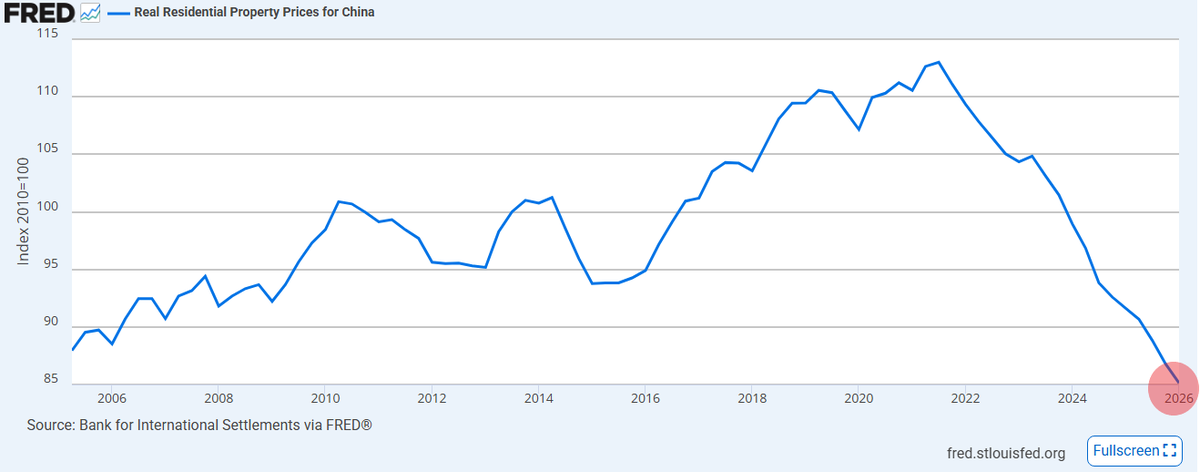
【中國房價帳面還比2010年高14%,扣掉物價已創新低 🏚️】
中國的房價帳面上還比2010年高,但扣掉物價之後,已經是20年來最低。
國際清算銀行編製的中國住宅價格指數,以2010年為100,今年第1季的名目值是114,代表帳面房價仍比2010年高14%。扣除物價上漲後的實質指數卻只剩約85,比2005年有資料以來任何時候都低。
兩個數字差這麼多,是因為這段時間其他東西都變貴了。中國消費者物價從2010年到2025年累計上漲約三成,房價名目上卻只多漲一成四,換算成購買力就是倒退。實質指數從2021年高點一路下滑,已經跌掉將近四分之一。
對中國家庭來說,這個落差比名目跌幅更有感。房子是多數家庭最主要的資產,2010年買房的人,帳面上看起來還小賺,實際上能換到的東西比當年少。
名目價格的跌勢近期有放緩跡象。新華社報導,8月北京、上海、廣州、深圳的新屋價格年跌0.9%,跌幅比7月收窄,但多數小城市和二手屋仍在下跌。只要物價維持在零附近,實質房價要回升,就只能靠名目房價自己止跌。
資料來源:國際清算銀行、新華社(圖片來自 @Barchart)
China's Home Prices Are Still 14% Above 2010 on Paper, but at a Record Low After Inflation
China's home prices are still higher than in 2010 on paper, but after adjusting for inflation they are the lowest in 20 years.
The Bank for International Settlements' residential price index for China, with 2010 set at 100, stood at 114 in nominal terms in the first quarter of this year, meaning prices are still 14% above 2010. The inflation-adjusted index, however, is down to about 85, lower than at any point since the data begin in 2005.
The gap is so wide because everything else got more expensive in the meantime. China's consumer prices rose about 30% in total from 2010 to 2025, while nominal home prices rose only 14%, which is a loss in purchasing power. The real index has slid since its 2021 peak and is down by almost a quarter.
For Chinese households, that gap matters more than the nominal decline. Housing is the main asset for most families, and someone who bought in 2010 looks like they made a small gain on paper, yet the home can now buy less than it could back then.
The nominal decline has recently shown signs of slowing. Xinhua reports that new home prices in Beijing, Shanghai, Guangzhou and Shenzhen fell 0.9% from a year earlier in August, a smaller drop than in July, but most smaller cities and existing homes are still falling. As long as consumer inflation stays near zero, real home prices can only recover if nominal prices stop falling on their own.
Source: Bank for International Settlements, Xinhua (Image: @Barchart)