【南韓AI記憶體每月約40億美元運到台灣,最後裝進AI晶片 🔁】
南韓最賺錢的一種記憶體晶片,最大的出口目的地是台灣,但真正用它的不是台灣。
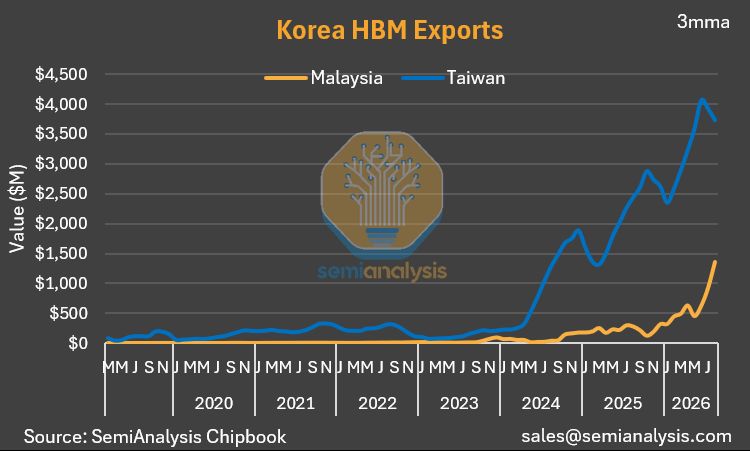
這種晶片叫高頻寬記憶體(HBM),是疊在AI晶片旁邊、負責高速供應資料的記憶體,南韓的SK海力士和三星是主要供應商。半導體研究機構SemiAnalysis整理南韓出口資料,運往台灣的HBM以三個月平均計算,今年中一度衝上每月約40億美元;2023年以前,每月只有兩、三億美元。
這些記憶體運到台灣,是為了封裝。輝達等公司的AI晶片,要在台積電用CoWoS先進封裝,把運算晶片和好幾顆HBM封在同一塊基板上,完成後再運去組裝伺服器。所以出口統計上的目的地,反映的是封裝廠在哪裡,不是誰付錢買單。
同一張圖上,運往馬來西亞的量也從幾乎零升到每月約14億美元。產業媒體Digitimes報導,英特爾在馬來西亞擴充先進封裝產能,開始分走一部分原本流向台灣的HBM。
要注意這是用海關商品分類推估的數字,可能混入其他多晶片記憶體,看趨勢會比看絕對金額可靠。
資料來源:SemiAnalysis、Digitimes(圖片來自 @jukan05)
About $4 Billion a Month of Korea's AI Memory Goes to Taiwan, Then Into AI Chips
Taiwan is the biggest export destination for one of South Korea's most profitable memory chips, but Taiwan is not the one using it.
The chip is high-bandwidth memory, or HBM, stacked next to an AI processor to feed it data at high speed. South Korea's SK Hynix and Samsung are its main suppliers. According to South Korean export data compiled by semiconductor research firm SemiAnalysis, HBM shipments to Taiwan, on a three-month average, peaked at about $4 billion a month in mid-2026. Before 2023 they were only $200 million to $300 million a month.
The memory goes to Taiwan to be packaged. AI chips from Nvidia and others go through TSMC's CoWoS advanced packaging, which places the processor and several HBM stacks on the same substrate before the finished part is shipped off for server assembly. So the destination in export data shows where the packaging plant is, not who is paying.
The same chart shows shipments to Malaysia rising from almost nothing to about $1.4 billion a month. Industry publication Digitimes reports that Intel is expanding advanced packaging capacity in Malaysia and has begun to draw away some of the HBM that used to flow to Taiwan.
These figures are estimated from customs product codes and may include other multi-chip memory, so the trend is more reliable than the exact dollar amounts.
Source: SemiAnalysis, Digitimes (Image: @jukan05)