【美國人每天待在家的時間,比20年前多了約100分鐘 🛋️】
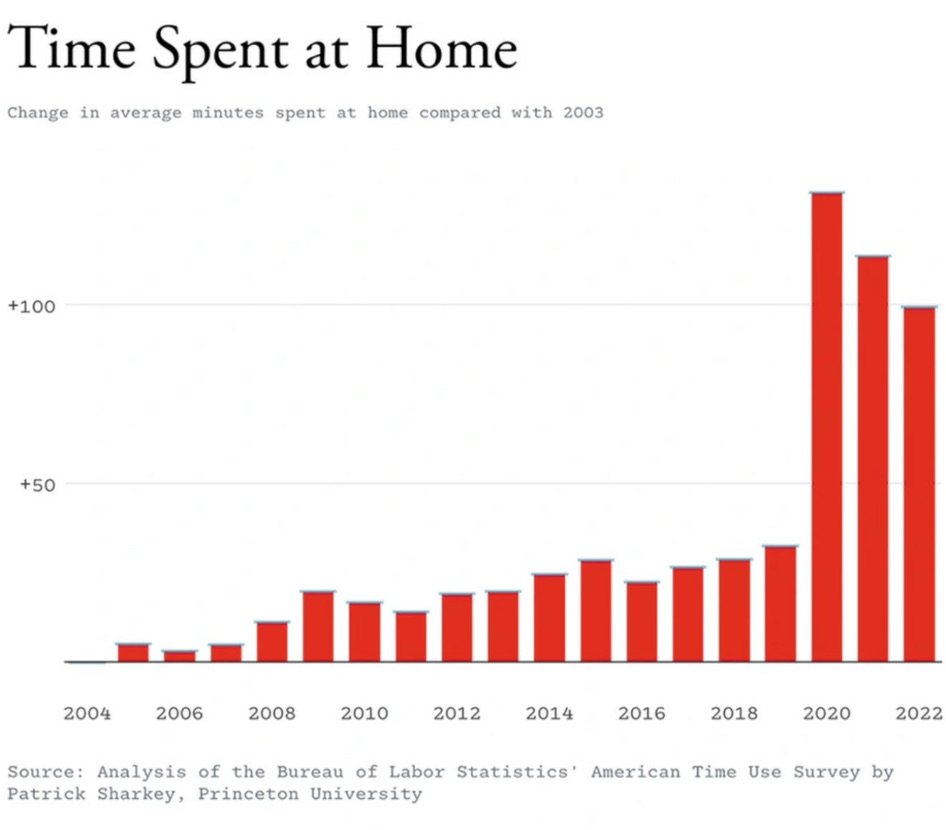
疫情結束後,美國人並沒有回到原本的生活節奏。2022年,美國成年人平均每天待在家的時間,比2003年多了約1小時39分鐘。
這組數字來自普林斯頓大學社會學家Patrick Sharkey,他分析美國勞工統計局的時間使用調查。2020年疫情期間,待在家的時間比2003年多了約130分鐘,之後只回落一點點。
比較少人注意的是,這個趨勢在疫情前就已經開始。2019年,待在家的時間已比2003年多約半小時,而且幾乎每個族群、每一類活動都一樣,工作、購物、娛樂和社交,都有越來越多是在家裡完成。疫情沒有創造這個趨勢,只是把它一口氣往前推了好幾年。
這對城市經濟是長期的變化。商場、餐廳和通勤運輸面對的人流減少,有一部分是結構性的,不只是疫情後的暫時冷清。Sharkey也發現,待在家的時段,受訪者回報的快樂和意義感比較低,不過這是相關性,不能直接推論在家會讓人不快樂。
資料來源:Sociological Science、美國勞工統計局(圖片來自 @Hedgeye)
Americans Spend About 100 More Minutes a Day at Home Than 20 Years Ago
Americans did not go back to their old routines after the pandemic. In 2022, the average American adult spent about 1 hour and 39 minutes more at home each day than in 2003.
The figures come from Princeton sociologist Patrick Sharkey, who analyzed the Bureau of Labor Statistics' American Time Use Survey. During the pandemic in 2020, time at home was about 130 minutes above 2003, and it has come down only a little since.
What gets less attention is that the trend started well before the pandemic. By 2019, time at home was already about half an hour above 2003, and the rise showed up in almost every group and every kind of activity. Work, shopping, entertainment and socializing were all increasingly done at home. The pandemic did not create the trend. It pushed it forward by several years at once.
That is a long-term shift for city economies. Some of the lost foot traffic at malls, restaurants and transit systems is structural, not just a temporary post-pandemic lull. Sharkey also found that people reported lower happiness and meaning during time spent at home, though that is a correlation and does not show that staying home makes people unhappy.
Source: Sociological Science, US Bureau of Labor Statistics (Image: @Hedgeye)