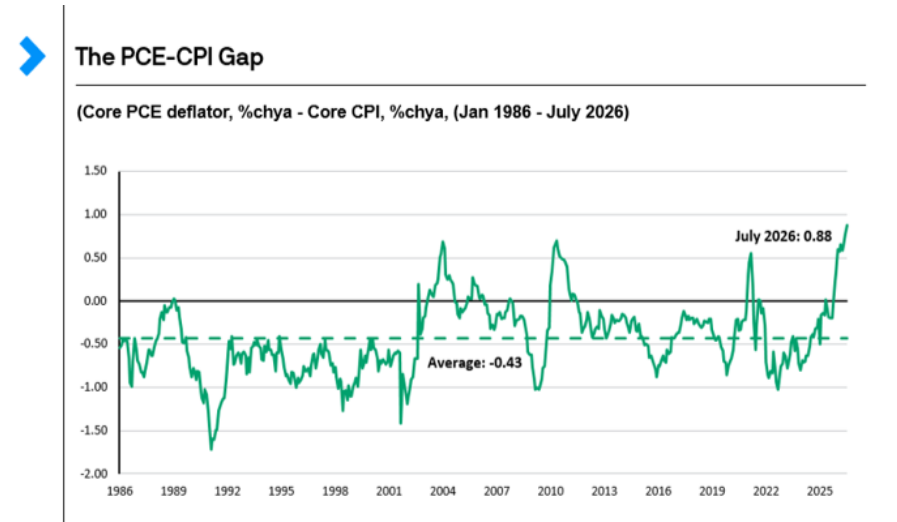
【聯準會看的通膨,比消費者物價高出0.88個百分點 🧮】
聯準會偏好的通膨指標,現在比一般人熟悉的消費者物價指數還高,而且差距是40年來最大。
過去40年,核心PCE物價指數平均比核心消費者物價指數(CPI)低0.43個百分點。今年7月,前者反而高出0.88個百分點,是1986年有資料以來最大的正差距。
兩者平常有落差,是因為範圍和權重不同。CPI只算家庭自己掏錢買的東西,房租占的比重很高;PCE還包括雇主和政府替家庭支付的醫療費,以及一些家庭沒有直接付錢的服務。
這次把PCE推高的,是一個很少人注意的項目:投資組合管理費。統計單位不是直接調查大家付了多少手續費,而是參考股票市值來推估,股市大漲,這一項就跟著漲。研究機構Employ America分析,7月核心PCE的漲幅主要來自這一項;太平洋投資管理公司(PIMCO)也指出,這類與AI行情相關的項目正在扭曲PCE讀數。
所以現在PCE偏高,有一部分是股市上漲的倒影,不全是物價壓力擴散。摩根資產管理首席全球策略師David Kelly就提醒,此刻太專注PCE可能會誤判。但只要聯準會還以PCE作為目標,這筆帳面上的通膨一樣會影響它的利率決定。
資料來源:摩根資產管理、Employ America、PIMCO(圖片來自 @MikeZaccardi)
The Fed's Inflation Gauge Is Running 0.88 Points Above Consumer Prices
The Federal Reserve's preferred inflation measure is now running above the consumer price index most people know, and the gap is the widest in 40 years.
Over the past four decades, core PCE inflation has averaged 0.43 percentage points below core CPI. In July it was 0.88 points above it, the largest positive gap since the data begin in 1986.
The two usually differ because they cover different things and weight them differently. CPI counts only what households pay for out of pocket, and rent carries a heavy weight. PCE also includes medical costs paid on households' behalf by employers and the government, along with some services households do not pay for directly.
What pushed PCE up this time is an item few people watch: portfolio management fees. Statisticians do not survey what people actually pay in fees. They estimate the item partly from stock market values, so when stocks rally, this category rises with them. Research group Employ America found that July's core PCE increase came mainly from this item, and PIMCO has also said AI-linked categories like this are distorting PCE readings.
So part of today's high PCE reading is a reflection of the stock market, not broadening price pressure. David Kelly, chief global strategist at J.P. Morgan Asset Management, has warned that focusing too much on PCE right now could be a mistake. But as long as the Fed targets PCE, this paper inflation will still shape its rate decisions.
Source: J.P. Morgan Asset Management, Employ America, PIMCO (Image: @MikeZaccardi)