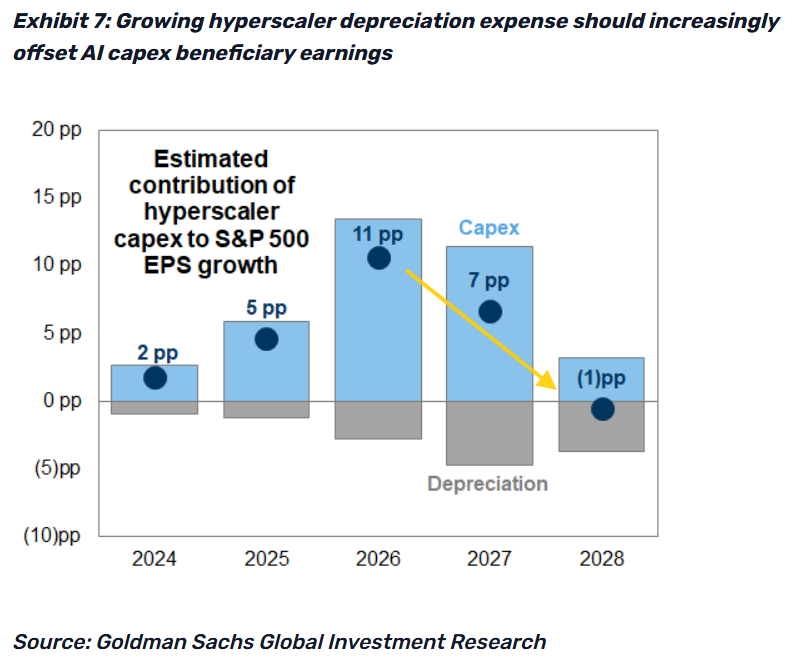
【AI投資今年替標普多賺11個百分點,2028年轉成拖累 🧾】
雲端巨頭砸下的AI資本支出,同時是別人的營收和自己的成本,只是兩邊入帳的時間不一樣。
高盛估計,今年雲端業者的資本支出替標普500的每股盈餘成長貢獻約11個百分點。到2027年,折舊開始吃掉約5個百分點,淨貢獻剩7個;2028年淨效果轉為負1個百分點。
原因在會計處理。雲端業者買一台伺服器,付出去的錢當年就成了輝達、博通這些供應商的營收與獲利;但對買方來說,這筆錢不是當年的費用,而是分五到六年慢慢提列折舊。投資一年比一年多,折舊就會一層一層疊上來,只要資本支出的增速放慢,每年新增的供應商獲利就追不上累積的折舊。
高盛預估資本支出2027年升到1.2兆美元、2028年1.4兆美元。金額仍在成長,只是增速變慢,就足以讓淨效果歸零。
但這只算了會計上的一進一出,沒有算AI服務本身帶來的新營收。雲端業者靠AI賺錢的速度如果夠快,折舊就不會變成淨拖累,這也是接下來兩年財報最值得看的地方。
資料來源:高盛全球投資研究、Benzinga(圖片來自 @neilsethinew)
AI Spending Adds 11 Points to S&P 500 Earnings Growth This Year, Then Turns Into a Drag by 2028
The AI capital spending of the big cloud companies is revenue for someone else and a cost for themselves. The two sides just hit the books at different times.
Goldman Sachs estimates that cloud capital spending adds about 11 percentage points to S&P 500 earnings-per-share growth this year. In 2027, depreciation starts eating about 5 points of that, leaving a net boost of 7. By 2028 the net effect turns to minus 1 point.
The reason is accounting. When a cloud company buys a server, the money becomes revenue and profit for suppliers such as Nvidia and Broadcom in the same year. For the buyer, though, the purchase is not an expense that year. It is depreciated gradually over five to six years. As spending grows year after year, depreciation piles up layer by layer, and once capex growth slows, the new profit going to suppliers each year can no longer keep up with accumulated depreciation.
Goldman expects capex to rise to $1.2 trillion in 2027 and $1.4 trillion in 2028. Spending is still growing, but slower growth alone is enough to push the net effect to zero.
This only counts the accounting flows in and out. It leaves out new revenue from AI services themselves. If cloud companies earn money from AI fast enough, depreciation will not become a net drag, and that is what matters most in earnings reports over the next two years.
Source: Goldman Sachs Global Investment Research, Benzinga (Image: @neilsethinew)