【荷莫茲停擺,沒出事的麻六甲也少了近三成原油 ⚓】
麻六甲海峽沒有被封鎖,流過的原油卻少了將近三成。
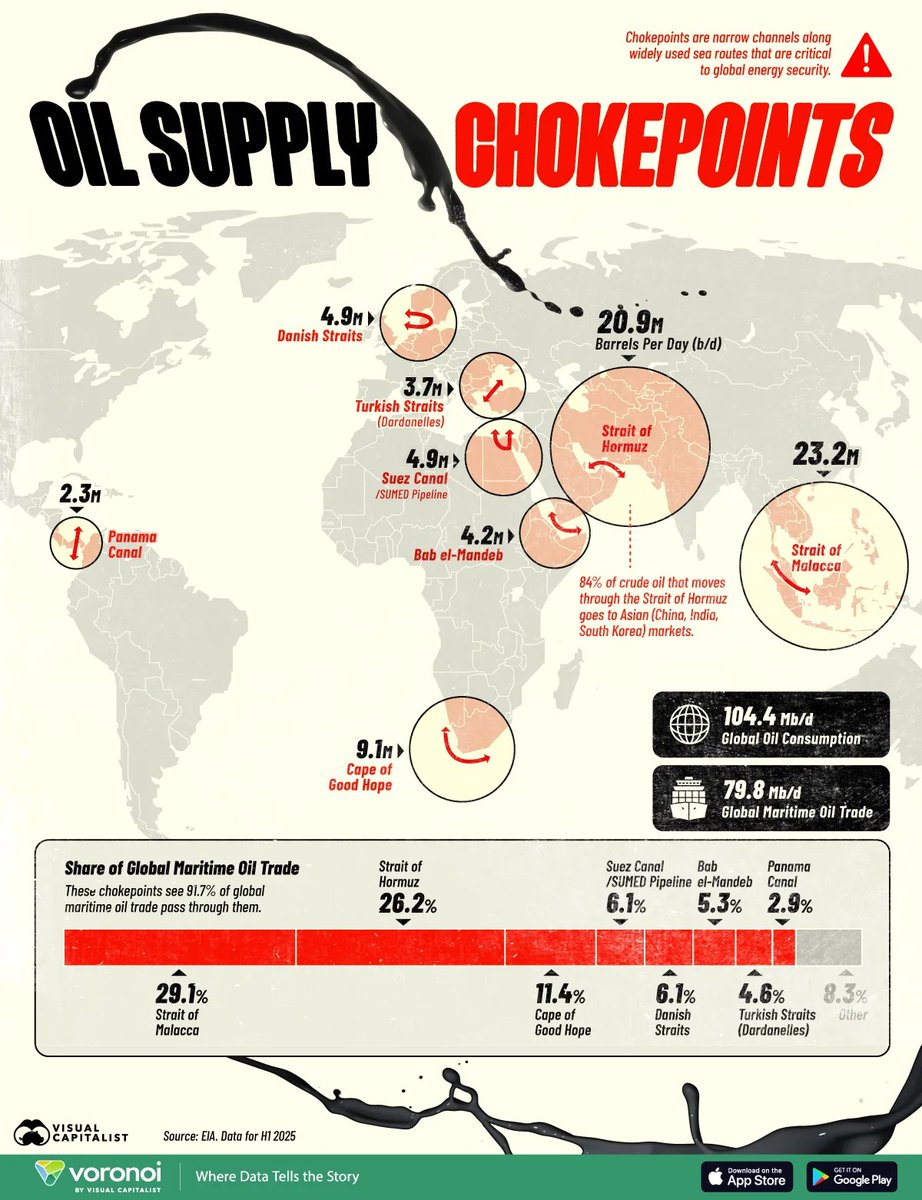
美國能源資訊署統計,2025年上半年每天約有2,320萬桶石油經過麻六甲,是全球最大的海上咽喉;荷莫茲海峽2,090萬桶排第二。七個咽喉的占比加起來,等於全球海運石油的91.7%。
這兩個數字其實高度重疊。波斯灣的油要運到中國、日本和南韓,先出荷莫茲,再穿過麻六甲,同一桶油會在兩個地方各算一次。荷莫茲的原油有84%運往亞洲,麻六甲的流量有很大一塊就是荷莫茲的下游。
戰爭開打後,這層關係就看得很清楚。美國能源資訊署估計,今年第2季荷莫茲每天只剩490萬桶,麻六甲跟著降到1,660萬桶。沙烏地把原油改從紅海岸出口,南下經過曼德海峽的量則從420萬桶增加到810萬桶。
所以評估咽喉風險,不能只看單一海峽的流量,要看油是從哪裡來的。對亞洲買家來說,真正的單一斷點是荷莫茲,麻六甲的流量大多是它的延伸。
資料來源:美國能源資訊署、Visual Capitalist(圖片來自 @glocalinvestor)
Hormuz Stalled, and Untouched Malacca Lost Nearly 30% of Its Oil
The Strait of Malacca was never blockaded, yet the oil flowing through it fell by nearly 30%.
According to the US Energy Information Administration, about 23.2 million barrels of oil a day passed through Malacca in the first half of 2025, making it the world's largest maritime chokepoint. The Strait of Hormuz came second at 20.9 million barrels. Add up the shares of all seven chokepoints and they equal 91.7% of global seaborne oil trade.
Those two numbers overlap heavily. Oil heading from the Persian Gulf to China, Japan and South Korea leaves through Hormuz and then passes through Malacca, so the same barrel is counted once at each strait. Some 84% of the crude moving through Hormuz goes to Asia, which means a big share of Malacca's traffic is simply Hormuz's downstream.
Once the war began, that link became obvious. The EIA estimates Hormuz carried only 4.9 million barrels a day in the second quarter of this year, and Malacca fell with it to 16.6 million. Saudi Arabia shifted exports to its Red Sea coast, and flows heading south through the Bab el-Mandeb rose from 4.2 million to 8.1 million barrels.
So judging chokepoint risk means looking at where the oil comes from, not just how much passes one strait. For Asian buyers, the real single point of failure is Hormuz, and most of Malacca's flow is an extension of it.
Source: US Energy Information Administration, Visual Capitalist (Image: @glocalinvestor)