【Daily · 2026-09-23】
昨天這裡寫到,Meta 的 AI 代理人 Muse 爆紅,市場先買進了 CPU 廠。週二(22 日)輪到另一邊:哪些公司的生意會被代理人搶走。標普 500 指數收平,那斯達克指數上漲 0.45% 再創新高,金融類股 ETF(XLF)卻下跌 1.97%。
跌最多的是券商:支援逾 3.2 萬名理財顧問的 LPL Financial(美股代號 LPLA)下跌 7.45%,客戶資產約 13 兆美元的嘉信理財(Charles Schwab,美股代號 SCHW)下跌 6.11%。
在嘉信的券商帳戶裡,沒有拿去投資的現金,年利率是 0.01%;同一個帳戶就能買、不設最低投資額的嘉信貨幣市場基金,7 日年化收益率是 3.62%。10 萬美元放一年,前者的利息約 10 美元,後者約 3,620 美元。客戶少拿的這些利息,就是嘉信利差的來源。
市場賣的是「客戶沒去搬」的收入。這段利差能存在,靠的不是客戶沒得選,而是客戶沒去選;AI 代理人要取代的,正是「去選」這個動作。不過 Muse 目前只能替人結帳,每一筆都要使用者確認,還不能在帳戶之間搬錢。週二的股價反映的是這個風險,不是已經流失的存款。
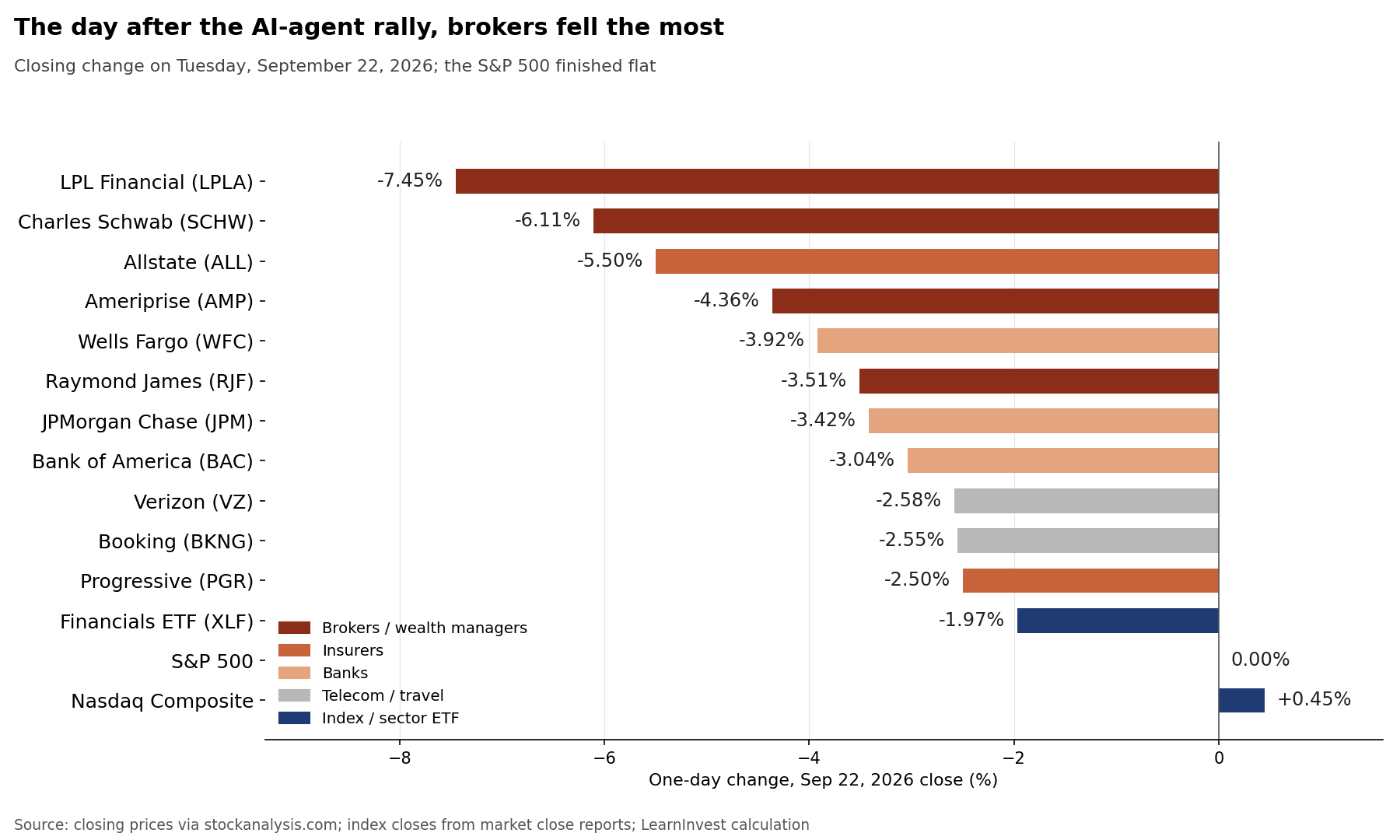
圖 1|9 月 22 日標普 500 收平,LPL 與嘉信跌幅最大,四家大型銀行跌 1.9% 至 3.9%。(LearnInvest 自製,資料為 9 月 22 日收盤價)
跌最多的是券商,不是銀行
同樣是金融股,週二的跌幅有明顯的輕重:
・券商與財富管理LPL 下跌 7.45%,嘉信 6.11%,Ameriprise(AMP)4.36%,Raymond James(RJF)3.51%
・大型銀行富國銀行下跌 3.92%,摩根大通 3.42%,美國銀行 3.04%,花旗 1.91%
被賣的不只金融股。同一天,保險公司好事達(Allstate)下跌 5.50%、Progressive 下跌 2.50%,電信公司 Verizon 下跌 2.58%,訂房平台 Booking 下跌 2.55%。據 Investing.com 報導,高盛交易部門當天提醒,依賴定期帳單、加購服務與顧客被動的產業最容易受衝擊。這些生意的共同點,是顧客不常比價、不常換約。市場擔心的情境是,代理人會替使用者比價、取消沒在用的會員、在保費更便宜時換保單,也會把閒置的現金搬到收益更高的地方。
整體來看,券商跌得比銀行多,因為最後這一項直接碰到它們的利潤來源。
嘉信的利差,靠的是客戶沒去選
嘉信第二季總營收 70.72 億美元,其中淨利息收入 33.57 億美元,占 47%;再加上客戶現金存放在合作銀行所收取的銀行存款帳戶費 3.33 億美元,合計約 52% 來自利差。嘉信在季報中的說法很直接:公司的淨利息收入,來自把客戶的現金與存款拿去投資生息資產。
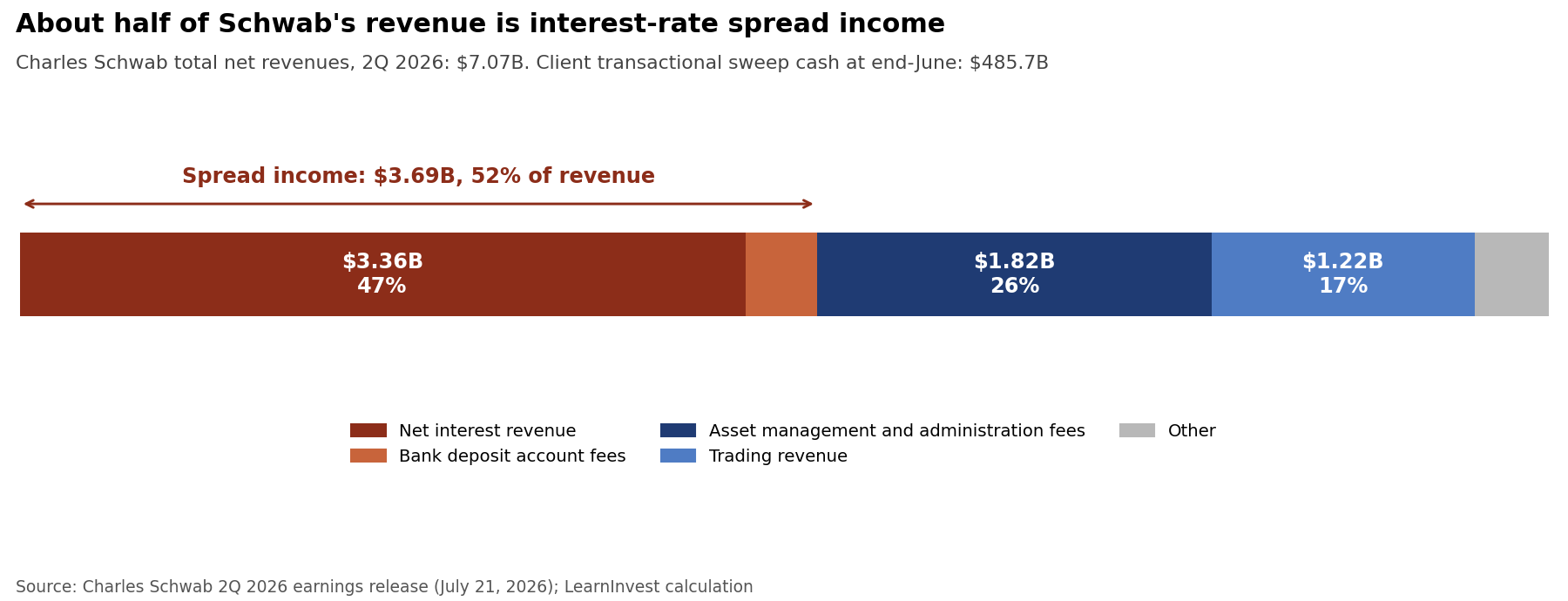
圖 2|嘉信第二季營收約 52% 來自淨利息收入與銀行存款帳戶費,6 月底客戶掃存現金 4,857 億美元。(LearnInvest 自製,資料為嘉信 2026 年第二季財報)
這門生意的原料,是客戶帳上沒有拿去投資、自動轉入銀行帳戶的掃存現金,6 月底有 4,857 億美元。其中一部分是交易周轉用的錢,本來就不會搬走;但第二季聯準會的利率還在 3.50% 至 3.75%,貨幣基金的收益遠高於掃存現金,客戶在同一個帳戶裡點幾下就能換過去,嘉信的掃存現金反而比上一季多了 242 億美元。
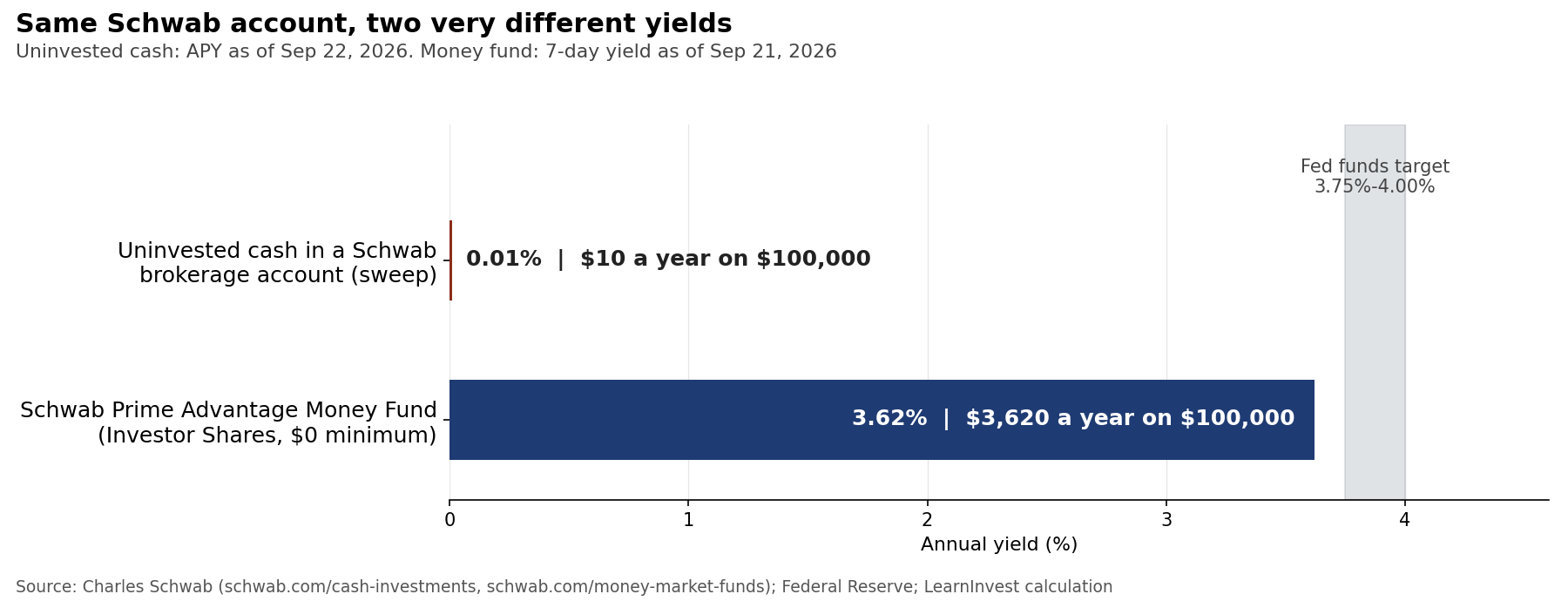
圖 3|同一個嘉信帳戶裡,未投資現金年利率 0.01%,不設最低投資額的嘉信貨幣市場基金 3.62%,10 萬美元一年相差約 3,610 美元。(LearnInvest 自製,資料為嘉信官網 9 月 21 日至 22 日公布的利率)
如果代理人全天候替客戶調整資產配置,這些沉澱在系統裡的現金還會剩下多少?券商過去不必回答這個問題,因為願意每天替自己比較利率的客戶並不多。
Muse 現在還搬不了錢
Muse 目前唯一和錢有關的功能是結帳。9 月 8 日上線時接上 Stripe 的 Link 支付,週二再加入 PayPal;每一筆購買,使用者都要在對話裡確認總金額,Muse 也看不到付款資料。目前沒有公開資料顯示,它能在銀行與券商帳戶之間搬錢,或替人換保單。昨天也提到,亞馬遜已經擋下 Muse 在站內代客下單。
週二的賣壓也不全來自 Muse:
・利率聯準會 9 月 16 日升息 1 碼,聯邦基金利率目標區間升到 3.75% 至 4.00%。利率越高,閒置現金搬去貨幣基金的誘因越大,這件事不需要代理人也在發生,美國家庭持有的貨幣市場基金已升到 5.11 兆美元,創歷史新高
・銀行據路透報導,美國 2 年期與 10 年期公債的殖利率差縮到 2025 年 3 月以來最小,壓縮銀行的放款利差
・保險好事達 9 月 17 日才公布 8 月巨災損失 7.48 億美元
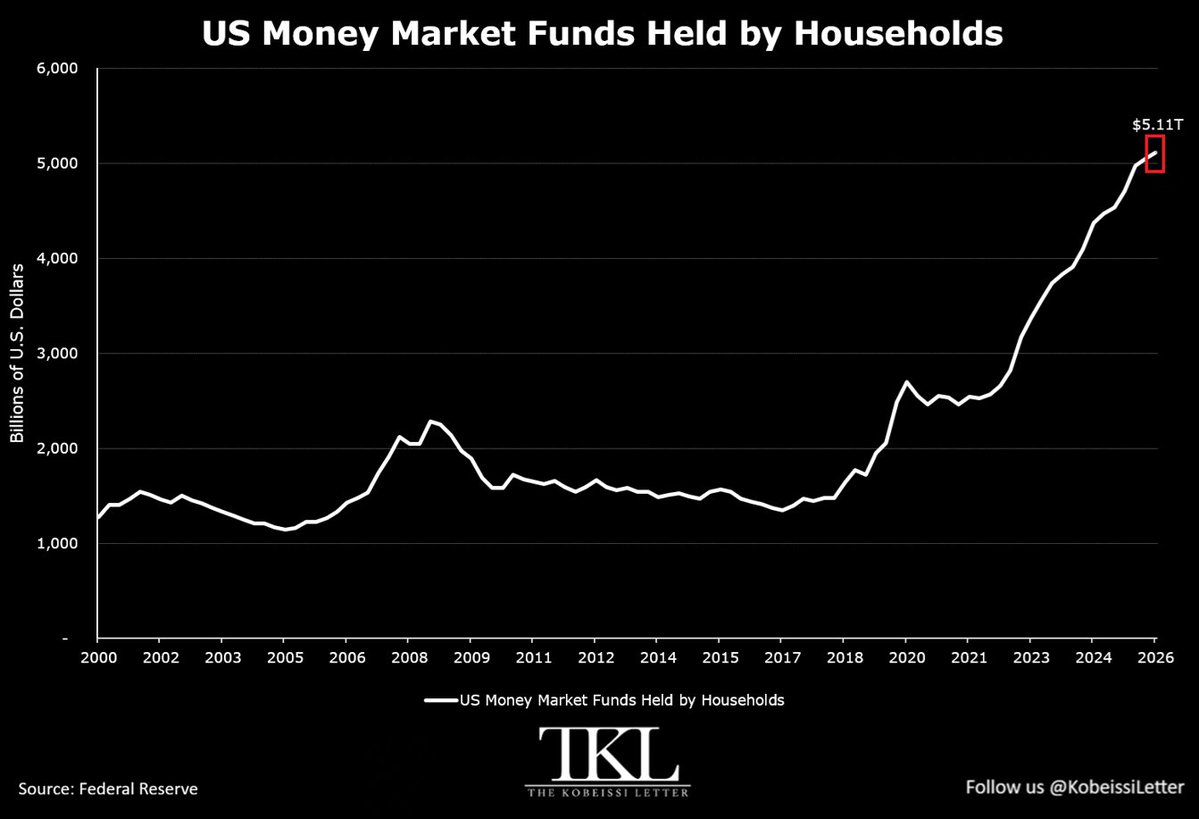
圖 4|美國家庭持有的貨幣市場基金升至 5.11 兆美元,創歷史新高。(The Kobeissi Letter,資料為聯準會)
2 月也跌過一次,股價幾個月沒回來
這不是第一次。2 月 10 日理財平台 Altruist 推出 AI 報稅規劃工具,財富管理類股一天蒸發約 200 億美元市值,嘉信也在其中。之後嘉信的獲利持續創新高,第二季還有 1,200 億美元的核心淨新增資產,客戶並沒有離開;但到 6 月 12 日,股價仍比 52 週高點低約 15%。
業者也在準備自己做這門生意。嘉信執行長 Rick Wurster 4 月在法說會上表示,如果客戶希望公司主動替他們搬現金、自己不必參與,那很可能屬於顧問服務,嘉信的顧問服務要收費,交給代理人來做也會收費。9 月 14 日,嘉信成為第一家接上 Anthropic「Claude for Financial Advisors」的 RIA 託管商(替獨立投資顧問保管客戶資產的機構),顧問可以用 Claude 讀取客戶在嘉信的餘額、持股與交易紀錄。代理人可以替客戶把錢搬走,也可能變成券商向客戶收費的新服務。
接下來看嘉信的掃存現金
週二的下跌,是市場把「客戶不去選」這筆收入的風險重新算了一次。這個風險要成真,需要兩件事同時發生:代理人取得在帳戶之間搬錢的權限,而且使用者願意放手讓它搬。前者目前還沒有,後者連 Muse 替人購物都還要逐筆確認。
嘉信每個月中公布前一個月的營運數據,其中包括掃存現金餘額。代理人如果真的開始搬錢,會最先出現在這個數字裡;10 月中旬公布的 9 月數據,是第一份涵蓋 Muse 上線期間的資料。
資料來源:嘉信理財 2026 年第二季財報與 10-Q、嘉信理財現金投資與貨幣基金利率頁(2026 年 9 月 21 日至 22 日)、LPL Financial 2026 年第二季財報、聯準會、Meta、Stripe、PYMNTS、TechCrunch、Investing.com、路透、The Insurer、RIABiz、WealthManagement.com、TIKR、美股收盤行情。圖片來源:LearnInvest 自製、@KobeissiLetter。
Daily · 2026-09-23
Yesterday we wrote that when Meta's AI agent Muse went viral, the market first bought CPU makers. On Tuesday, September 22, attention turned to the other side: which businesses could lose out to agents. The S&P 500 finished flat and the Nasdaq Composite rose 0.45% to another record, but the Financial Select Sector SPDR ETF (XLF) fell 1.97%. Brokers fell the most. LPL Financial (LPLA), which supports more than 32,000 financial advisors, dropped 7.45%, and Charles Schwab (SCHW), which holds about $13 trillion in client assets, dropped 6.11%.
In a Schwab brokerage account, cash that has not been invested earns 0.01% a year. A Schwab money market fund with no minimum investment, available in the same account, has a 7-day yield of 3.62%. On $100,000 held for a year, that is about $10 of interest versus about $3,620. The interest clients forgo is where Schwab's spread comes from.
The market sold income that depends on clients not moving their cash.The spread exists not because clients have no choice, but because they do not make one, and making that choice is exactly what AI agents are built to take over. For now, though, Muse can only check out purchases for its users, each one needs the user's approval, and it cannot move money between accounts. Tuesday's prices reflect that risk, not deposits that have already left.
Chart 1 | On September 22 the S&P 500 finished flat, LPL and Schwab fell the most, and four large banks fell between 1.9% and 3.9%. (LearnInvest chart, based on September 22 closing prices)
Brokers fell the most, not banks
Among financial stocks, Tuesday's losses came in a clear order:
・Brokers and wealth managersLPL down 7.45%, Schwab 6.11%, Ameriprise (AMP) 4.36%, Raymond James (RJF) 3.51%
・Large banksWells Fargo down 3.92%, JPMorgan Chase 3.42%, Bank of America 3.04%, Citigroup 1.91%
The selling was not limited to financial stocks. On the same day, insurers Allstate and Progressive fell 5.50% and 2.50%, telecom company Verizon fell 2.58%, and travel booking platform Booking fell 2.55%. According to Investing.com, Goldman Sachs' trading desk warned that day that industries relying on recurring bills, add-on services and customer passivity were most exposed. What these businesses share is customers who rarely compare prices or switch providers. The scenario the market fears is agents that compare prices for their users, cancel memberships nobody uses, switch insurance policies when premiums are cheaper elsewhere, and move idle cash to where it earns more.
Overall, brokers fell more than banks because that last item goes straight to the source of their profits.
Schwab's spread depends on clients not choosing
Schwab's total net revenue in the second quarter was $7.07 billion. Net interest revenue was $3.36 billion, or 47%. Adding $333 million in bank deposit account fees, earned on client cash placed at partner banks, about 52% came from the spread. Schwab's quarterly filing puts it plainly: the company earns net interest revenue by investing client cash and deposits in interest-earning assets.
Chart 2 | About 52% of Schwab's second-quarter revenue came from net interest revenue and bank deposit account fees; client sweep cash stood at $485.7 billion at the end of June. (LearnInvest chart, based on Schwab's second-quarter 2026 results)
The raw material for this business is sweep cash, the uninvested money in client accounts that is automatically moved into bank deposits. It stood at $485.7 billion at the end of June. Part of it is working cash for trading that was never going to move. But in the second quarter, with the Fed's policy rate still at 3.50% to 3.75%, money market funds paid far more than sweep cash, and clients could switch with a few clicks in the same account. Schwab's sweep cash still rose by $24.2 billion from the previous quarter.
Chart 3 | In the same Schwab account, uninvested cash earns 0.01% a year while a Schwab money market fund with no minimum investment yields 3.62%, a gap of about $3,610 a year on $100,000. (LearnInvest chart, based on rates posted on Schwab's website on September 21 and 22)
If an agent optimizes a client's allocation around the clock, how much of the cash sitting in the system will be left? Brokers have never had to answer that question, because few clients are willing to compare rates for themselves every day.
Muse cannot move money yet
For now, Muse's only money-related feature is checkout. It launched on September 8 with Stripe's Link payments, and PayPal was added on Tuesday. For every purchase, the user has to confirm the total in the chat, and Muse never sees the payment details. No public information shows that it can move money between bank and brokerage accounts or switch an insurance policy for someone. As we noted yesterday, Amazon has already blocked Muse from placing orders on its site.
Not all of Tuesday's selling came from Muse:
・RatesThe Fed raised rates by a quarter point on September 16, lifting the target range for the federal funds rate to 3.75% to 4.00%. The higher rates go, the stronger the pull to move idle cash into money market funds, and that is happening without any agent: US households' money market fund holdings have risen to a record $5.11 trillion
・BanksAccording to Reuters, the gap between 2-year and 10-year Treasury yields narrowed to its smallest since March 2025, squeezing banks' lending spreads
・InsurersAllstate reported only on September 17 that its August catastrophe losses were $748 million
Chart 4 | Money market fund holdings of US households rose to a record $5.11 trillion. (The Kobeissi Letter, based on Federal Reserve data)
A similar drop in February, and the stock took months to recover
This has happened before. On February 10, the wealth platform Altruist launched an AI tax planning tool, and wealth management stocks lost about $20 billion in market value in a single day, Schwab among them. Schwab's earnings kept setting records after that, and it brought in $120 billion of core net new assets in the second quarter, so clients did not leave. Even so, on June 12 the stock was still about 15% below its 52-week high.
The industry is also preparing to run this business itself. Schwab CEO Rick Wurster said on an April earnings call that if clients want the firm to move their cash proactively without being involved, that is likely an advisory offer, that Schwab charges for advisory offers, and that it would charge for an agent doing it too. On September 14, Schwab became the first RIA custodian (a firm that holds client assets for independent investment advisers) connected to Anthropic's Claude for Financial Advisors, letting advisers use Claude to read their clients' balances, positions and transaction history at Schwab. Agents could move money out for clients, and they could also become a new service brokers charge clients for.
What to watch next: Schwab's sweep cash
Tuesday's drop was the market recalculating the risk to income that depends on clients not making a choice.For that risk to materialize, two things have to happen together: agents gaining permission to move money between accounts, and users being willing to let them do it. The first has not happened yet, and on the second, Muse still needs approval for every purchase.
Schwab publishes its operating data for the previous month in the middle of each month, including sweep cash balances. If agents really start moving money, it will show up in this number first. The September figures due in mid-October will be the first to cover the period since Muse launched.
Sources: Charles Schwab second-quarter 2026 results and Form 10-Q; Charles Schwab cash investments and money market fund rate pages (September 21-22, 2026); LPL Financial second-quarter 2026 results; Federal Reserve; Meta; Stripe; PYMNTS; TechCrunch; Investing.com; Reuters; The Insurer; RIABiz; WealthManagement.com; TIKR; US market closing data. Images: LearnInvest charts; @KobeissiLetter.