【Daily · 2026-09-22】
Meta 本月 8 日推出的個人 AI 代理人 Muse,連續三天是美國 iPhone 下載量最多的免費 app。週一(21 日)美股收盤,Meta 上漲 11.43%,但漲得更多的是做 CPU(中央處理器)的公司:替手機與伺服器晶片提供設計架構的安謀(Arm,美股代號 ARM)上漲 17.16%,英特爾上漲 12.14%,AMD 上漲 9.95%,市值首次站上 1 兆美元。同一天,AI 晶片龍頭輝達只上漲 2.30%,和那斯達克指數的 2.26% 相差無幾。
市場這次買的是一個很具體的推論。聊天機器人回答問題,主要靠 GPU 運算模型;AI 代理人則要替使用者寄信、訂行程、填表單,Meta 為每一個 Muse 都在雲端配置一台專屬的電腦,這些開網頁、跑程式、呼叫其他服務的工作,大多落在 CPU 上。代理人用得越多,需要的 CPU 就越多,這是週一資金繞過輝達、集中買進 CPU 廠的原因。
這條需求並不是 Muse 帶來的。英特爾第二季資料中心與 AI 部門的營收已經年增 59%,執行長上週更表示,公司只能供應約一半的客戶需求;Meta 早在 3 月就和安謀合作開發資料中心 CPU。Muse 讓這條原本藏在供應鏈裡的需求,第一次出現在一般人的手機上。不過 Muse 本身還沒證明能賺錢,上線頭 11 天的營收只有約 2.7 萬美元,股價走在訂單前面。
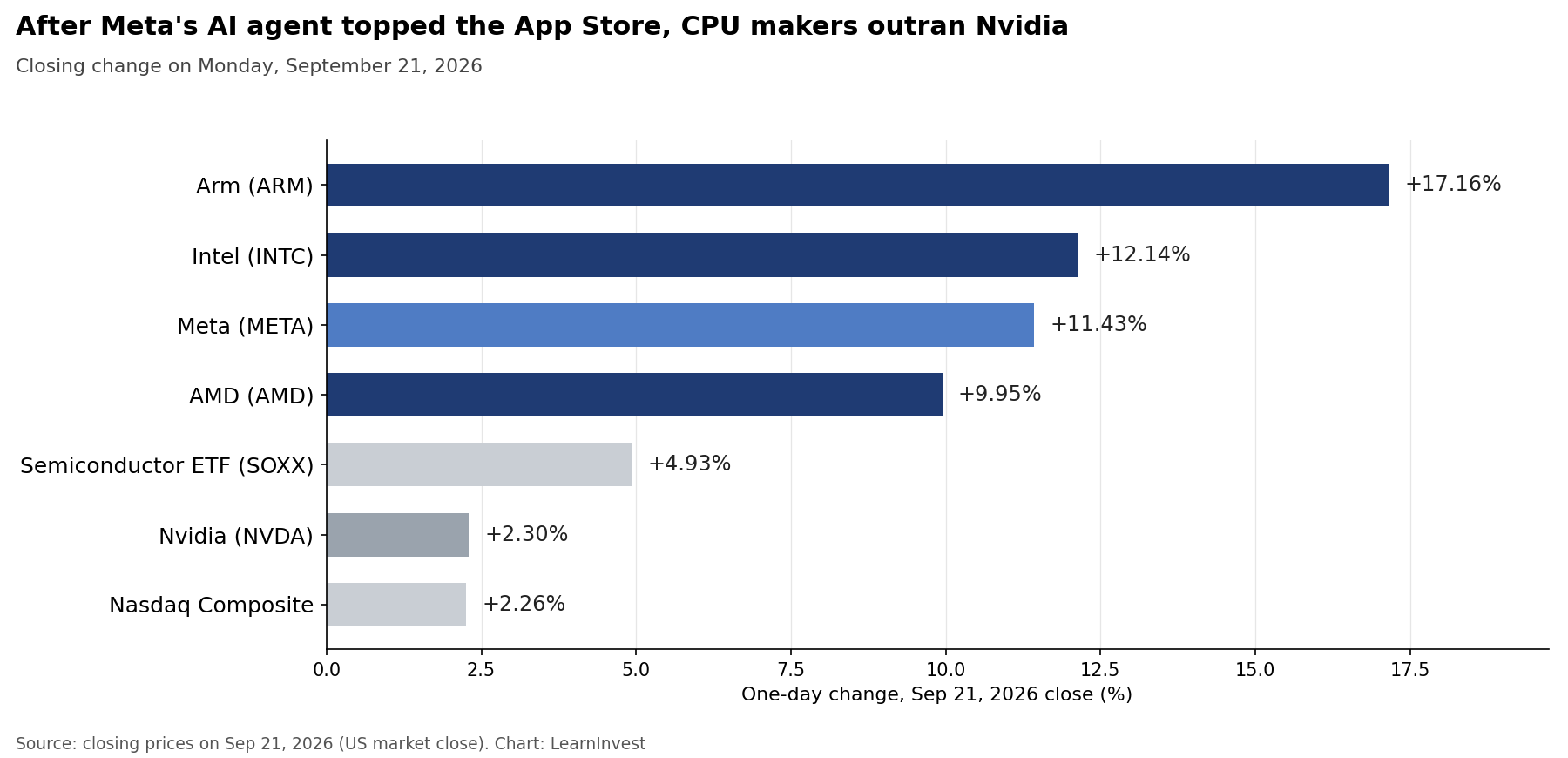
圖 1|Muse 登上美國 App Store 榜首後,9 月 21 日安謀、英特爾、AMD 的漲幅都遠高於輝達與半導體 ETF。(LearnInvest 自製,資料為 9 月 21 日收盤價)
聊天機器人和代理人,差在要不要一台電腦
聊天機器人每次回答一個問題,代理人則要持續替使用者做事,這個差別讓 CPU 重新變得重要。Meta 在 9 月 8 日的發表文中形容,Muse「不只回答問題,而是真的把事情做完」,會寄電子郵件、訂行程、填表單,app 關掉之後仍繼續工作。每一個 Muse 都跑在雲端一台專屬的電腦上,彼此隔離。
這類工作可以拆成兩段:
・理解指令、產生回覆屬於模型運算,主要由 GPU 負責
・執行任務開網頁、讀寫檔案、呼叫其他服務、在隔離環境裡跑程式碼,主要由 CPU 負責
輝達替自家 Vera CPU 設定的用途,正是後面這一段:代理人的調度、資料處理、工具使用,以及在隔離環境中執行程式碼。
代理人的工作量已經在快速放大。根據 AI 模型路由平台 OpenRouter 的統計,平台上代理人使用的 token 數量(7 日平均)如下:
・2 月 6 日約 0.51 兆,首次超過人類使用的約 0.5 兆
・8 月 10 日約 7.3 兆,半年增加約 14 倍;同期人類用量增加約 2.8 倍,來到約 1.4 兆
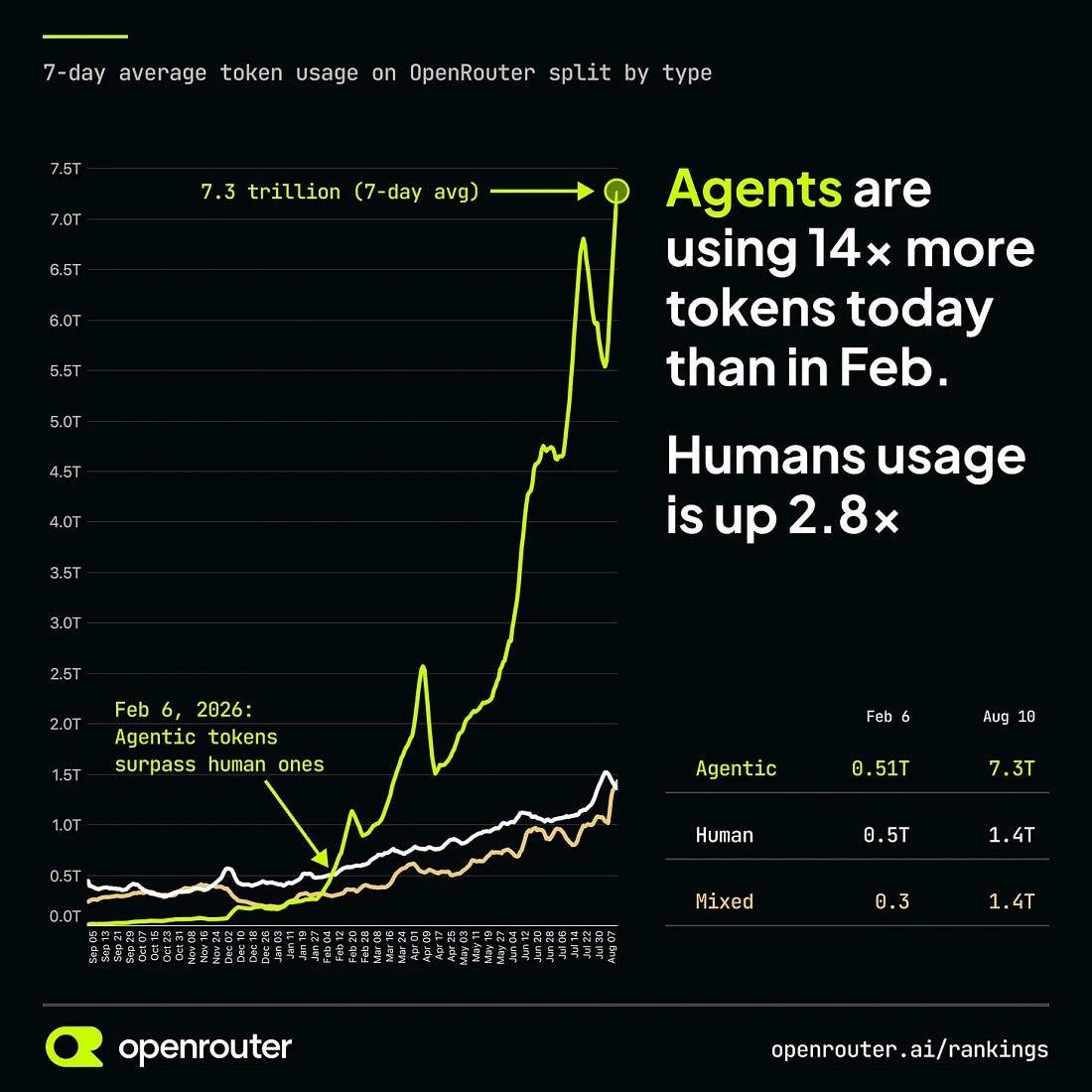
圖 2|OpenRouter 上代理人使用的 token 從 2 月的約 0.51 兆增至 8 月的約 7.3 兆,人類用量同期增加約 2.8 倍。(OpenRouter)
放到 CPU 市場上看,花旗的預估顯示了代理人的份量。伺服器 CPU 市場 2025 年約 290 億美元,花旗估計 2030 年約 2,370 億美元,約為 8 倍。增加的部分大多來自代理人:代理式應用在伺服器 CPU 市場的占比,從 2025 年的約 1%(約 3 億美元),升到 2030 年的約 52%(約 1,230 億美元);傳統通用 CPU 的占比則從 71% 降到 22%。
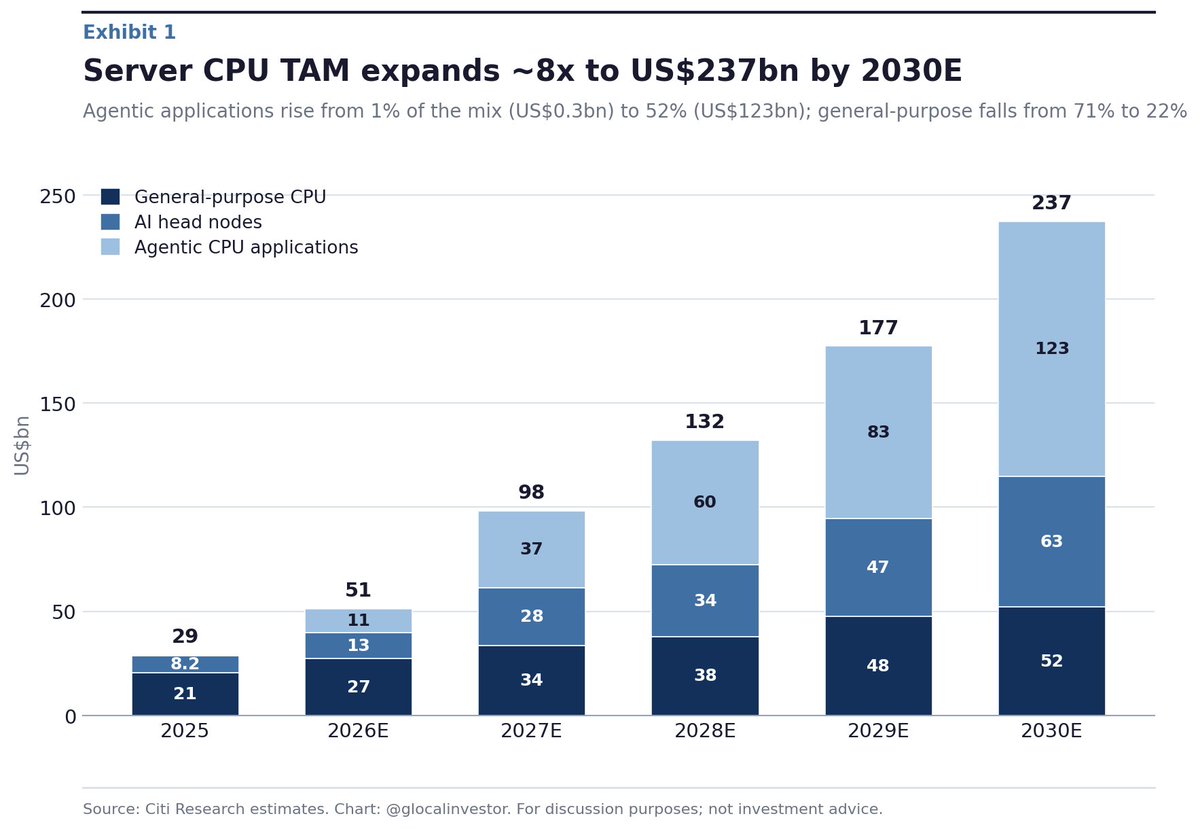
圖 3|花旗估伺服器 CPU 市場 2030 年約 2,370 億美元,其中代理式應用約 1,230 億美元,占一半以上。(花旗研究)
換算下來,花旗預估的伺服器 CPU 市場增量裡,近六成來自代理式應用。CPU 廠的成長故事有很大一部分押在代理人身上,Muse 登上榜首,讓這個假設多了一個看得見的例子。
CPU 缺貨,早在 Muse 之前就開始
CPU 供不應求的證據,在 Muse 上線之前就已經出現在財報和供應鏈裡。
・英特爾第二季資料中心與 AI 部門營收 63 億美元,年增 59%;非 GAAP 毛利率(排除部分一次性與非現金項目後的毛利率)41.8%,一年前是 29.7%。據 The Motley Fool 報導,執行長陳立武上週在 Splunk 的年度大會上表示,英特爾目前只能滿足客戶約一半的需求。
・AMD第二季資料中心營收 67 億美元,年增 107%,公司指出主要來自 EPYC 伺服器處理器與 Instinct 加速器的需求。
・Meta3 月 24 日宣布擔任安謀首款資料中心 CPU「AGI CPU」的主要合作夥伴與共同開發者,這顆晶片鎖定大規模 AI 與代理式 AI 的部署。
價格也在反映缺貨。伯恩斯坦(Bernstein)引用 Mercury Research 的資料指出,第二季英特爾的伺服器處理器出貨市占少了約 1.4 個百分點,營收市占反而多了約 1.7 個百分點。賣出的顆數占比變少,收到的錢占比變多,代表英特爾的單價在上升。
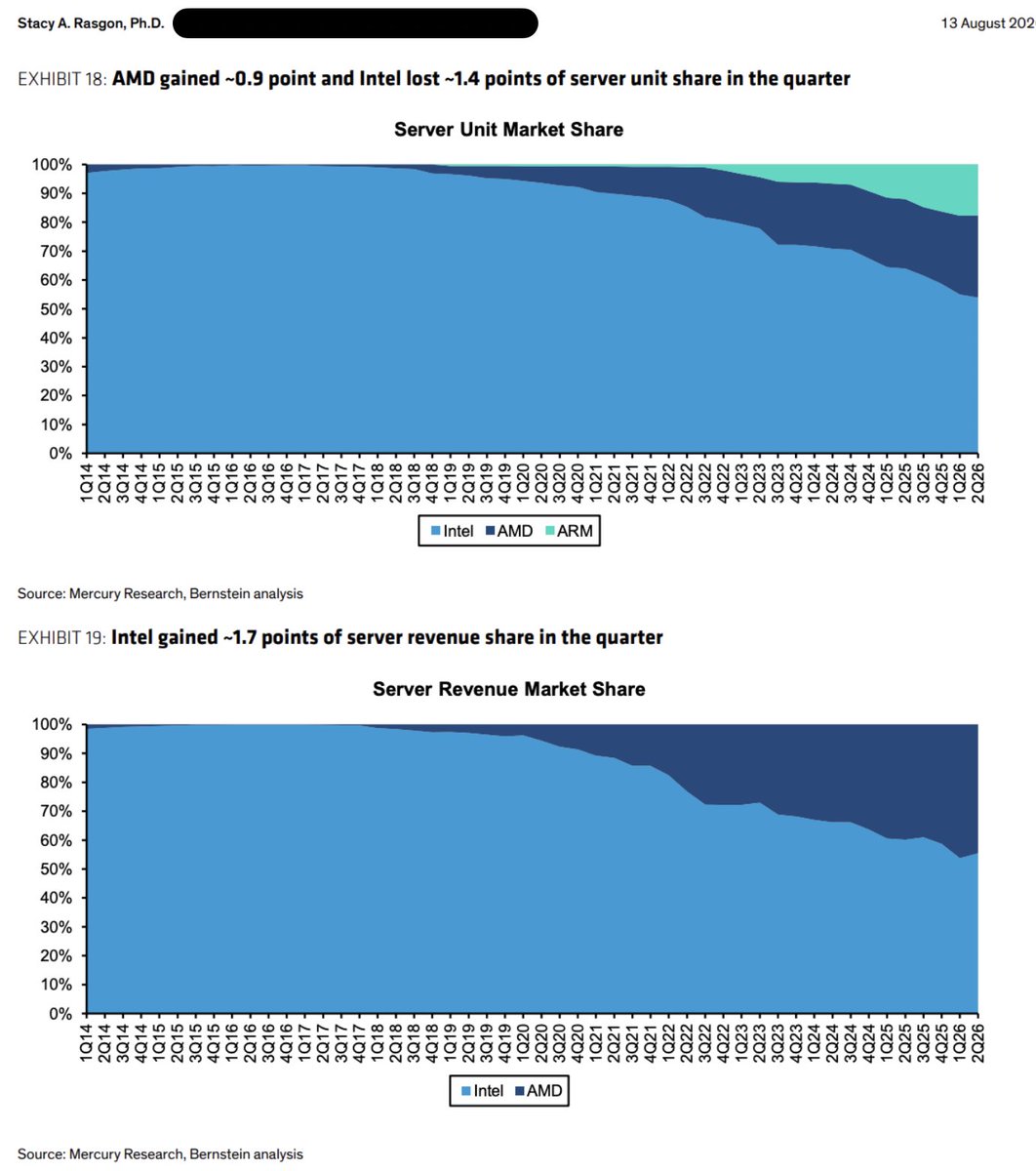
圖 4|第二季英特爾伺服器處理器出貨市占下滑約 1.4 個百分點,營收市占上升約 1.7 個百分點。(伯恩斯坦,資料 Mercury Research)
股價同樣早就跑在前面。依 Evercore ISI 的統計,截至 8 月 7 日,英特爾、安謀、AMD 今年以來的漲幅都超過一倍,費城半導體指數上漲 74%,標普 500 指數上漲 13%,輝達的漲幅只比標普 500 略高。週一的大漲,是一段走了大半年的趨勢再加速一次。
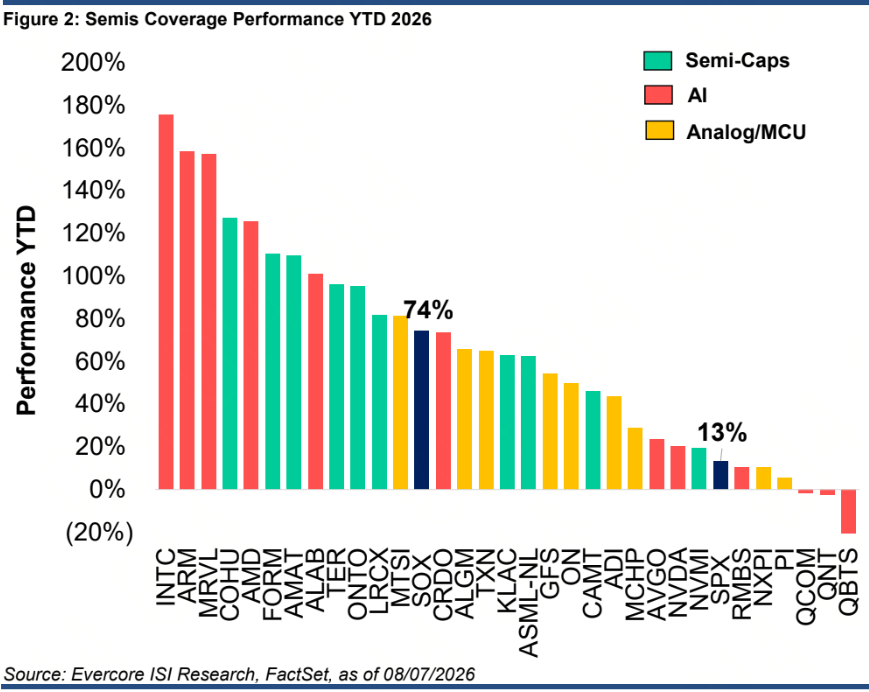
圖 5|截至 8 月 7 日,英特爾、安謀、AMD 今年漲幅都超過一倍,費城半導體指數上漲 74%,標普 500 上漲 13%。(Evercore ISI,資料 FactSet)
餅變大,搶餅的人也變多
CPU 市場變大,不代表每一家分到的一樣多,輝達自己也在搶這塊。輝達週一只漲 2.30%,並不是被排除在這條需求之外。據 24/7 Wall St. 報導,輝達的 Vera CPU 採用安謀架構,內含 88 顆自家設計的核心,可以搭配自家 GPU 平台,也能單獨作為伺服器處理器;輝達管理層表示已看到約 200 億美元的伺服器 CPU 需求,2028 財年的 CPU 營收可能成長一倍以上。
CPU 廠之間,市占也在移動。花旗對伺服器 CPU 出貨市占的預估如下:
・英特爾從 2025 年的 62% 降到 2030 年的 46%
・AMD從 24% 升到 37%
・安謀架構與其他從 14% 升到 17%
同一份預估認為,總出貨量每年成長約 21%,2030 年達到約 7,600 萬顆。照這個速度,英特爾即使市占下滑,出貨顆數仍會增加,眼前限制它的是產能。
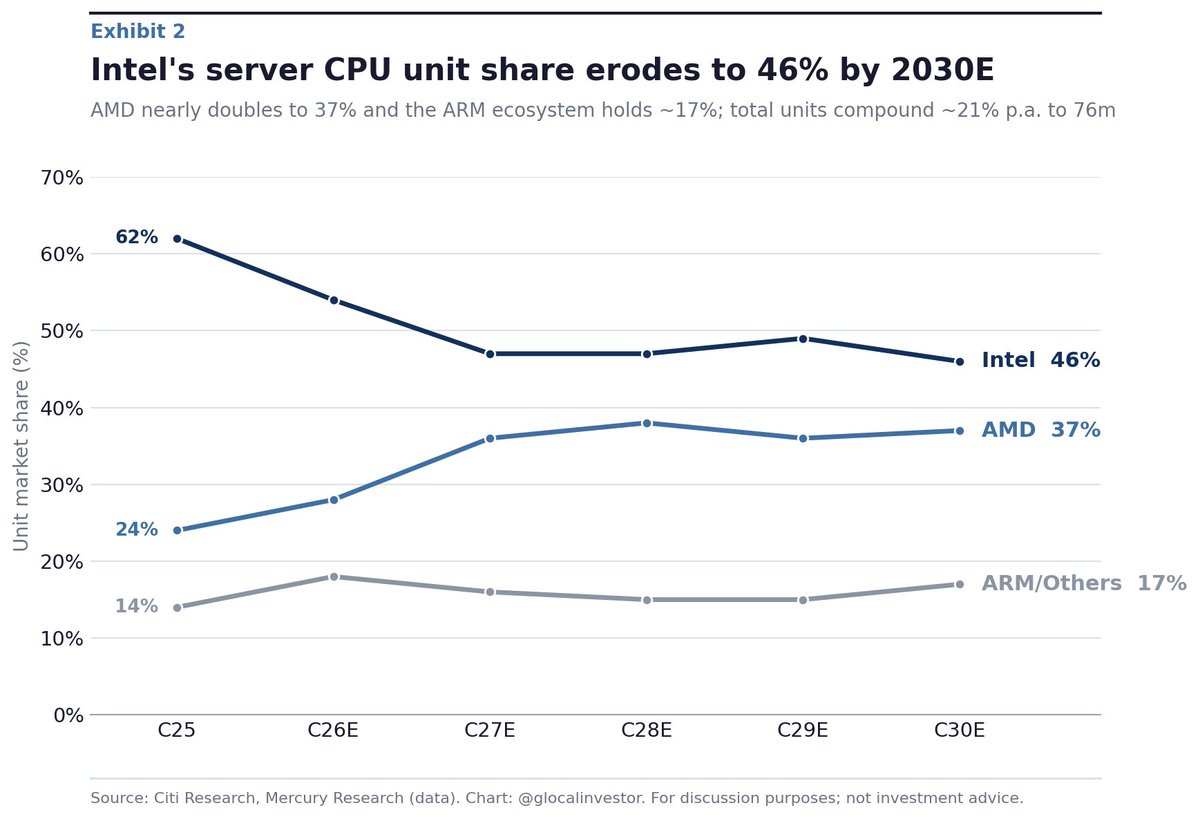
圖 6|花旗預估 2030 年英特爾伺服器 CPU 出貨市占降至 46%,AMD 升至 37%,安謀架構與其他約 17%。(花旗研究,資料 Mercury Research)
三家受惠的方式也不同。安謀原本以授權晶片架構給其他廠商為主,今年 3 月宣布和 Meta 合作開發自己的第一款資料中心 CPU;AMD 是花旗預估中市占持續上升的一方;英特爾則是缺貨最直接的受益者,能賣多少,受限於自己的產能。
Muse 本身還沒證明能賺錢
CPU 需求的方向有供給端的證據撐著,Muse 這門生意本身卻還在很早期。
・營收依 App 數據公司 Appfigures 統計,Muse 截至 9 月 18 日已安裝在約 110 萬台裝置上,但上線頭 11 天扣除平台抽成後的營收約 2.7 萬美元;同類型的代理人 app Grok Bot,在同樣長度的上線期間約 17.5 萬美元。
・購物亞馬遜週日(20 日)晚間開始阻擋 Muse 在站內代客下單,理由是 Muse 沒有表明自己是 AI 代理,而且會進入顧客的帳戶頁面與購買紀錄。Meta 表示,今年稍晚會推出新的隔離機制,讓 Meta 本身也無法讀取使用者 Muse 裡的資料。
・付費奧本海默(Oppenheimer)分析師 Jason Helfstein 估算,Meta 要從 Muse 每年賺到約 275 億至 280 億美元,需要約 1.15 億名每月付 20 美元的訂閱用戶;他對付費轉換率、ChatGPT 與 Gemini 的競爭,以及使用者是否願意把密碼交給 Meta 都有疑慮。
摩根士丹利的試算更保守。假設 2028 年 Muse 有 1 億名月活躍用戶,營收約 13 億美元,只讓 Meta 當年的每股盈餘增加約 1%。
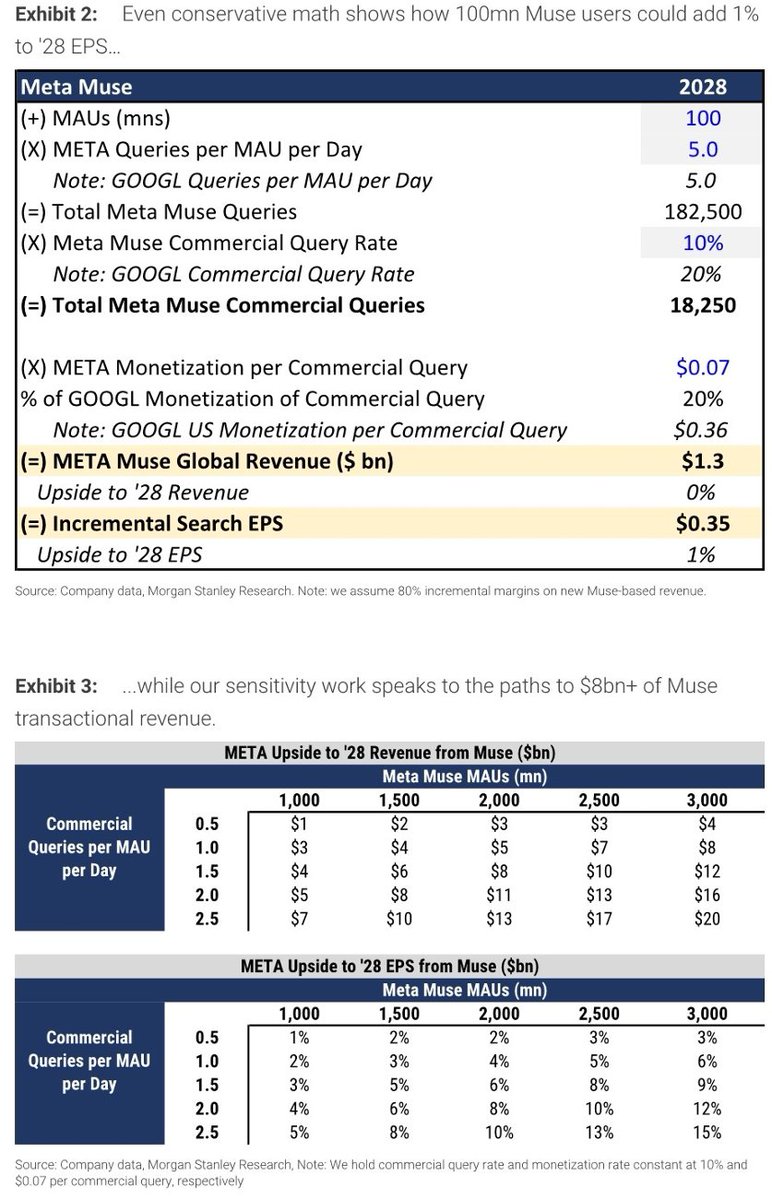
圖 7|摩根士丹利假設 2028 年 Muse 有 1 億名月活躍用戶,營收約 13 億美元,約增加 Meta 當年每股盈餘 1%。(摩根士丹利研究)
以 1 兆美元市值與 9.95% 的漲幅推算,AMD 週一一天就增加了約 900 億美元市值,引發這波行情的 app,頭 11 天的營收還不到 3 萬美元。市場願意為這個落差付錢,理由是 Muse 讓人看到一般消費者願意下載、試用 AI 代理人。這些代理人最後能替晶片廠帶來多少訂單,要從晶片廠自己的財報裡看。
接下來看晶片廠財報與 Muse 的留存
週一的重新定價可以拆成兩部分,第一部分有證據撐著。CPU 缺貨、漲價、市占與市場規模的變化,都在 Muse 之前就寫在財報和供應鏈資料裡,不會因為一個 app 的熱度退燒而消失。第二部分押在「代理人會大規模走進消費市場」,目前能支持它的,只有下載量和榜單排名。
會決定第二部分的,是兩組還沒出來的數字:
・晶片廠英特爾、AMD 下一季財報裡,資料中心 CPU 營收與毛利率能不能繼續上升,英特爾的供應缺口有沒有縮小
・MuseMeta 會不會公布留存率、完成任務的次數或付費用戶數;在這些數字出來之前,下載量只能說明很多人試用過
資料來源:Meta〈Introducing Muse〉(2026 年 9 月 8 日)與安謀資料中心 CPU 合作公告(2026 年 3 月 24 日)、英特爾 2026 年第二季財報(7 月 23 日)、AMD 2026 年第二季財報(8 月 4 日)、OpenRouter、Appfigures、Sensor Tower、花旗研究、伯恩斯坦、Mercury Research、Evercore ISI、FactSet、摩根士丹利研究、奧本海默、The Motley Fool、24/7 Wall St.、TechCrunch、SiliconANGLE、美股收盤行情。圖片來源:LearnInvest 自製、@dailychartbook、@glocalinvestor、@jukan05、@Jadzo1_。
Daily · 2026-09-22
Muse, the personal AI agent Meta launched on September 8, was the most downloaded free iPhone app in the US for three days running. At Monday's close (September 21), Meta rose 11.43%, but the bigger gains went to companies that make CPUs (central processing units): Arm (ARM), which designs the chip architecture used in phones and servers, rose 17.16%, Intel rose 12.14%, and AMD rose 9.95%, closing above $1 trillion in market value for the first time. On the same day, Nvidia, the leader in AI chips, rose only 2.30%, barely more than the Nasdaq Composite's 2.26%.
What the market bought was a specific line of reasoning. A chatbot answers questions, and that work mostly runs on GPUs running the model. An AI agent sends emails, books trips and fills out forms for its user, and Meta gives every Muse its own dedicated computer in the cloud. Opening web pages, running code and calling other services mostly fall on the CPU.The more agents are used, the more CPUs are needed, and that is why money bypassed Nvidia on Monday and went into CPU makers.
Muse did not create this demand. Intel's Data Center and AI revenue was already up 59% year over year in the second quarter, and last week its CEO said the company can supply only about half of what customers want. Meta started working with Arm on a data center CPU back in March. What Muse did was bring a demand that had been sitting inside the supply chain onto ordinary people's phones for the first time. Muse itself has not yet shown it can make money, though: its revenue in the first 11 days was only about $27,000, and the stocks are running ahead of the orders.
Chart 1 | After Muse topped the US App Store, Arm, Intel and AMD gained far more than Nvidia and the semiconductor ETF on September 21. (LearnInvest chart, based on September 21 closing prices)
The difference between a chatbot and an agent is a computer of its own
A chatbot answers one question at a time, while an agent keeps working on the user's behalf, and that difference makes the CPU matter again.In its September 8 announcement, Meta described Muse as something that "doesn't just answer questions, it actually does the work": it sends emails, books travel, fills out forms, and keeps working after the app is closed. Every Muse runs on its own dedicated, isolated computer in the cloud.
The work splits into two parts:
・Understanding the request and writing the replythis is model computation, handled mainly by GPUs
・Carrying out the taskopening web pages, reading and writing files, calling other services and running code in an isolated environment, handled mainly by CPUs
Nvidia lists exactly this second part as the job of its own Vera CPU: agent orchestration, data processing, tool use and sandboxed code execution.
The volume of agent work is already growing fast. According to OpenRouter, a platform that routes requests across AI models, tokens used by agents on the platform (7-day average) were:
・February 6about 0.51 trillion, passing human usage of about 0.5 trillion for the first time
・August 10about 7.3 trillion, roughly 14 times higher in six months; human usage grew about 2.8 times over the same period, to about 1.4 trillion
Chart 2 | Tokens used by agents on OpenRouter rose from about 0.51 trillion in February to about 7.3 trillion in August, while human usage grew about 2.8 times. (OpenRouter)
In the CPU market, Citi's forecast shows how much weight agents carry. The server CPU market was about $29 billion in 2025, and Citi expects about $237 billion in 2030, roughly eight times larger. Most of the increase comes from agents: agentic applications rise from about 1% of the server CPU market in 2025 (about $0.3 billion) to about 52% in 2030 (about $123 billion), while general-purpose CPUs fall from 71% to 22%.
Chart 3 | Citi expects the server CPU market to reach about $237 billion in 2030, with agentic applications at about $123 billion, more than half. (Citi Research)
Put another way, nearly 60% of the growth in Citi's server CPU forecast comes from agentic applications. A large part of the CPU makers' growth story rests on agents, and Muse reaching the top of the charts gave that assumption a visible example.
The CPU shortage started before Muse
Evidence that CPUs are in short supply was already in earnings reports and supply chain data before Muse launched.
・IntelSecond-quarter Data Center and AI revenue was $6.3 billion, up 59% year over year; non-GAAP gross margin (which excludes some one-time and non-cash items) was 41.8%, versus 29.7% a year earlier. According to The Motley Fool, CEO Lip-Bu Tan said at Splunk's annual conference last week that Intel is currently meeting only about half of what its customers are asking for.
・AMDSecond-quarter Data Center revenue was $6.7 billion, up 107% year over year, which the company attributed mainly to demand for EPYC server processors and Instinct accelerators.
・MetaOn March 24, Meta announced it would be lead partner and co-developer of the AGI CPU, Arm's first data center CPU, a chip aimed at large-scale AI and agentic AI deployments.
Prices are reflecting the shortage too. Bernstein, citing Mercury Research data, noted that in the second quarter Intel's share of server processor units fell by about 1.4 percentage points while its share of server revenue rose by about 1.7 points. Selling a smaller share of units while collecting a larger share of the money means Intel's prices are rising.
Chart 4 | In the second quarter, Intel's server processor unit share fell about 1.4 percentage points while its revenue share rose about 1.7 points. (Bernstein, data from Mercury Research)
The stocks were also moving well ahead. According to Evercore ISI, as of August 7, Intel, Arm and AMD had each more than doubled year to date, the Philadelphia Semiconductor Index was up 74%, the S&P 500 was up 13%, and Nvidia was only slightly ahead of the S&P 500. Monday's jump was a trend that had run for most of the year speeding up once more.
Chart 5 | As of August 7, Intel, Arm and AMD had each more than doubled this year, while the Philadelphia Semiconductor Index was up 74% and the S&P 500 was up 13%. (Evercore ISI, data from FactSet)
A bigger market, and more companies competing for it
A bigger CPU market does not mean every company gets the same share, and Nvidia is competing for it too.Nvidia's 2.30% gain on Monday does not mean it is shut out of this demand. According to 24/7 Wall St., Nvidia's Vera CPU is built on the Arm architecture with 88 custom cores, and it can be paired with Nvidia's own GPU platform or used on its own as a server processor. Nvidia management said it sees about $20 billion in server CPU demand and that CPU revenue could more than double in fiscal 2028.
Among CPU makers, market share is shifting as well. Citi's forecast for server CPU unit share:
・Intelfrom 62% in 2025 to 46% in 2030
・AMDfrom 24% to 37%
・Arm architecture and othersfrom 14% to 17%
The same forecast has total unit shipments growing about 21% a year, to about 76 million in 2030. At that pace, Intel would still ship more chips even as its share falls, and what is limiting it right now is capacity.
Chart 6 | Citi expects Intel's server CPU unit share to fall to 46% by 2030, AMD's to rise to 37%, and Arm architecture and others to hold about 17%. (Citi Research, data from Mercury Research)
The three companies also benefit in different ways. Arm has mainly licensed its chip architecture to other companies, and in March it announced it was developing its first data center CPU of its own with Meta. AMD is the one whose share keeps rising in Citi's forecast. Intel is the most direct beneficiary of the shortage, and how much it can sell is limited by its own capacity.
Muse itself has not yet shown it can make money
The direction of CPU demand is backed by supply-side evidence, but Muse as a business is still at a very early stage.
・RevenueAccording to app data firm Appfigures, Muse had been installed on about 1.1 million devices as of September 18, but its revenue after store fees in the first 11 days was about $27,000. Grok Bot, a similar agent app, made about $175,000 over the same length of time after launch.
・ShoppingLate on Sunday, September 20, Amazon began blocking Muse from placing orders on its site, saying Muse does not identify itself as an AI agent and can reach customers' account pages and purchase history. Meta said it will roll out a new isolation feature later this year so that Meta itself cannot read the data inside a user's Muse.
・Paid usersOppenheimer analyst Jason Helfstein estimated that for Meta to earn about $27.5 billion to $28 billion a year from Muse, it would need about 115 million subscribers paying $20 a month. He has doubts about paid conversion, competition from ChatGPT and Gemini, and whether users will trust Meta with their passwords.
Morgan Stanley's math is more conservative. Assuming Muse has 100 million monthly active users in 2028, it would bring in about $1.3 billion of revenue, adding only about 1% to Meta's earnings per share that year.
Chart 7 | Morgan Stanley assumes 100 million monthly active Muse users in 2028, bringing in about $1.3 billion of revenue and adding about 1% to Meta's earnings per share that year. (Morgan Stanley Research)
Based on a $1 trillion market value and a 9.95% gain, AMD alone added about $90 billion in market value on Monday, while the app behind the rally made less than $30,000 in its first 11 days. The market is willing to pay for that gap because Muse showed that ordinary consumers are willing to download and try an AI agent. How many orders those agents eventually bring the chipmakers will show up in the chipmakers' own earnings.
Next: chipmaker earnings and Muse retention
Monday's repricing can be split into two parts, and the first part is backed by evidence.The shortage, the price increases, the share shifts and the growth of the market were all in earnings reports and supply chain data before Muse, and they will not disappear if one app cools off. The second part is a bet that agents will enter the consumer market at scale, and for now the only support for it is download counts and chart rankings.
Two sets of numbers that are not out yet will decide the second part:
・Chipmakerswhether data center CPU revenue and gross margins keep rising in Intel's and AMD's next quarterly reports, and whether Intel's supply gap narrows
・Musewhether Meta discloses retention, completed tasks or paying users; until then, downloads only show that many people have tried it
Sources: Meta, "Introducing Muse" (September 8, 2026) and Arm data center CPU partnership announcement (March 24, 2026); Intel second-quarter 2026 results (July 23); AMD second-quarter 2026 results (August 4); OpenRouter; Appfigures; Sensor Tower; Citi Research; Bernstein; Mercury Research; Evercore ISI; FactSet; Morgan Stanley Research; Oppenheimer; The Motley Fool; 24/7 Wall St.; TechCrunch; SiliconANGLE; US market closing prices. Images: LearnInvest chart, @dailychartbook, @glocalinvestor, @jukan05, @Jadzo1_.